We are excited to share the newest draft of the Metaliteracy Goals and Learning Objectives (2025) with you! Through our collaborative work and plenty of our favorite tea, we’ve revised this document based on the progression of metaliteracy. It also addresses the revolutionary developments in artificial intelligence (AI). This update builds on the 2018 version, addressing the needs of educators and learners in rapidly changing information environments. We would love to hear your feedback! Please take a moment to review the draft. Then share your thoughts in the comment box at the end of that page. Do you find the revised goals and objectives useful? Any suggestions for revision? What did we miss? You may also want to add your thoughts concerning others’ suggestions and comments.
The world is evolving rapidly, especially with advancements in artificial intelligence (AI) and the growing concerns around mis- and disinformation. This led us to revisit the original goals and objectives published in 2018. Our aim was to tackle these trends head-on and consider the broader development of the metaliteracy model itself. We wanted a forward-thinking, adaptable approach for educators and learners to thrive in an increasingly complex information environment. This new version prepares learners for the challenges they will face in a world deeply influenced by AI. Metaliteracy’s emphasis on the “learner as producer” is central to the effective and ethical use of new tools and technologies.
As we worked through these revisions, we realized that the 2018 version was out-of -date and overly detailed. We streamlined the document by reducing the number of objectives from 34 to 20, focusing on clarity and purpose. This revision aligns with the evolution of metaliteracy itself and makes the framework more actionable for educators. We believe this new version is more focused and better suited to the needs of today’s learners. It has a sharper focus on critical thinking, self-awareness, and adaptability. We want learners to engage with and critically assess the technologies and influences shaping their world.
We’ve opted for an open comment period instead of a closed survey. This is a transparent process that encourages a collaborative exchange of ideas. We appreciate your thoughts and insights on these revisions, which will help guide the final version of the document.
So now, it’s your turn! We invite you to offer feedback on the draft Metaliteracy Goals and Learning Objectives (2025). What do you think about the revised document? Are there areas that need further refinement? How would these revised goals and objectives support you in teaching with AI? What kinds of assignments would you develop with these new insights? How would you revise existing assignments to apply these changes? The comment period will be open until February 28, 2025. After we analyze all of the feedback, we’ll share the final iteration of the 2025 document via this blog. We greatly appreciate your feedback as we continue to refine and evolve the metaliteracy framework for the future.
Thank you for your ongoing support and for being part of this exciting process! Please leave your comments on the page containing the new draft—let’s continue the conversation!
We welcome this guest post from Gabrielle Lerner, Student Government Association President and a graduate student in the MPA Program at Empire State University!
What is information? Is it the truth or perspective? What are we interpreting, and how do we know? Are we considering a lens or a fragment of something that is before us? I want to see information and feel that it is true—to discern its actuality. Can we feel information, like the vibration of a song? Is the goal for it to resonate and transcend our logical minds, or do we compare its intensity and velocity to standing on a mountain high up in the sky?
These were just some of the questions that stirred my curiosity during my metaliteracy course, an experience that transformed how I view and engage with information.
About three years ago, I had the incredible opportunity to take this course, and it remains one of the most profound educational experiences of my life. The course, Intercultural Perspectives on Information Literacy and Metaliteracy, brought together a diverse team of students from across the globe, including Germany, Bosnia-Herzegovina, Austria, Poland, India, and the United States. Our differences enriched our collaboration, offering a tapestry of perspectives as we navigated complex questions about truth, bias, and the framing of information. I am deeply grateful for the experience and for the chance to work with such a talented and thoughtful group of individuals.
As a group, we focused on the ways information is created, shared, and consumed, using an infographic as our lens. Our discussions delved into the complexities of citing general information, which can transform into something deeply specific with just the click of a button.
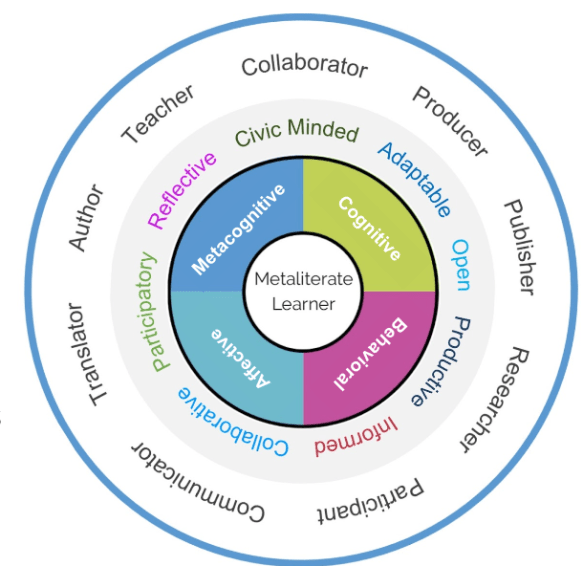
One of our most memorable exercises involved using the Metaliteracy wheel to assign roles within the group, ensuring that everyone contributed as a Teacher, Collaborator, Researcher, and Producer. This approach inspired us to be facilitators, speakers, and leaders. Together, we examined a controversial topic—climate change—from a perspective detached from the heated debates over causes or effects. Instead, we honed in on how information about climate change is produced, disseminated, and received.
The virtual landscape we explored was overwhelming at times, a maze of truths and half-truths that made us question what we thought we knew. We sought clarity amid the noise, sifting through scholarly articles, social media posts, and everything in between. We focused on how to identify credible channels, eliminate sensationalism, and help others do the same. We found fire in the footnotes of articles—the hidden truths buried in citations—and realized that even well-meaning authors could unknowingly perpetuate bias.
What truly united us as a group was our shared identity as truth seekers. We questioned assumptions, evaluated impacts, and guided each other through challenging topics. Our discussions were not just about information but also about who we are as learners and communicators. How do we ensure our voices contribute to a clearer understanding rather than adding to the clutter? How do we empower others to do the same?
The course was not only intellectually stimulating but also personally transformative. As we investigated the nuances of information, we, too, changed. Our group—the “metaliterate bunch”—became a microcosm of the literacy goals we sought to understand. We discovered that learning is as much about collaboration and introspection as it is about seeking answers. By the end, we had not only found the “key” to navigating the noise of the information age but also grown as individuals committed to a lifelong pursuit of truth.
Reflecting on this journey, I’m filled with gratitude for the experience and for my teammates, who inspired and challenged me every step of the way. The course taught me that being metaliterate is not just about understanding information; it’s about embracing the complexity of knowledge and striving to make sense of it with humility and curiosity.
We are excited to invite contributions to our forthcoming book, “AI and Metaliteracy: Empowering Learners for the Generative Revolution” edited by Dr. Nicola Marae Allain and Dr. Thomas P. Mackey. This new volume will be published in fall 2025 for the Innovations in Information Literacy series edited by Trudi E. Jacobson for Bloomsbury Publishing (Rowman & Littlefield).
This pioneering book will feature theories and case studies about empowering learners with metaliteracy as reflective producers, informed writers, and active participants for the technological, pedagogical, and cultural revolution inspired by generative AI (Heaven, 2022, Mackey & Jacobson, 2011, 2022).
We are interested in groundbreaking approaches to metaliteracy education that encourage learners to engage with innovative AI tools such as ChatGPT and DALL-E, among many others, for creating artistic, literary, scientific, and scholarly forms of generative text, image, and video. Each chapter will focus on developing ethical metaliterate learners with autonomy and agency who are capable of producing individual and collaborative knowledge with AI (Mackey & Jacobson, 2011, 2022). We encourage imaginative chapters about the effective use of AI through the lens of metaliteracy and related literacy models, such as the ACRL Framework for Information Literacy for Higher Education and the ACRL Visual Literacy Framework.
We welcome proposals from educators and practitioners, including librarians, teachers and professors worldwide, particularly those offering case studies with solid theoretical foundations and transferrable pedagogical strategies. We are seeking authors from wide-ranging disciplines, such as the Arts and Humanities, Digital Media Arts, Social Sciences, Composition Studies, Library and Information Science, Nursing, Business, and STEM. Chapter themes will also address the relevance of AI and metaliteracy to adult learning and workforce development and the importance of designing inclusive AI-driven learning experiences to advance digital equity, and accessibility for students with disabilities. The book will present methods for assessing the effectiveness of teaching metaliteracy competencies and highlight collaborative, interdisciplinary projects. We aim to provide international perspectives on the challenges and opportunities of empowering learners with generative AI and metaliteracy, exploring innovative theories and case studies that provide future directions for AI-driven learning environments.
Submission Guidelines
Proposals should include the following information:
Title: The concise and descriptive title for your proposed chapter.
Abstract: A summary (300-500 words) outlining the main objectives, theoretical foundation, metaliteracy components, generative AI tools, assessment methodology, and expected contributions of your chapter.
Author Information: Names, affiliations, and contact details of all authors.
Biographical Note: A brief biography (150-200 words) of each author highlighting relevant expertise and experience.
Please submit your proposals by December 15, 2024, to Tom.Mackey@sunyempire.edu. Selected authors will be notified by February 1, 2024, and full chapters will be due by May 1, 2025. Final chapters should be between 20 and 25 pages (double-spaced) and follow the formatting guidelines that will be provided upon acceptance.
Important Dates
Proposal Submission Deadline: December 15, 2024
Notification of Acceptance: February 1, 2025
Full Chapter Submission Deadline: May 1, 2025
Expected Publication Date: November 1, 2025
We look forward to receiving your innovative and insightful contributions that will help shape the future of metaliteracy for the generative AI revolution. For any inquiries or further information, please contact Nicola Marae Allain at Nicola.Allain@sunyempire.edu or Tom Mackey at Tom.Mackey@sunyempire.edu.
Join us in this groundbreaking project to advance education and empower learners with metaliteracy worldwide for the generative AI revolution!
Editors
Nicola Marae Allain, Ph.D. is the Dean of the School of Arts and Humanities at SUNY Empire State University, where she has held faculty (tenured) and administrative roles since 2002. Her research and leadership have focused on digital learning, immersive and virtual environments, and emerging technologies. She holds a PhD in Media and Communication from the European Graduate School, a MA in Dramatic Art, Dance and Music from the University of California, and a BA in English from the University of Ottawa. Allain’s interdisciplinary background in arts and humanities complements expertise in higher education technologies and systems, digital media arts, visual pedagogy, and digital communication. Throughout her career, Allain has demonstrated a commitment to developing an aptitude for lifelong learning among students and faculty, while supporting the agency and autonomy of learners within active and authentic learning environments. Her leadership in faculty development and curriculum design has modeled innovative strategies that scale across disciplines, and were widely adopted by SUNY Empire and institutions in New Zealand. Her decade-long role on the SUNY Innovative Instruction Research Council led to collaborations with the SUNY Faculty and Teaching with Technology (FACT2) Committee AI Task Group. Allain co-authored the SUNY FACT² Guide “Optimizing AI in Higher Education” (May 2024), for which she contributed sections on the social impact and creative applications of AI. She has previously collaborated on metaliteracy initiatives, courses and publications. Her recent articles focus on curriculum innovations in digital humanities, mindfulness, and leadership in higher education settings. Fluent in several languages, Allain is also a translator of French poetry and Classical Chinese literary texts.
Thomas P. Mackey, Ph.D. is Professor of Arts and Media and Program Coordinator for the BA and BS programs in Digital Media Arts at Empire State University. He is Academic Coordinator for online courses in Arts and Media. Dr. Mackey is the recipient of the Chancellor’s Award for Scholarship and Creative Activities (2022) and the Dr. Susan H Turben Chair in Mentoring (2021–2022). He has an honorary appointment as Extraordinary Professor, Research Unit Self- Directed Learning, Faculty of Education, North-West University, South Africa. Dr. Mackey originated the metaliteracy framework with Prof. Trudi E. Jacobson to prepare learners as individual and collaborative producers of new knowledge. He has published four books with Prof. Jacobson on metaliteracy, including the first co-authored manuscript on this topic entitled Metaliteracy: Reinventing Information Literacy as a Metaliteracy (2014). They co-edited two volumes Metaliteracy in Practice (2016) and Metaliterate Learning for the Post-Truth World (2019). Their most recent book Metaliteracy in a Connected World: Developing Learners as Producers (2022) is the recipient of the 2024 Divergent Publication Award for Excellence in Literacy in a Digital Age Research. Dr. Mackey’s latest book is a co-edited volume with Dr. Sheila Marie Aird entitled Teaching Digital Storytelling: Inspiring Voices through Online Narratives (2024). He has presented both nationally and internationally about metaliteracy and generative AI and has designed learning assignments in several courses to engage learners in the generative AI revolution.
ACRL Association of College and Research Libraries. (2015). Framework for information literacy for higher education. American Library Association. Retrieved July 20, 2024, from http://www.ala.org/acrl/standards/ilframework.
Mackey, T. P., & Jacobson, T. E. (2011). Reframing information literacy as a metaliteracy. College & Research Libraries, 72(1), 62–78. https://doi.org/10.5860/crl-76r1.
Mackey, T. P., & Jacobson, T. E. (2022). Metaliteracy in a Connected World: Developing Learners as Producers. ALA Neal-Schuman.
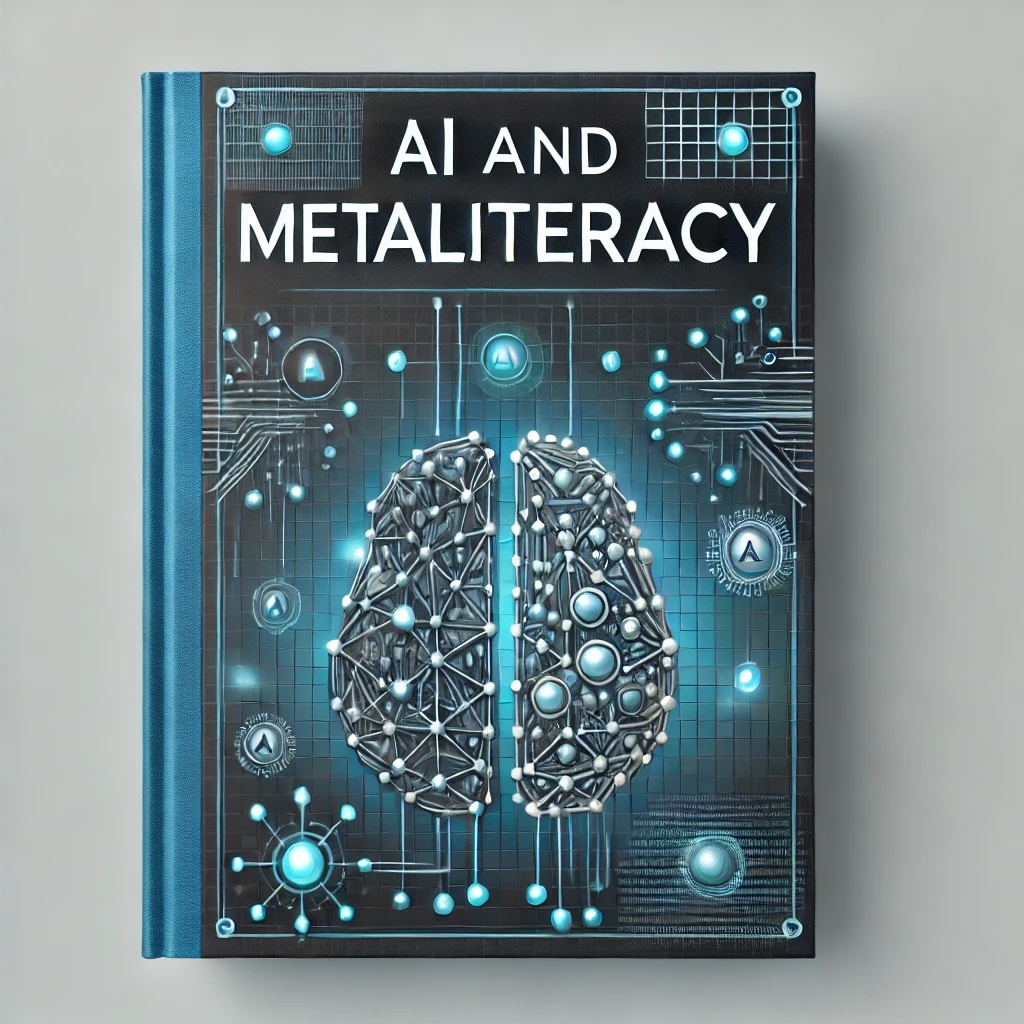
Book image created in DALL-E using the prompt: “Visualize a dynamic book cover for AI and Metaliteracy: Empowering Learners for the Generative Revolution” (October 28, 2024).
The 3rd international Conference on Information Literacy (ICIL – Africa 2024) took place at Bibliotheca Alexandrina in Egypt. It featured a virtual presentation by Prof. Tom Mackey from Empire State University. The topic of Tom’s talk was Artificial Intelligence and the Future of Literacy. This presentation explored the revolutionary changes in generative artificial intelligence (AI). It highlighted the groundbreaking potential of information literacy, AI literacy, and especially metaliteracy to transform learning. This talk explored the core theme of the conference “Information Literacy Revolution: Get Ready.” It also looked ahead to the future of literacy in a world of generative AI. Metaliteracy serves as a comprehensive pedagogical framework that prepares meditative learners as individual and collaborative producers of digital information. It also prepares them as effective communicators and participants in rapidly-evolving information environments.
Tom’s presentation examined several key themes:
AI offers considerable potential for supporting artistic creativity and learning
AI challenges our understanding of originality and the original production of information
The problem of mis- and dis-information is exacerbated through AI
Metaliteracy offers a holistic model for effectively engaging learners with AI technologies
The metaliteracy goals and learning objectives reinforce the application of metaliteracy in practice
Metaliteracy emerged from information literacy and developed into a comprehensive model with several core components. It aligns with emerging AI Literacy models while focusing on learning in wide-ranging information environments. This approach provides a holistic and open framework to prepare learners as ethical producers of generative content.
We want to know how you engage with metaliteracy in your teaching and learning with AI. To share your techniques for applying AI and metaliteracy, please contact Tom Mackey or Trudi Jacobson directly. We welcome your ideas about a guest blog post!
Here’s the slideshow of the Metaliteracy and AI Keynote:
Tom’s keynote offered several takeaways:
The development of AI is both a revolution and evolution
Several international organizations have defined ethical frameworks for engaging with AI
Generative AI contributes to the proliferation of mis- and disinformation
Metaliteracy supports the design of effective learning activities with generative AI
Metacognitive reflection is key to the learning process when working with AI
Reflecting on their learner roles, especially the producer role, reinforces active engagement with AI
The analysis of AI ethics is reinforced through metaliteracy’s civic-minded characteristic
Digital storytelling and the inventive production of AI-generated content support learners in discovering their authentic voice
This international conference offered a chance to engage with educators and learners from around the world. It emphasized the value of exploring generative AI through the lens of metaliteracy. The keynote emphasized the core components of metaliteracy including the learning domains, roles, and characteristics. It focused on how these elements work together to support learners in developing a metaliteracy mindset. This mindset prepares them for wide ranging information environments that are increasingly mediated by AI.
If you are interested in learning more about metaliteracy, please explore the many open resources via this blog as a starting point. Additionally, we want to know how you engage with metaliteracy in your teaching and learning with AI. If you have an idea for a guest blog post, feel free to reach out to Tom Mackey or Trudi Jacobson directly.
We welcome this guest post from Heloisa Helena Lopes Rodrigues Galiza, Instructional Designer for the edtech company DOT Digital Group in Brazil, who recently completed our Cousera MOOC Metaliteracy: Empowering Yourself in a Connected World.
During the Coursera MOOC, Metaliteracy: Empowering Yourself in a Connected World I realized that I have been a metaliterate citizen for a very long time. All the knowledge I’ve gained through this MOOC makes sense not only in the digital world but also within collaborative communities, where sharing, creating, and evaluating information are essential for collective growth and learning.
As someone who produces, publishes, and holds the authorship of the shared content, I also take on the role of a researcher, seeking reliable sources to support my work while being mindful of copyrights and open licenses. At this moment, I reflect on the characteristics of a metaliterate learner, remaining open to new perspectives and seeking the origins of information to ensure that I am not perpetuating biases. I also consider the need to be adaptable to the digital world, taking care to protect data and respect copyrights when sharing digital content. For example, when publishing in collaborative communities, I am aware that people from all over the world may consume the information I share, so it is crucial to present accurate, unbiased content that adheres to legal and ethical standards.
As a communicator, translator, or even someone who is teaching something, it is important to maintain critical and active engagement, while ensuring that my participation in the process preserves the originality of the information. At this moment, it is important to recognize that we are always learning and teaching, being collaborative in this digital world, and assuming the role of a co-creator of the knowledge shared. As an instructional designer, when I translate or adapt educational content for different audiences, I make sure to retain the core message while adjusting the language and context to suit the target audience. This helps to preserve the integrity of the information while making it accessible and relevant to a broader range of learners.
As a participant and collaborator in the digital world, and aware that everything is constantly changing, I reflect on my civic minded and social responsibility by sharing information that contributes to important debates within my community, whether in a personal or professional context. I understand that the content I share can reach diverse audiences globally, so I strive to ensure that it is accurate, respectful, and fosters meaningful discussions.
Above all, I see myself as someone who thinks a lot about my own learning, always trying to satisfy my curiosity about different topics. I also want to learn new ways of learning and understand how important self-awareness is to stay true to what I learn and teach. This mindset was further strengthened by the insights I gained through the MOOC Metaliteracy: Empowering Yourself in a Connected World, which emphasized the value of self-reflection, adaptability, and critical thinking in the learning process, both as a learner and an educator. It also helped me understand the importance of sharing information in the most accurate and responsible way, while being fully aware of my role as a metaliterate citizen.
References
O’Brien, K., Forte, M., Mackey, T. P., & Jacobson, T. (2019). Metaliteracy: Empowering yourself in a connected world [Course]. Coursera. https://www.coursera.org/learn/metaliteracy
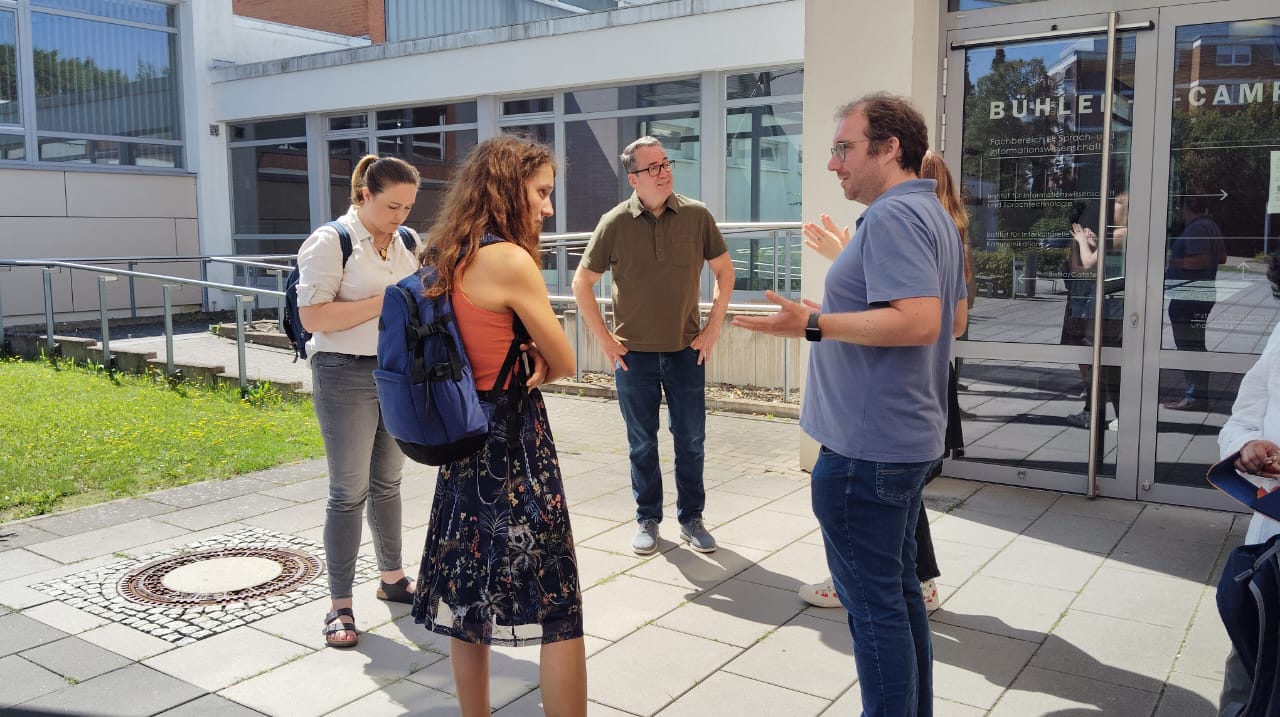
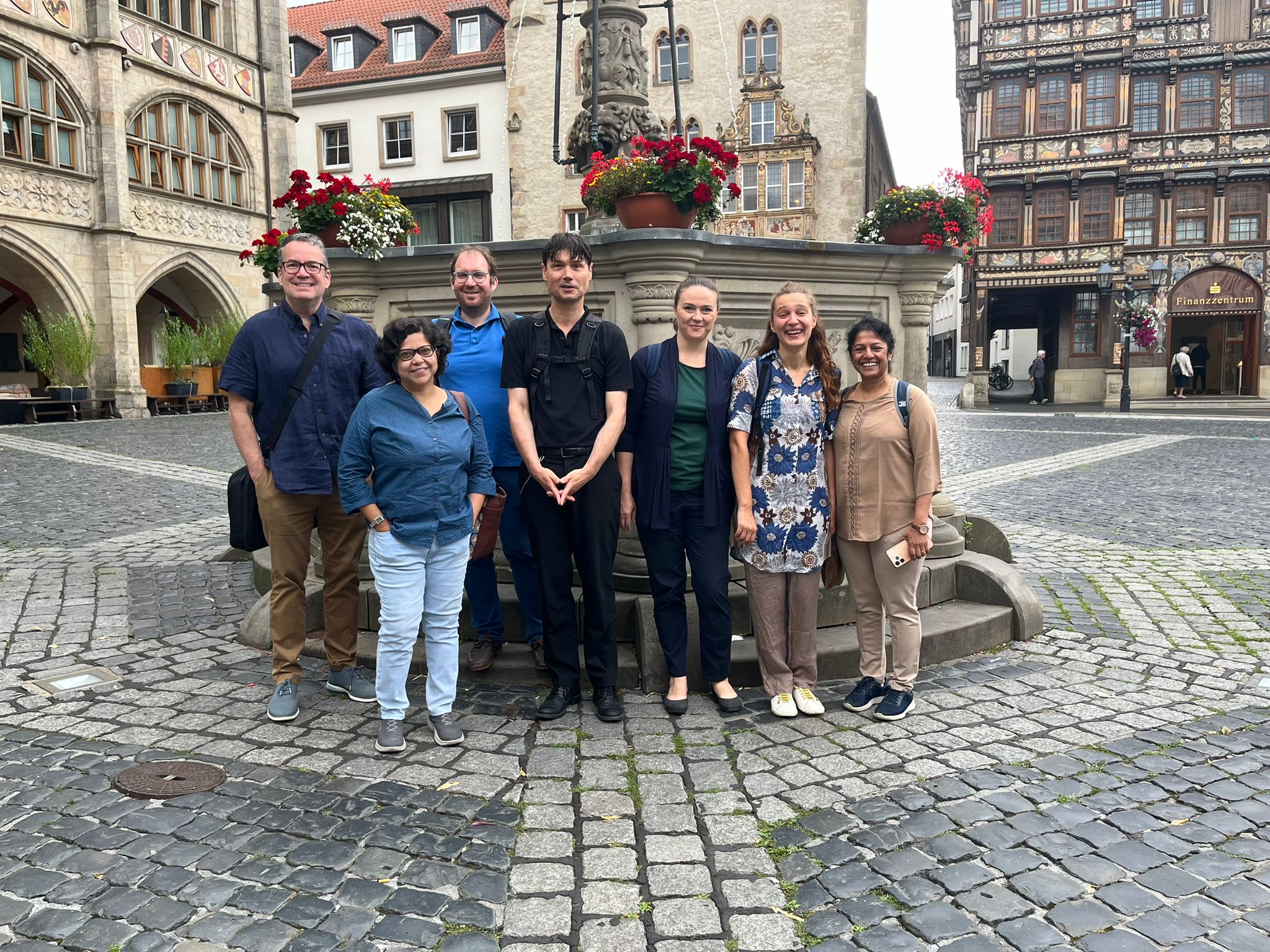
Teaching information literacy and metaliteracy in a world of generative artificial intelligence (AI) was discussed among a global team of educators at the University of Hildesheim from August 5 to 9, 2024, The grant-funded meeting of the Intercultural Perspectives on Information Literacy and Metaliteracy (IPILM) facilitators further strengthened cooperation in teaching and research related to these themes. This was the first time the entire IPILM team was brought together in person for research and planning about the IPILM virtual exchange and related research agenda. Participants of the workshop included: Tessy Thadathil (Symbiosis College of Arts & Commerce Pune, India), Tom Mackey (Empire State University, USA), Emina Adilović (University of Sarajevo, Bosnia-Herzegovina), Stefan Dreisiebner (Carinthia University of Applied Sciences, Austria), Joachim Griesbaum (University of Hildesheim, Germany), Justyna Berniak-Woźny (Tischner European University, Poland), and Subarna Bhattacharya (Kalinga Institute of Industrial Technology, India). The meetings were supported by Ms. Magdalena Dresler, a student from the University of Hildesheim.
Funding for this in-person workshop was provided by the Lower Saxony Ministry for Science and Culture through the INTENSIV funding format, which supports European and international cooperation in science and research. During the meetings, the teaching collaboration among this global team was assessed and opportunities for sustainable improvement, scalability, and institutional anchoring was discussed. The team evaluated the most recent IPILM virtual exchange in the summer of 2024 and developed plans for the 2024-25 academic year. Additionally, the team developed a research agenda for the next two years to advance cooperative research among the partner institutions.
The grant-funded workshop provided participants with a platform to discuss the challenges and opportunities of teaching topics related to generative artificial intelligence (AI) through the lens of information literacy and metaliteracy. Information literacy, understood as the ability to effectively identify, evaluate, and use information, is of great importance in the face of increasing digitization and the spread of misinformation. Metaliteracy emphasizes the learner as an active producer and ethical participant in social information environments (https://en.wikipedia.org/wiki/Metaliteracy).
The IPILM workshop is part of the ongoing commitment at the University of Hildesheim to promote international education and research in these critical competency areas. It supports the innovative virtual exchange initiated by Prof. Griesbaum and Professor Thadathil and developed by this international team. The IPILM team members and participating institutions are similarly committed to this global partnership and support the further development of this innovative collaboration.
To learn more about this initiative, read the peer-reviewed article by members of the IPILM team:
Griesbaum, J., Dreisiebner, S., Mackey, T. P., Jacobson, T. E., Thadathil, T., Bhattacharya, S., & Adilović, E. (2023). Teaching Internationally, Learning Collaboratively: Intercultural Perspectives on Information Literacy and Metaliteracy (IPILM). Communications in Information Literacy, 17 (1), 260–278. https://doi.org/10.15760/comminfolit.2023.17.1.4
Keynote Welcome to the XI INTERNATIONAL SYMPOSIUM ON CURRICULUM AND EDUCATIONAL POLICIES
The international symposium is presented by the The Universidad del Magdalena and the Vice-Rectorate for Research, through the Faculty of Education Sciences. According to the conference organizers:
Our main objective is to disseminate the results and advances of educational research and innovations in the fields of theory and curricular development, as well as in educational policies. We seek to foster collaboration between academic communities at national and international level and contribute to the ongoing debate and reflection in the constant search for high-quality education.
Registration for the symposium is now open and call for proposals is available until 08/20/2024. Both in person and virtual participation options are available.
Register today for the upcoming virtual event Developing Metaliteracy to Teach and Learn with Generative Artificial Intelligence (GenAI) presented by Tom Mackey on April 24 (1pm CDT and 2pm EDT) at the Alabama Association of College & Research Libraries (AACRL) Annual Meeting. Registration is free and open so sign up today for this engaging and interactive conversation about metaliteracy in a world of GenAI.
As generative artificial intelligence (GenAI) transforms higher education, how do we prepare learners for this rapidly evolving technology? How do librarians, faculty, and learners analyze the ethical dimension of GenAI? What does it mean to be an active producer and participant in these dynamic information environments? How does metaliteracy prepare reflective metaliterate learners to address such revolutionary changes to our learning communities?
Thanks to Jennifer Long, Vice-President of the Alabama Association of College & Research Libraries (AACRL) and the Executive Board of the Alabama ACRL Chapter for the invitation to present!