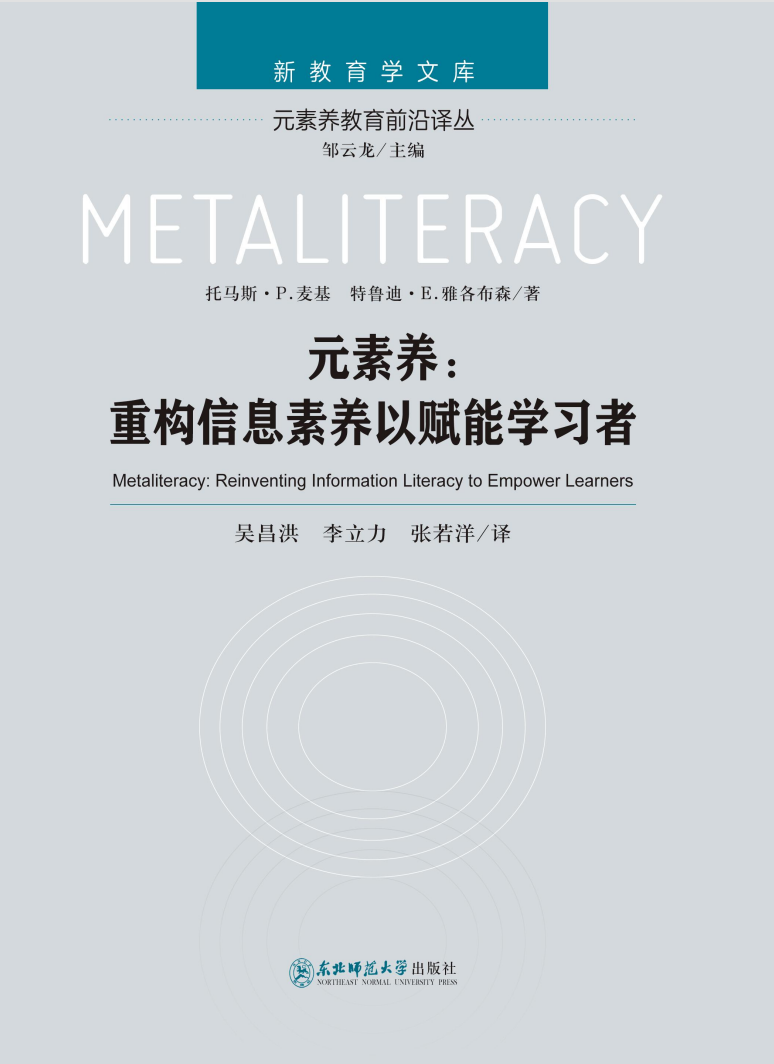
The first book introducing the metaliteracy framework, Metaliteracy: Reinventing Information Literacy to Empower Learners (2014) by Thomas P. Mackey and Trudi E. Jacobson, has now been translated and published in Chinese, making the metaliteracy framework more accessible to students and educators across higher education and library communities in China. The translation was initiated and completed by Changhong Wu (Bella Wu), Information Literacy & AI Literacy Librarian, Subject Librarian for History, and Instructor at Northeast Normal University. This is the first of a series that will also include the Chinese translation of Metaliteracy in Practice (2016) and Metaliterate Learning for the Post-Truth World (2018).
Changhong Wu launched the project in 2023 and coordinated the collaboration among the authors, Northeast Normal University Press, and American Library Association Editions to secure publication permissions and guide the translation process.
The publication was highlighted in an IFLA news announcement that noted:
This project reflects Northeast Normal University Library’s ongoing efforts to align with international standards and foster a culture of critical, reflective, and participatory learning among students. We believe that the metaliteracy framework will empower Chinese learners to become not only discerning consumers but also responsible creators of information.
As noted in the IFLA newsletter, the Chinese edition has also been included in the New Education Library Series of Northeast Normal University and will serve as a course text for the credit-bearing class Social Media Literacyand Metaliteracy Capabilities.
This translation represents a significant milestone in the continued international development of metaliteracy as an established framework. It reflects the growing global interest in learner-centered approaches to metacognitive reflection, collaborative learning, and ethical participation in digital environments.
We are deeply appreciative of Bella Wu’s leadership, commitment, and scholarly work in making this translation possible and helping extend the reach of metaliteracy to new academic and professional communities.
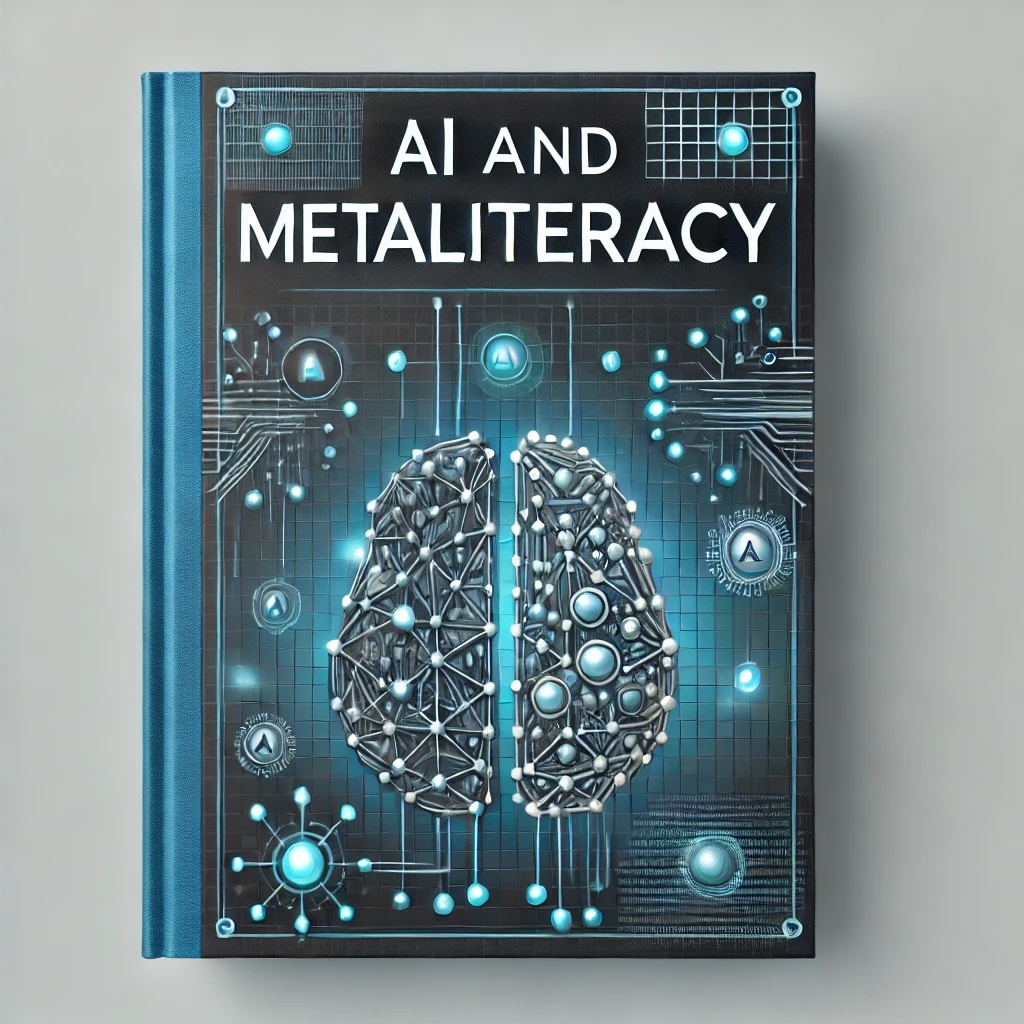
We are excited to invite contributions to our forthcoming book, “AI and Metaliteracy: Empowering Learners for the Generative Revolution” edited by Dr. Nicola Marae Allain and Dr. Thomas P. Mackey. This new volume will be published in fall 2025 for the Innovations in Information Literacy series edited by Trudi E. Jacobson for Bloomsbury Publishing (Rowman & Littlefield).
This pioneering book will feature theories and case studies about empowering learners with metaliteracy as reflective producers, informed writers, and active participants for the technological, pedagogical, and cultural revolution inspired by generative AI (Heaven, 2022, Mackey & Jacobson, 2011, 2022).
We are interested in groundbreaking approaches to metaliteracy education that encourage learners to engage with innovative AI tools such as ChatGPT and DALL-E, among many others, for creating artistic, literary, scientific, and scholarly forms of generative text, image, and video. Each chapter will focus on developing ethical metaliterate learners with autonomy and agency who are capable of producing individual and collaborative knowledge with AI (Mackey & Jacobson, 2011, 2022). We encourage imaginative chapters about the effective use of AI through the lens of metaliteracy and related literacy models, such as the ACRL Framework for Information Literacy for Higher Education and the ACRL Visual Literacy Framework.
We welcome proposals from educators and practitioners, including librarians, teachers and professors worldwide, particularly those offering case studies with solid theoretical foundations and transferrable pedagogical strategies. We are seeking authors from wide-ranging disciplines, such as the Arts and Humanities, Digital Media Arts, Social Sciences, Composition Studies, Library and Information Science, Nursing, Business, and STEM. Chapter themes will also address the relevance of AI and metaliteracy to adult learning and workforce development and the importance of designing inclusive AI-driven learning experiences to advance digital equity, and accessibility for students with disabilities. The book will present methods for assessing the effectiveness of teaching metaliteracy competencies and highlight collaborative, interdisciplinary projects. We aim to provide international perspectives on the challenges and opportunities of empowering learners with generative AI and metaliteracy, exploring innovative theories and case studies that provide future directions for AI-driven learning environments.
Submission Guidelines
Proposals should include the following information:
Title: The concise and descriptive title for your proposed chapter.
Abstract: A summary (300-500 words) outlining the main objectives, theoretical foundation, metaliteracy components, generative AI tools, assessment methodology, and expected contributions of your chapter.
Author Information: Names, affiliations, and contact details of all authors.
Biographical Note: A brief biography (150-200 words) of each author highlighting relevant expertise and experience.
Please submit your proposals by December 15, 2024, to Tom.Mackey@sunyempire.edu. Selected authors will be notified by February 1, 2024, and full chapters will be due by May 1, 2025. Final chapters should be between 20 and 25 pages (double-spaced) and follow the formatting guidelines that will be provided upon acceptance.
Important Dates
Proposal Submission Deadline: December 15, 2024
Notification of Acceptance: February 1, 2025
Full Chapter Submission Deadline: May 1, 2025
Expected Publication Date: November 1, 2025
We look forward to receiving your innovative and insightful contributions that will help shape the future of metaliteracy for the generative AI revolution. For any inquiries or further information, please contact Nicola Marae Allain at Nicola.Allain@sunyempire.edu or Tom Mackey at Tom.Mackey@sunyempire.edu.
Join us in this groundbreaking project to advance education and empower learners with metaliteracy worldwide for the generative AI revolution!
Editors
Nicola Marae Allain, Ph.D. is the Dean of the School of Arts and Humanities at SUNY Empire State University, where she has held faculty (tenured) and administrative roles since 2002. Her research and leadership have focused on digital learning, immersive and virtual environments, and emerging technologies. She holds a PhD in Media and Communication from the European Graduate School, a MA in Dramatic Art, Dance and Music from the University of California, and a BA in English from the University of Ottawa. Allain’s interdisciplinary background in arts and humanities complements expertise in higher education technologies and systems, digital media arts, visual pedagogy, and digital communication. Throughout her career, Allain has demonstrated a commitment to developing an aptitude for lifelong learning among students and faculty, while supporting the agency and autonomy of learners within active and authentic learning environments. Her leadership in faculty development and curriculum design has modeled innovative strategies that scale across disciplines, and were widely adopted by SUNY Empire and institutions in New Zealand. Her decade-long role on the SUNY Innovative Instruction Research Council led to collaborations with the SUNY Faculty and Teaching with Technology (FACT2) Committee AI Task Group. Allain co-authored the SUNY FACT² Guide “Optimizing AI in Higher Education” (May 2024), for which she contributed sections on the social impact and creative applications of AI. She has previously collaborated on metaliteracy initiatives, courses and publications. Her recent articles focus on curriculum innovations in digital humanities, mindfulness, and leadership in higher education settings. Fluent in several languages, Allain is also a translator of French poetry and Classical Chinese literary texts.
Thomas P. Mackey, Ph.D. is Professor of Arts and Media and Program Coordinator for the BA and BS programs in Digital Media Arts at Empire State University. He is Academic Coordinator for online courses in Arts and Media. Dr. Mackey is the recipient of the Chancellor’s Award for Scholarship and Creative Activities (2022) and the Dr. Susan H Turben Chair in Mentoring (2021–2022). He has an honorary appointment as Extraordinary Professor, Research Unit Self- Directed Learning, Faculty of Education, North-West University, South Africa. Dr. Mackey originated the metaliteracy framework with Prof. Trudi E. Jacobson to prepare learners as individual and collaborative producers of new knowledge. He has published four books with Prof. Jacobson on metaliteracy, including the first co-authored manuscript on this topic entitled Metaliteracy: Reinventing Information Literacy as a Metaliteracy (2014). They co-edited two volumes Metaliteracy in Practice (2016) and Metaliterate Learning for the Post-Truth World (2019). Their most recent book Metaliteracy in a Connected World: Developing Learners as Producers (2022) is the recipient of the 2024 Divergent Publication Award for Excellence in Literacy in a Digital Age Research. Dr. Mackey’s latest book is a co-edited volume with Dr. Sheila Marie Aird entitled Teaching Digital Storytelling: Inspiring Voices through Online Narratives (2024). He has presented both nationally and internationally about metaliteracy and generative AI and has designed learning assignments in several courses to engage learners in the generative AI revolution.
ACRL Association of College and Research Libraries. (2015). Framework for information literacy for higher education. American Library Association. Retrieved July 20, 2024, from http://www.ala.org/acrl/standards/ilframework.
Mackey, T. P., & Jacobson, T. E. (2011). Reframing information literacy as a metaliteracy. College & Research Libraries, 72(1), 62–78. https://doi.org/10.5860/crl-76r1.
Mackey, T. P., & Jacobson, T. E. (2022). Metaliteracy in a Connected World: Developing Learners as Producers. ALA Neal-Schuman.
Book image created in DALL-E using the prompt: “Visualize a dynamic book cover for AI and Metaliteracy: Empowering Learners for the Generative Revolution” (October 28, 2024).
We welcome this guest post from Heloisa Helena Lopes Rodrigues Galiza, Instructional Designer for the edtech company DOT Digital Group in Brazil, who recently completed our Cousera MOOC Metaliteracy: Empowering Yourself in a Connected World.
During the Coursera MOOC, Metaliteracy: Empowering Yourself in a Connected World I realized that I have been a metaliterate citizen for a very long time. All the knowledge I’ve gained through this MOOC makes sense not only in the digital world but also within collaborative communities, where sharing, creating, and evaluating information are essential for collective growth and learning.
As someone who produces, publishes, and holds the authorship of the shared content, I also take on the role of a researcher, seeking reliable sources to support my work while being mindful of copyrights and open licenses. At this moment, I reflect on the characteristics of a metaliterate learner, remaining open to new perspectives and seeking the origins of information to ensure that I am not perpetuating biases. I also consider the need to be adaptable to the digital world, taking care to protect data and respect copyrights when sharing digital content. For example, when publishing in collaborative communities, I am aware that people from all over the world may consume the information I share, so it is crucial to present accurate, unbiased content that adheres to legal and ethical standards.
As a communicator, translator, or even someone who is teaching something, it is important to maintain critical and active engagement, while ensuring that my participation in the process preserves the originality of the information. At this moment, it is important to recognize that we are always learning and teaching, being collaborative in this digital world, and assuming the role of a co-creator of the knowledge shared. As an instructional designer, when I translate or adapt educational content for different audiences, I make sure to retain the core message while adjusting the language and context to suit the target audience. This helps to preserve the integrity of the information while making it accessible and relevant to a broader range of learners.
As a participant and collaborator in the digital world, and aware that everything is constantly changing, I reflect on my civic minded and social responsibility by sharing information that contributes to important debates within my community, whether in a personal or professional context. I understand that the content I share can reach diverse audiences globally, so I strive to ensure that it is accurate, respectful, and fosters meaningful discussions.
Above all, I see myself as someone who thinks a lot about my own learning, always trying to satisfy my curiosity about different topics. I also want to learn new ways of learning and understand how important self-awareness is to stay true to what I learn and teach. This mindset was further strengthened by the insights I gained through the MOOC Metaliteracy: Empowering Yourself in a Connected World, which emphasized the value of self-reflection, adaptability, and critical thinking in the learning process, both as a learner and an educator. It also helped me understand the importance of sharing information in the most accurate and responsible way, while being fully aware of my role as a metaliterate citizen.
References
O’Brien, K., Forte, M., Mackey, T. P., & Jacobson, T. (2019). Metaliteracy: Empowering yourself in a connected world [Course]. Coursera. https://www.coursera.org/learn/metaliteracy