Unknown's avatar

About metaliteracy1

The Metaliteracy Learning Collaborative includes Trudi Jacobson, Tom Mackey, and Kelsey O'Brien..

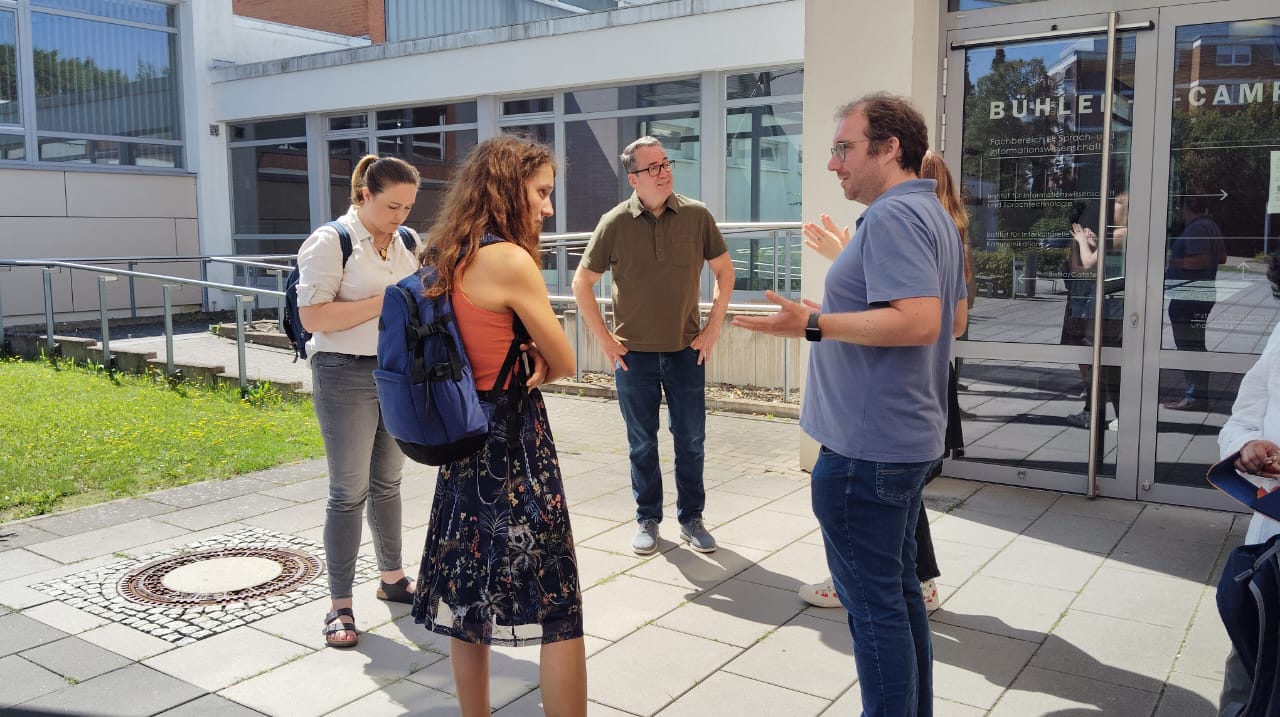
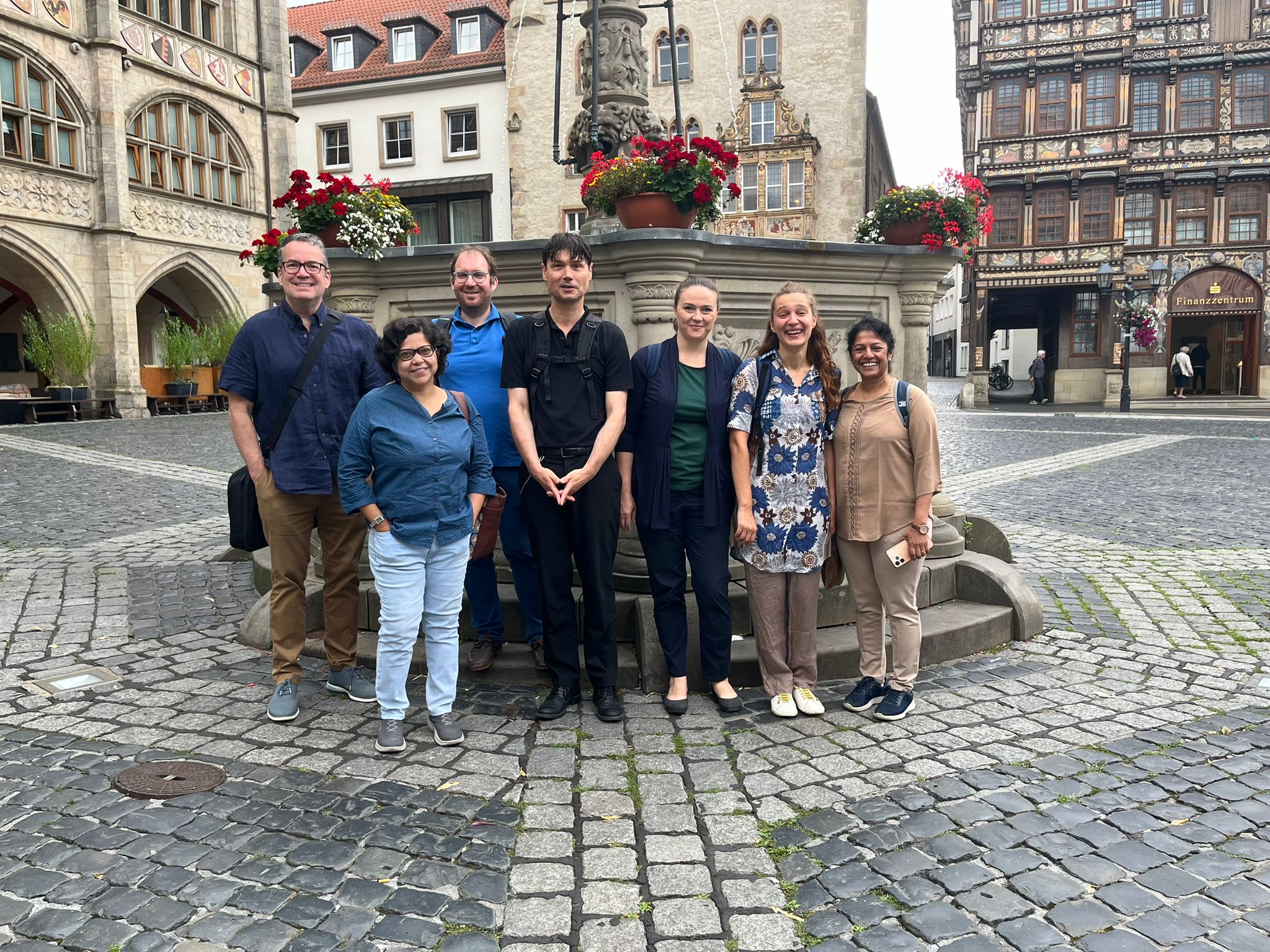
International Cooperation Workshop on Information Literacy and Metaliteracy at the University of Hildesheim

To learn more about this initiative, read the peer-reviewed article by members of the IPILM team:

Griesbaum, J., Dreisiebner, S., Mackey, T. P., Jacobson, T. E., Thadathil, T., Bhattacharya, S., & Adilović, E. (2023). Teaching Internationally, Learning Collaboratively: Intercultural Perspectives on Information Literacy and Metaliteracy (IPILM). Communications in Information Literacy, 17 (1), 260–278. https://doi.org/10.15760/comminfolit.2023.17.1.4

Metaliteracy and AI to be Featured in Keynote at the XI INTERNATIONAL SYMPOSIUM ON CURRICULUM AND EDUCATIONAL POLICIES 

This year’s XI INTERNATIONAL SYMPOSIUM ON CURRICULUM AND EDUCATIONAL POLICIES will feature a keynote presentation by Prof. Thomas Mackey from Empire State University who will address developing metaliteracy in a world of generative artificial intelligence. The call for proposals is now open for this global event that will take place on October 2 and 3, 2024 at the Universidad del Magdalena in Santa Marta, Columbia. The theme of this year’s conference will explore “Challenges and opportunities of artificial intelligence in education.” 

Keynote Welcome to the XI INTERNATIONAL SYMPOSIUM ON CURRICULUM AND EDUCATIONAL POLICIES 

The international symposium is presented by the The Universidad del Magdalena and the Vice-Rectorate for Research, through the Faculty of Education Sciences. According to the conference organizers:

Our main objective is to disseminate the results and advances of educational research and innovations in the fields of theory and curricular development, as well as in educational policies. We seek to foster collaboration between academic communities at national and international level and contribute to the ongoing debate and reflection in the constant search for high-quality education. 

Registration for the symposium is now open and call for proposals is available until 08/20/2024. Both in person and virtual participation options are available.

See you in Santa Marta!

Developing Metaliteracy to Teach and Learn with Generative Artificial Intelligence (GenAI)

This year’s Annual Meeting of the Alabama Association of College & Research Libraries (AACRL) featured a presentation by Tom Mackey entitled Developing Metaliteracy to Teach and Learn with Generative Artificial Intelligence (GenAI). The talk explores the challenges of GenAI including issues related to authoring, accuracy, and attribution and reviews two models for AI Literacy. In addition, the metaliteracy framework is discussed as a comprehensive approach to support teaching and learning with GenAI. As examples of metaliteracy in practice, student images that applied GenAI are introduced from the course Ethics of Digital Art and Design in the Digital Media Arts Program at Empire State University.

Here’s the complete slide deck for the presentation:

Metaliteracy and GenAI Talk to be Featured at Alabama Association of College & Research Libraries (AACRL) Annual Meeting!

Register today for the upcoming virtual event Developing Metaliteracy to Teach and Learn with Generative Artificial Intelligence (GenAI) presented by Tom Mackey on April 24 (1pm CDT and 2pm EDT) at the Alabama Association of College & Research Libraries (AACRL) Annual Meeting. Registration is free and open so sign up today for this engaging and interactive conversation about metaliteracy in a world of GenAI.

Here’s the registration link:

https://uab.zoom.us/meeting/register/tZ0vceqprjwuHtMnBZ5cSuqaHg9N-oJQN6sX

According to the event description:

As generative artificial intelligence (GenAI) transforms higher education, how do we prepare learners for this rapidly evolving technology? How do librarians, faculty, and learners analyze the ethical dimension of GenAI? What does it mean to be an active producer and participant in these dynamic information environments? How does metaliteracy prepare reflective metaliterate learners to address such revolutionary changes to our learning communities?

https://aacrl.org/news-events/annual-meetings/

Thanks to Jennifer Long, Vice-President of the Alabama Association of College & Research Libraries (AACRL) and the Executive Board of the Alabama ACRL Chapter for the invitation to present!

Divergent Lecture Series Features Conversation with 2024 Awardees!

The newest book by Tom Mackey and Trudi Jacobson Metaliteracy in a Connected World: Developing Learners as Producers was recognized as part of this year’s Divergent Lecture Series for the 2024 divergent honorees. A recording of the “Divergent Conversation” is now available via YouTube. According to Shelbie Witte, Ph.D., from The Initiative for Literacy in a Digital Age: “Our desire for this new type of lecture event is to provide an opportunity for us all to come together and discuss the current state of digital literacies and where the field can go from here.” Tom Mackey participated in this open-ended dialogue with the awardees and explored a wide range of issues from the impact of generative artificial intelligence on literacy frameworks to teaching literacies in the K-12 and higher education environments.

This year, Metaliteracy in a Connected World: Developing Learners as Producers published by ALA Neal-Schuman received the 2024 Divergent Publication Award for Excellence in Literacy in a Digital Age Research.

Metaliteracy, Mmetaliteracy, or Metagramotnost?

by Trudi E. Jacobson

There is an article about metaliteracy on Wikipedia. Actually, there are four. But let’s start at the beginning, with the one that was never officially published. While there are millions of articles on Wikipedia, there are also guidelines about what might appropriately be added to the site.

First, the subject must be notable. In other words, it must have gained sufficiently significant attention by the world at large and over time, and secondly, it must fall within Wikipedia’s scopeNotability involves these elements:

  • Significant coverage in reliable sources suggests it would merit its own Wikipedia article
  • This significant coverage directly addresses the topic, in some detail, so no original research is needed
  • Reliable sources “means that sources need editorial integrity to allow verifiable evaluation of notability”
  • Sources must be secondary sources, which might be either online or in print, in English or not
  • Being “independent of the subject” means that “works produced by the article’s subject or someone affiliated with it” cannot be the reliable secondary sources that justify the Wikipedia article.

While there is the perception that anyone can add anything to Wikipedia, this clearly is not the case. It can be an uphill struggle to get new articles approved. Two earlier blog posts document the struggle to get a metaliteracy article added to Wikipedia, one from December 2019 and the second from April 2021. There was also a celebratory post from May 2022 when the Metaliteracy Wikipedia article was accepted. Taking a look at the page that documents the history of edits to the article, there have been a modest number of changes since its publication. It took a while, but the resulting metaliteracy article is excellent.

Let’s return to the title of this blog post. The exciting news is that there are now translations of the metaliteracy article appearing on three additional language versions of Wikipedia: Spanish, Igbo (native to Nigeria), and Čeština (native to the Czech Republic). The revision history page for each of these indicates that the English version was translated as is, rather than new metaliteracy articles being created from scratch. However, a small number of edits have since been made in each article--they have taken on lives of their own.

Wikipedia has a resource page for translating English-language articles into other languages. There are automated tools to help create these translations. But machine translations can’t be relied on without some additional work. As mentioned on the resource page, “Mere machine translations, without substantial modification are highly undesirable. For that reason, you must have a reasonable level of fluency so that you can make appropriate changes to the tool’s automated output.” We would love to see translations appear in additional Wikipedia language versions to make information about metaliteracy available to all who are interested. Would you be able to help, if you are a speaker of languages beyond English? The metaliteracy learning goals and objectives are currently available in 15 different languages. It would be great if the number of metaliteracy Wikipedia articles reached that level!

The Wikipedia logo is from Wikimedia Commons: https://commons.wikimedia.org/wiki/File:Wikipedia-logo-v2-en.svg.

Why Metaliteracy is Critical for People Over 55

Recently, Caitlin Manner, an author for the publication 55+ Life, interviewed Trudi Jacobson for her article, “Learning Curve,” on the value of MOOCs for those who fit the magazine’s age demographic. (The article is in the Fall 2023 issue, pages 38-39). During that interview, Trudi introduced Caitlin to the concept of metaliteracy. Caitlin included information on the Coursera MOOC Metaliteracy: Empowering Yourself in a Connected World in the “Learning Curve” article, but then delved more deeply into the meaning and value of metaliteracy. She went on to write an article on it for the 55+ Life website entitled The Importance of Metaliteracy for People 55+.

As she noted in the essay:

It is increasingly critical for everyone to assess their own metaliteracy and continuously work to improve it. This will not only prevent you from falling prey to “fake news,” but it can impact your hireability, your mindset, and your ability to navigate an increasingly online society. 

Caitlin Manner. (2023, September 25). The Importance of Metaliteracy for People 55+.55+ Life, https://55pluslifemag.com/the-importance-of-metaliteracy-for-people-55/

Caitlin wrote in an email to Trudi, “[O]ur conversation has made me tell just about everyone I know about the importance of metaliteracy…I’m fascinated by it.” We are delighted that this is the case, and that she wrote such an accessible article about metaliteracy for the magazine’s online readers. She highlights the evaluative, reflective, and societal benefits of metaliteracy, and notes the important factor that we are, each of us, creators of information. The article posits three main reasons that metaliteracy is critical for those 55 years old and older:

  • Protecting yourself and others from inaccurate information
  • Enhancing your employability in the gig economy
  • Providing a means for social justice

The article ends, “If you’re at all interested in maintaining your elasticity of thought and staying open-minded, metaliteracy is one way to do so.”

We would love to hear your feedback about the article and this application of the metaliteracy model. Feel free to reach out to us with your feedback.

Prestige Lecture to Feature Metaliteracy and Multimodality

Registration is now open for a new Prestige Lecture by Tom Mackey and Trudi Jacobson entitled Combining Metaliteracy and Multimodality to Develop Metaliterate Producers. This online event scheduled for August 17, 2023 at 9am EDT is part of their honorary appointments as Extraordinary Professors at Research Unit Self-Directed Learning, Faculty of Education, North-West University, South Africa. This Prestige Lecture is based on a chapter from their latest book Metaliteracy in a Connected World: Developing Learners as Producers published by ALA Neal-Schuman. In early September, Trudi and Tom will present a follow-up workshop entitled Adapting Metaliteracy OER to Multimodal Teaching and Learning Practices (additional details about the workshop to follow in a later post).

To learn more about the upcoming Prestige Lecture and to register, review the poster for the event:

From the Literature No. 2

This second From the Literature post brings to your attention a 2022 article by Alison Hicks and Annemaree Lloyd, “Reaching into the basket of doom: Learning outcomes, discourse and information literacy,” published in the Journal of Librarianship and Information Science.

Hicks’ and Lloyd’s article, the third in a series, “employs the theory of practice architectures and a discourse analytical approach to examine the learning goals of five recent English-language models of information literacy” (p.1). The five models, all developed since 2010, include two from the UK: ANCIL and SCONUL’s Seven Pillars, and three from the US: AACU, the ACRL Framework, and Metaliteracy. Table 1 provides an illuminating overview of the origins and characteristics of each of the models, which is then explored in more detail in the literature review section. The authors compare these new models from the “second wave of constructivist-focussed information literacy models (Hicks and Lloyd, 2016)” with first wave models, including the ACRL Standards. [Hicks A and Lloyd A (2016) It takes a community to build a framework: Information literacy within intercultural settings. Journal of Information Science 42(3): 334–343.]

The authors state that

“Since their creation, these models have been widely implemented within North American and UK systems of higher education and have been welcomed by teaching librarians…and teaching faculty, particularly in the area of writing and composition studies…. However, somewhat surprisingly, given the role that models play within teaching librarianship, there have been few attempts to examine and critique these guidelines” (p.4)

(Please see their article for the authors they cite in connection with these statements.) Grounding their work in the theory of practice architecture, they use discourse analysis to examine the learning goals and outcomes of the five models.

This analysis suggests that there are 12 common dimensions across the five models, and the authors provide details of these dimensions in Appendix 1. Hicks and Lloyd assert that the 12 dimensions can be grouped into two categories, Mappying and Applying (p. 6).

The Mapping category encompasses learning outcomes that introduce the learner to accepted ways of knowing or what is valued by and how things work within higher education. Comprised of seven dimensions, including Access, Comply, Disseminate, Evaluate, Identify, Manage and Search, this category inculcates induction into the ways in which information is understood, interpreted and organised within new or specific academic cultures. One of the most prominent emphases within this category is on the mapping of information systems that will contribute to academic success, whether this is the information tools or the information sources that will be useful for academic study. (p. 6)

They continue,

The Applying category encompasses learning outcomes that encourage the learner to implement or integrate ideas into their own practice, including to their own questions, to themselves or to their experience. Forming a more personally focussed approach to learning, this category comprises five dimensions including Analyse, Determine need, Maintain, Reflect and Transfer. (p. 7)

The discussion section not only examines these findings, but also touches upon those aspects of information literacy from the first wave that were not found in the analysis of the five models.

The implications from the authors’ research have a potential major impact on information literacy in higher education:

Beyond helping to demonstrate areas of practice that have been overlooked, this research provides insight into how the writing of learning outcomes could be improved, including by making the language more specific. This research also calls for the broadening of research methods that are used to create institutional models and guidelines…. (p. 9)

As with our first look into the literature, we encourage you to read this critically important article, as this brief overview can not hope to capture the full impact of the authors’ work. It will also afford you the opportunity to understand the article’s title.

Citation:

Hicks, Alison, and Annemaree Lloyd. 2022. “Reaching Into the Basket of Doom: Learning Outcomes, Discourse and Information Literacy.” Journal of Librarianship and Information Science 0(0). 10.1177/09610006211067216

Metaliteracy Presentation at OLC Accelerate Explores Online Courses in the Digital Media Arts

How does metaliteracy support creative and collaborative learning in fully online courses? This year’s Online Learning Consortium’s Accelerate 2022 conference featured a presentation by Tom Mackey about applying metaliteracy in Digital Media Arts courses at SUNY Empire State College. The presentation, entitled Effective Strategies in the Digital Media Arts to Inspire Creativity and Collaboration examines how metaliteracy influenced the development of several online courses that envision learners as knowledge producers. According to the abstract for this presentation:

Online courses in the Digital Media Arts offer effective models for designing innovative learning activities in a wide range of disciplinary settings. Several courses in the Digital Media Arts at SUNY Empire State College, such as Digital Storytelling, Ethics of Digital Art and Design, and Information Design have been developed to include open educational resources (OER) to replace textbooks. In addition, openly-available digital resources have been curated in these courses to support individual and collaborative learning activities for producing original and remixed information. 

As part of this presentation, the learning outcomes for each course are shared along with specific pedagogical strategies that have proven to be effective in each class. These techniques are transferrable to a wide range of modalities and disciplinary settings beyond those described. The presentation includes several digital media projects produced by students as well as feedback from learners about the experience.

If you have questions about these fully online courses taught by Tom Mackey at SUNY Empire State College, feel free to reach out any time.