Call for Chapters: AI and Metaliteracy Book Project!

We are excited to invite contributions to our forthcoming book, “AI and Metaliteracy: Empowering Learners for the Generative Revolution” edited by Dr. Nicola Marae Allain and Dr. Thomas P. Mackey. This new volume will be published in fall 2025 for the Innovations in Information Literacy series edited by Trudi E. Jacobson for Bloomsbury Publishing (Rowman & Littlefield).
This pioneering book will feature theories and case studies about empowering learners with metaliteracy as reflective producers, informed writers, and active participants for the technological, pedagogical, and cultural revolution inspired by generative AI (Heaven, 2022, Mackey & Jacobson, 2011, 2022).

We are interested in groundbreaking approaches to metaliteracy education that encourage learners to engage with innovative AI tools such as ChatGPT and DALL-E, among many others, for creating artistic, literary, scientific, and scholarly forms of generative text, image, and video. Each chapter will focus on developing ethical metaliterate learners with autonomy and agency who are capable of producing individual and collaborative knowledge with AI (Mackey & Jacobson, 2011, 2022). We encourage imaginative chapters about the effective use of AI through the lens of metaliteracy and related literacy models, such as the ACRL Framework for Information Literacy for Higher Education and the ACRL Visual Literacy Framework.

We welcome proposals from educators and practitioners, including librarians, teachers and professors worldwide, particularly those offering case studies with solid theoretical foundations and transferrable pedagogical strategies.  We are seeking authors from wide-ranging disciplines, such as the Arts and Humanities, Digital Media Arts, Social Sciences, Composition Studies, Library and Information Science, Nursing, Business, and STEM. Chapter themes will also address the relevance of AI and metaliteracy to adult learning and workforce development and the importance of designing inclusive AI-driven learning experiences to advance digital equity, and accessibility for students with disabilities. The book will present methods for assessing the effectiveness of teaching metaliteracy competencies and highlight collaborative, interdisciplinary projects. We aim to provide international perspectives on the challenges and opportunities of empowering learners with generative AI and metaliteracy, exploring innovative theories and case studies that provide future directions for AI-driven learning environments.

Submission Guidelines

Proposals should include the following information:

  1. Title: The concise and descriptive title for your proposed chapter.
  2. Abstract: A summary (300-500 words) outlining the main objectives, theoretical foundation, metaliteracy components, generative AI tools, assessment methodology, and expected contributions of your chapter.
  3. Author Information: Names, affiliations, and contact details of all authors.
  4. Biographical Note: A brief biography (150-200 words) of each author highlighting relevant expertise and experience.

Please submit your proposals by December 15, 2024, to Tom.Mackey@sunyempire.edu. Selected authors will be notified by February 1, 2024, and full chapters will be due by May 1, 2025. Final chapters should be between 20 and 25 pages (double-spaced) and follow the formatting guidelines that will be provided upon acceptance.

Important Dates

Proposal Submission Deadline: December 15, 2024

Notification of Acceptance: February 1, 2025

Full Chapter Submission Deadline: May 1, 2025

Expected Publication Date: November 1, 2025

We look forward to receiving your innovative and insightful contributions that will help shape the future of metaliteracy for the generative AI revolution. For any inquiries or further information, please contact Nicola Marae Allain at Nicola.Allain@sunyempire.edu or Tom Mackey at Tom.Mackey@sunyempire.edu.

Join us in this groundbreaking project to advance education and empower learners with metaliteracy worldwide for the generative AI revolution!

Editors

Nicola Marae Allain, Ph.D. is the Dean of the School of Arts and Humanities at SUNY Empire State University, where she has held faculty (tenured) and administrative roles since 2002. Her research and leadership have focused on digital learning, immersive and virtual environments, and emerging technologies. She holds a PhD in Media and Communication from the European Graduate School, a MA in Dramatic Art, Dance and Music from the University of California, and a BA in English from the University of Ottawa. Allain’s interdisciplinary background in arts and humanities complements expertise in higher education technologies and systems, digital media arts, visual pedagogy, and digital communication. Throughout her career, Allain has demonstrated a commitment to developing an aptitude for lifelong learning among students and faculty, while supporting the agency and autonomy of learners within active and authentic learning environments. Her leadership in faculty development and curriculum design has modeled innovative strategies that scale across disciplines, and were widely adopted by SUNY Empire and institutions in New Zealand. Her decade-long role on the SUNY Innovative Instruction Research Council led to collaborations with the SUNY Faculty and Teaching with Technology (FACT2) Committee AI Task Group. Allain co-authored the SUNY FACT² Guide “Optimizing AI in Higher Education” (May 2024), for which she contributed sections on the social impact and creative applications of AI. She has previously collaborated on metaliteracy initiatives, courses and publications. Her recent articles focus on curriculum innovations in digital humanities, mindfulness, and leadership in higher education settings. Fluent in several languages, Allain is also a translator of French poetry and Classical Chinese literary texts.

Thomas P. Mackey, Ph.D. is Professor of Arts and Media and Program Coordinator for the BA and BS programs in Digital Media Arts at Empire State University. He is Academic Coordinator for online courses in Arts and Media. Dr. Mackey is the recipient of the Chancellor’s Award for Scholarship and Creative Activities (2022) and the Dr. Susan H Turben Chair in Mentoring (2021–2022). He has an honorary appointment as Extraordinary Professor, Research Unit Self- Directed Learning, Faculty of Education, North-West University, South Africa. Dr. Mackey originated the metaliteracy framework with Prof. Trudi E. Jacobson to prepare learners as individual and collaborative producers of new knowledge. He has published four books with Prof. Jacobson on metaliteracy, including the first co-authored manuscript on this topic entitled Metaliteracy: Reinventing Information Literacy as a Metaliteracy (2014). They co-edited two volumes Metaliteracy in Practice (2016) and Metaliterate Learning for the Post-Truth World (2019). Their most recent book Metaliteracy in a Connected World: Developing Learners as Producers (2022) is the recipient of the 2024 Divergent Publication Award for Excellence in Literacy in a Digital Age Research. Dr. Mackey’s latest book is a co-edited volume with Dr. Sheila Marie Aird entitled Teaching Digital Storytelling: Inspiring Voices through Online Narratives (2024). He has presented both nationally and internationally about metaliteracy and generative AI and has designed learning assignments in several courses to engage learners in the generative AI revolution.

References

Association of College & Research Libraries. (2022). Visual literacy competency standards for higher education: Framework companion document. Retrieved July 20, 2024, from https://www.ala.org/sites/default/files/acrl/content/standards/Framework_Companion_Visual_Literacy.pdf

ACRL Association of College and Research Libraries. (2015). Framework for information literacy for higher education. American Library Association. Retrieved July 20, 2024, from http://www.ala.org/acrl/standards/ilframework

Heaven, W. D. (2022, December 16). Generative AI is changing everything. But what’s left when the hype is gone? MIT Technology Review. Retrieved July 20, 2024, from https://www.technologyreview.com/2022/12/16/1065005/generative-ai-revolution-art/

Mackey, T. P., & Jacobson, T. E. (2011). Reframing information literacy as a metaliteracy. College & Research Libraries, 72(1), 62–78. https://doi.org/10.5860/crl-76r1.

Mackey, T. P., & Jacobson, T. E. (2022). Metaliteracy in a Connected World: Developing Learners as Producers. ALA Neal-Schuman.

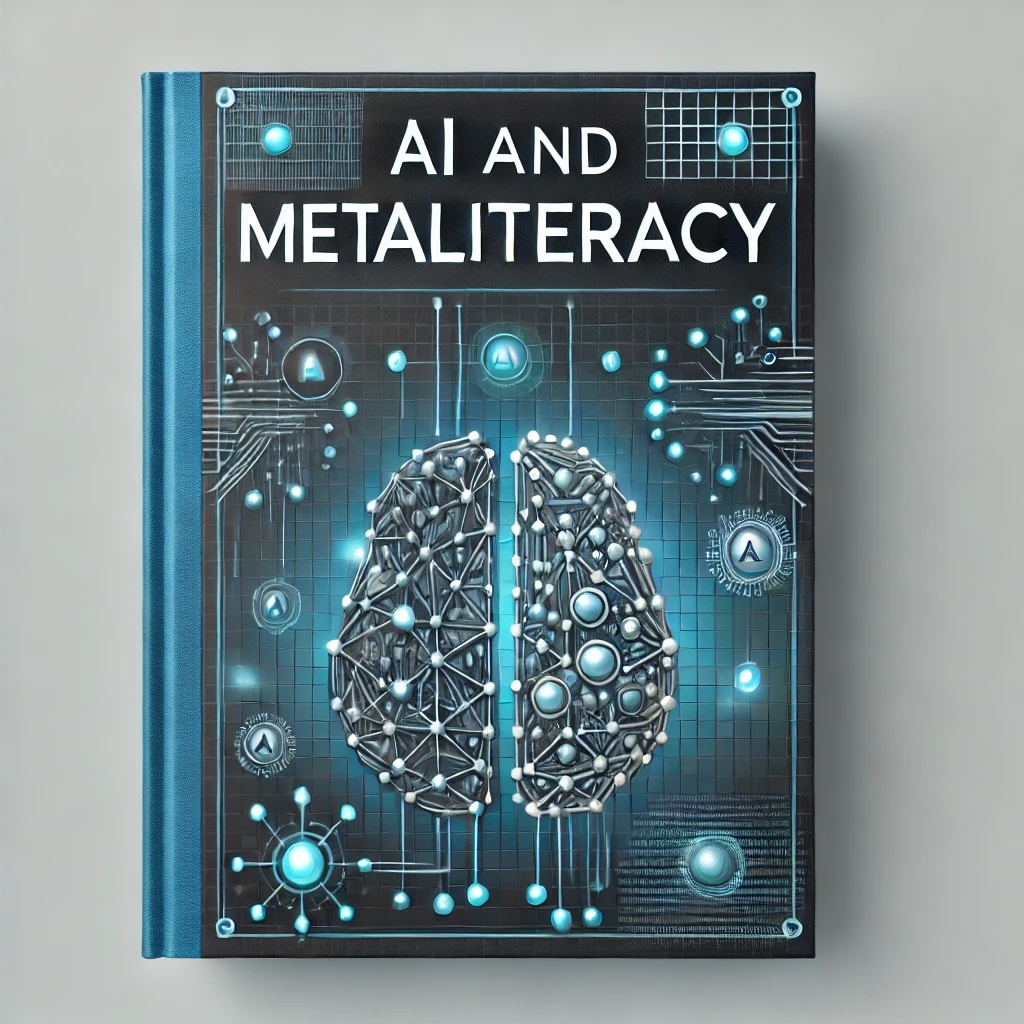
Book image created in DALL-E using the prompt: “Visualize a dynamic book cover for AI and Metaliteracy: Empowering Learners for the Generative Revolution” (October 28, 2024).

Feel free to share this Call for Chapters!

Exploring Metaliteracy and AI at ICIL 2024 Africa Conference

The 3rd international Conference on Information Literacy (ICIL – Africa 2024) took place at Bibliotheca Alexandrina in Egypt. It featured a virtual presentation by Prof. Tom Mackey from Empire State University. The topic of Tom’s talk was Artificial Intelligence and the Future of Literacy. This presentation explored the revolutionary changes in generative artificial intelligence (AI). It highlighted the groundbreaking potential of information literacy, AI literacy, and especially metaliteracy to transform learning. This talk explored the core theme of the conference “Information Literacy Revolution: Get Ready.” It also looked ahead to the future of literacy in a world of generative AI. Metaliteracy serves as a comprehensive pedagogical framework that prepares meditative learners as individual and collaborative producers of digital information. It also prepares them as effective communicators and participants in rapidly-evolving information environments.

Tom’s presentation examined several key themes:

  • AI offers considerable potential for supporting artistic creativity and learning
  • AI challenges our understanding of originality and the original production of information
  • The problem of mis- and dis-information is exacerbated through AI
  • Metaliteracy offers a holistic model for effectively engaging learners with AI technologies
  • The metaliteracy goals and learning objectives reinforce the application of metaliteracy in practice

Metaliteracy emerged from information literacy and developed into a comprehensive model with several core components. It aligns with emerging AI Literacy models while focusing on learning in wide-ranging information environments. This approach provides a holistic and open framework to prepare learners as ethical producers of generative content.

We want to know how you engage with metaliteracy in your teaching and learning with AI. To share your techniques for applying AI and metaliteracy, please contact Tom Mackey or Trudi Jacobson directly. We welcome your ideas about a guest blog post!

Empowering Learners with Metaliteracy in AI Education

Prof. Thomas Mackey from Empire State University presented the keynote “Developing Metaliteracy to Empower Learners for the Generative AI Revolution” at the XI INTERNATIONAL SYMPOSIUM ON CURRICULUM AND EDUCATIONAL POLICIES in Santa Marta, Colombia. The Universidad del Magdalena hosts this annual international conference and this year’s event explored the central theme “Challenges and opportunities of artificial intelligence in education.” The symposium is sponsored by the Vice-Rectorate for Research and supported through the Faculty of Education Sciences at The Universidad del Magdalena. Thanks to Matilde Bolaño-García for the invitation to keynote at this global event!

Here’s the slideshow of the Metaliteracy and AI Keynote:

Tom’s keynote offered several takeaways:

  • The development of AI is both a revolution and evolution
  • Several international organizations have defined ethical frameworks for engaging with AI
  • Generative AI contributes to the proliferation of mis- and disinformation
  • Metaliteracy supports the design of effective learning activities with generative AI
  • Metacognitive reflection is key to the learning process when working with AI
  • Reflecting on their learner roles, especially the producer role, reinforces active engagement with AI
  • The analysis of AI ethics is reinforced through metaliteracy’s civic-minded characteristic
  • Digital storytelling and the inventive production of AI-generated content support learners in discovering their authentic voice

This international conference offered a chance to engage with educators and learners from around the world. It emphasized the value of exploring generative AI through the lens of metaliteracy. The keynote emphasized the core components of metaliteracy including the learning domains, roles, and characteristics. It focused on how these elements work together to support learners in developing a metaliteracy mindset. This mindset prepares them for wide ranging information environments that are increasingly mediated by AI.

If you are interested in learning more about metaliteracy, please explore the many open resources via this blog as a starting point. Additionally, we want to know how you engage with metaliteracy in your teaching and learning with AI. If you have an idea for a guest blog post, feel free to reach out to Tom Mackey or Trudi Jacobson directly.

-Tom

Metaliteracy and Me

During the Coursera MOOC, Metaliteracy: Empowering Yourself in a Connected World I realized that I have been a metaliterate citizen for a very long time. All the knowledge I’ve gained through this MOOC makes sense not only in the digital world but also within collaborative communities, where sharing, creating, and evaluating information are essential for collective growth and learning.

Circular figure of the Metaliteracy Model

References

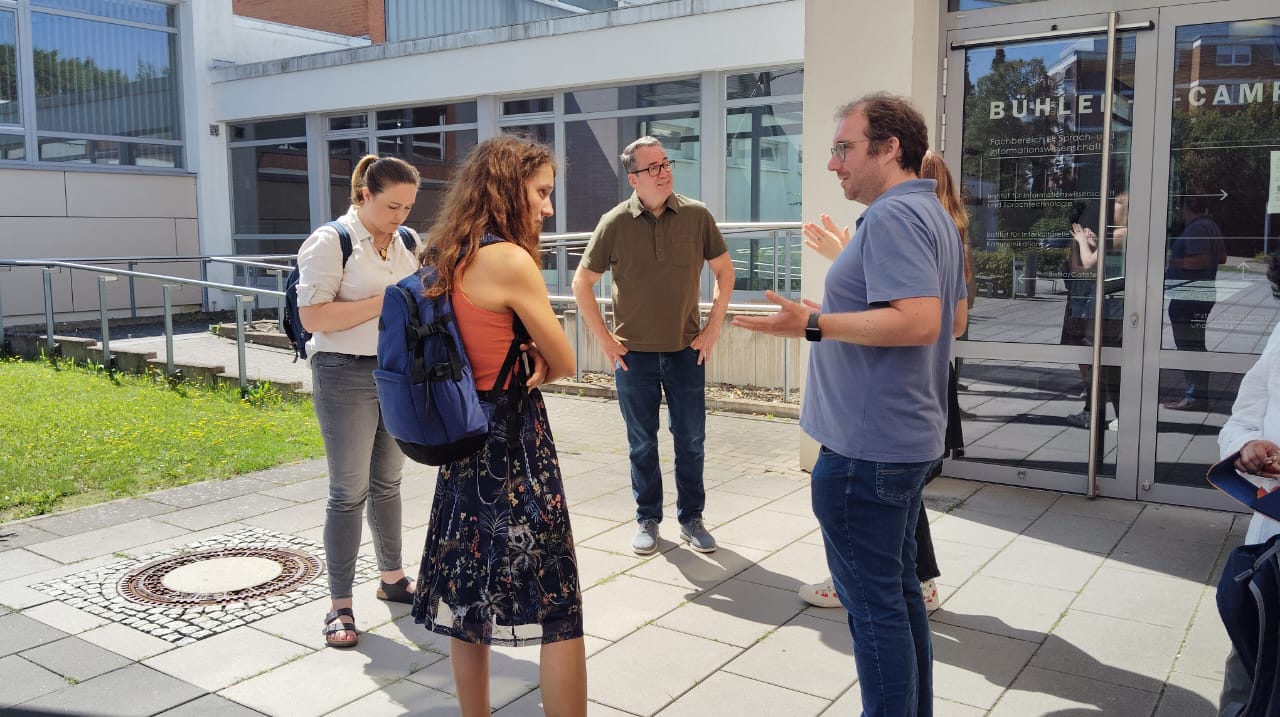
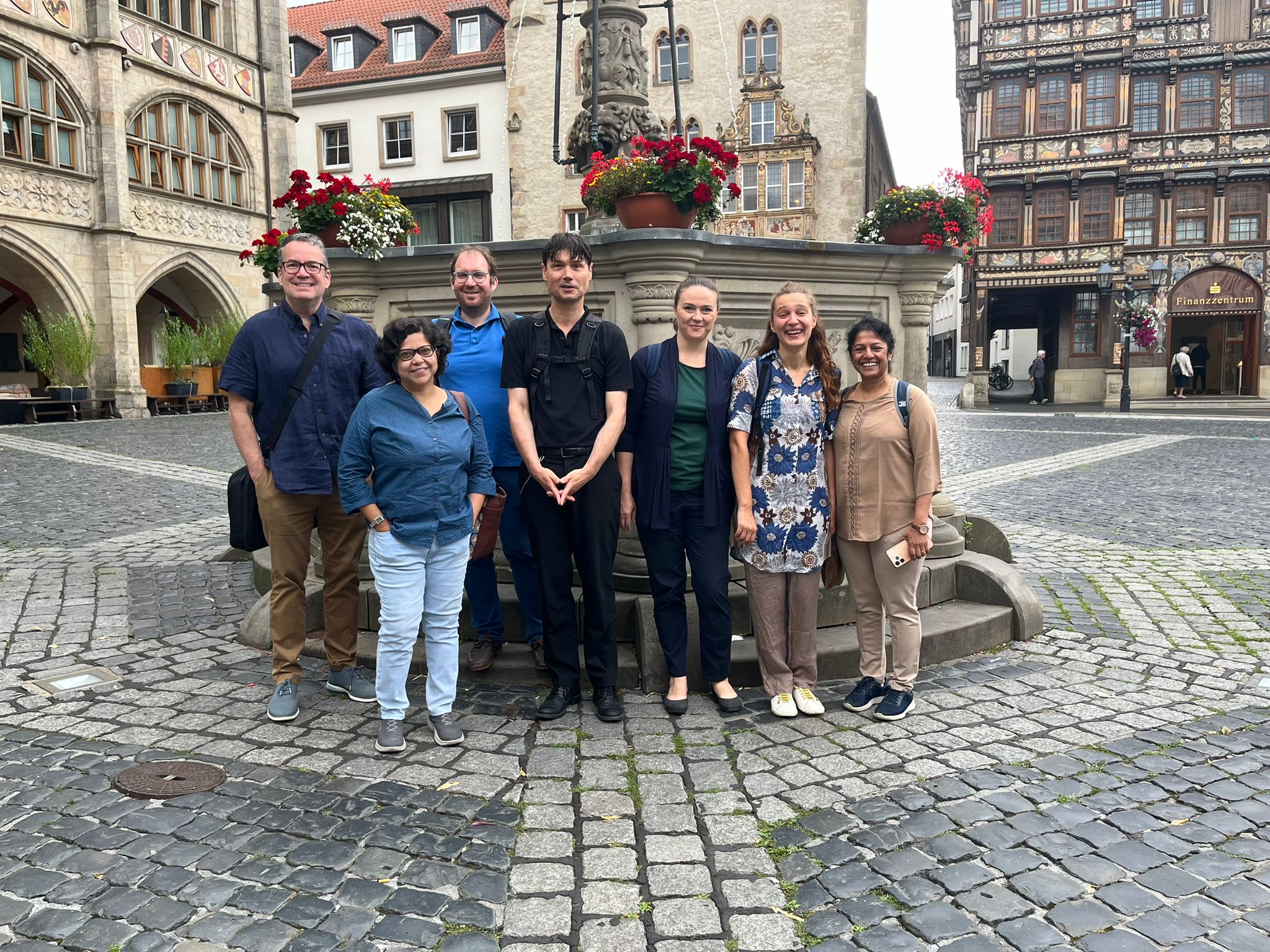
International Cooperation Workshop on Information Literacy and Metaliteracy at the University of Hildesheim

To learn more about this initiative, read the peer-reviewed article by members of the IPILM team:

Griesbaum, J., Dreisiebner, S., Mackey, T. P., Jacobson, T. E., Thadathil, T., Bhattacharya, S., & Adilović, E. (2023). Teaching Internationally, Learning Collaboratively: Intercultural Perspectives on Information Literacy and Metaliteracy (IPILM). Communications in Information Literacy, 17 (1), 260–278. https://doi.org/10.15760/comminfolit.2023.17.1.4

Metaliteracy and AI to be Featured in Keynote at the XI INTERNATIONAL SYMPOSIUM ON CURRICULUM AND EDUCATIONAL POLICIES 

This year’s XI INTERNATIONAL SYMPOSIUM ON CURRICULUM AND EDUCATIONAL POLICIES will feature a keynote presentation by Prof. Thomas Mackey from Empire State University who will address developing metaliteracy in a world of generative artificial intelligence. The call for proposals is now open for this global event that will take place on October 2 and 3, 2024 at the Universidad del Magdalena in Santa Marta, Columbia. The theme of this year’s conference will explore “Challenges and opportunities of artificial intelligence in education.” 

Keynote Welcome to the XI INTERNATIONAL SYMPOSIUM ON CURRICULUM AND EDUCATIONAL POLICIES 

The international symposium is presented by the The Universidad del Magdalena and the Vice-Rectorate for Research, through the Faculty of Education Sciences. According to the conference organizers:

Our main objective is to disseminate the results and advances of educational research and innovations in the fields of theory and curricular development, as well as in educational policies. We seek to foster collaboration between academic communities at national and international level and contribute to the ongoing debate and reflection in the constant search for high-quality education. 

Registration for the symposium is now open and call for proposals is available until 08/20/2024. Both in person and virtual participation options are available.

See you in Santa Marta!

Developing Metaliteracy to Teach and Learn with Generative Artificial Intelligence (GenAI)

This year’s Annual Meeting of the Alabama Association of College & Research Libraries (AACRL) featured a presentation by Tom Mackey entitled Developing Metaliteracy to Teach and Learn with Generative Artificial Intelligence (GenAI). The talk explores the challenges of GenAI including issues related to authoring, accuracy, and attribution and reviews two models for AI Literacy. In addition, the metaliteracy framework is discussed as a comprehensive approach to support teaching and learning with GenAI. As examples of metaliteracy in practice, student images that applied GenAI are introduced from the course Ethics of Digital Art and Design in the Digital Media Arts Program at Empire State University.

Here’s the complete slide deck for the presentation:

Metaliteracy and GenAI Talk to be Featured at Alabama Association of College & Research Libraries (AACRL) Annual Meeting!

Register today for the upcoming virtual event Developing Metaliteracy to Teach and Learn with Generative Artificial Intelligence (GenAI) presented by Tom Mackey on April 24 (1pm CDT and 2pm EDT) at the Alabama Association of College & Research Libraries (AACRL) Annual Meeting. Registration is free and open so sign up today for this engaging and interactive conversation about metaliteracy in a world of GenAI.

Here’s the registration link:

https://uab.zoom.us/meeting/register/tZ0vceqprjwuHtMnBZ5cSuqaHg9N-oJQN6sX

According to the event description:

As generative artificial intelligence (GenAI) transforms higher education, how do we prepare learners for this rapidly evolving technology? How do librarians, faculty, and learners analyze the ethical dimension of GenAI? What does it mean to be an active producer and participant in these dynamic information environments? How does metaliteracy prepare reflective metaliterate learners to address such revolutionary changes to our learning communities?

https://aacrl.org/news-events/annual-meetings/

Thanks to Jennifer Long, Vice-President of the Alabama Association of College & Research Libraries (AACRL) and the Executive Board of the Alabama ACRL Chapter for the invitation to present!

Divergent Lecture Series Features Conversation with 2024 Awardees!

The newest book by Tom Mackey and Trudi Jacobson Metaliteracy in a Connected World: Developing Learners as Producers was recognized as part of this year’s Divergent Lecture Series for the 2024 divergent honorees. A recording of the “Divergent Conversation” is now available via YouTube. According to Shelbie Witte, Ph.D., from The Initiative for Literacy in a Digital Age: “Our desire for this new type of lecture event is to provide an opportunity for us all to come together and discuss the current state of digital literacies and where the field can go from here.” Tom Mackey participated in this open-ended dialogue with the awardees and explored a wide range of issues from the impact of generative artificial intelligence on literacy frameworks to teaching literacies in the K-12 and higher education environments.

This year, Metaliteracy in a Connected World: Developing Learners as Producers published by ALA Neal-Schuman received the 2024 Divergent Publication Award for Excellence in Literacy in a Digital Age Research.

Digital Storytelling and Metaliteracy Explored in New Book!

The new book edited by Dr. Sheila Marie Aird and Dr. Thomas P. Mackey Teaching Digital Storytelling: Inspiring Voices Through Online Narratives has been published by Rowman & Littlefield. The editors worked with an exceptional team of authors from SUNY schools, Temple University, and universities in South Africa to share their narratives about teaching with digital storytelling through the lens of information literacy and metaliteracy. The new book features a Foreword written by futurist and digital storytelling pioneer Dr. Bryan Alexander. This is the newest book to be included in Trudi Jacobson’s Innovations in Information Literacy Series at Rowman & Littlefield.

This book project emerged from the collaborative teaching by the Drs. Aird and Mackey to design a fully online course in Digital Storytelling to unite Empire State University students studying in Prague, Czech Republic and the United States. This course fully integrates the metaliteracy framework and features learning objects available at the metaliteracy.org blog. The editors wrote the framing chapter about this case study Metaliteracy and Global Digital Storytelling: Building Shared Learning Communities.

As noted in the book overview and description:

This book presents the stories of educators who through digital storytelling inspire students from diverse communities to construct their empowering digital narratives. Educators from a wide range of disciplines present innovative case studies of teaching digital storytelling through the lens of personal narratives, metaliteracy, and information literacy. They describe how teaching students to tell their personal digital stories prepares them as learners who are reflective while playing active learner roles such as producer, publisher, and collaborator. 

https://rowman.com/ISBN/9781538172919/Teaching-Digital-Storytelling-Inspiring-Voices-through-Online-Narratives

We invite you to explore this new book and tell us about your own digital storytelling adventures!

-Sheila and Tom