Finalized 2025 Metaliteracy Goals and Objectives: Empowering Learners for Generative AI

We are excited to announce the final version of the 2025 Metaliteracy Goals and Learning Objectives. After an open comment period and extensive discussions, we have carefully reviewed the insightful feedback from the community and incorporated valuable suggestions into this finalized version. This update builds upon the 2018 goals and objectives while addressing the evolving nature of metaliteracy, particularly in response to revolutionary developments in artificial intelligence (AI) and the rapidly changing information environment.

AI-generated image to illustrate the idea of AI and Metaliteracy 2025.

Discussing the Role of AI

As we worked through these revisions, we had several intensive meetings in December and January to discuss not only specific updates but also how we conceptualize this version. One key topic of discussion was the role of AI. Although AI is specifically mentioned in the document, our focus extends beyond it to emphasize a broader understanding of metaliteracy. Our overarching goal is to acknowledge AI’s significant influence while ensuring that metaliteracy fosters a comprehensive and adaptable approach to learning in social information environments. Many of the revised objectives inherently address the need for metacognitive reflection and the ethical production of information, which are essential when engaging with AI-driven technologies.

Streamlining the Objectives

Through our collaborative efforts, we have refined this document to make it more actionable and adaptable for today’s educators and learners. This latest version of the Metaliteracy Goals and Learning Objectives streamlines the previous iteration by reducing the number of objectives from 34 to 20, providing greater clarity and focus. It further enhances self-awareness, critical thinking, and adaptability, ensuring that learners are prepared to engage with the complex information environments of today and the future. We made difficult decisions about which objectives to retain, eliminate, or merge, ultimately arriving at a more concise and focused approach. This process reinforced the “meta” perspective that distinguishes metaliteracy from traditional information literacy, aligning the framework with its continued evolution. This latest version underscores the essential ways in which metaliteracy supports continuous reflection, ethical participation in digital environments, and the responsible creation of knowledge.

How We Used AI

It is worth noting that we applied generative AI as a writing assistant to enhance clarity, refine the structure of ideas, and assess how certain objectives align with learning domains which provided valuable insights. Rather than allowing AI to dictate content, we used it as a tool for reflection and refinement, ensuring that our revisions remained true to the principles of metaliteracy that we have been developing for several years. This process serves as a model for how learners can engage with generative AI in a thoughtful, ethical, and collaborative manner—leveraging its strengths while maintaining critical oversight and intellectual ownership of ideas.

Call for Translations

As a next step, we welcome translation assistance to make the 2025 Metaliteracy Goals and Learning Objectives accessible globally. Translations will support a wider group of educators, learners, and researchers to integrate metaliteracy into their work, fostering international collaboration and engagement. If you can help, please leave a comment or contact us directly. Your support in broadening access to metaliteracy is invaluable. We invite you to review the final version of the 2025 Metaliteracy Goals and Learning Objectives and share your thoughts in the comments.

Thanks to the Metaliteracy Community

We want to extend our sincere gratitude to everyone who contributed during the open comment period. Your feedback was instrumental in shaping this final version, and we truly appreciate the thoughtful engagement from the metaliteracy community. Your insights helped refine the goals and objectives, making certain that they are relevant and impactful in educational and professional settings. Thank you for being part of this important process and for your ongoing support of metaliteracy. We look forward to continuing this important conversation with you. We invite you to review the final version of the 2025 Metaliteracy Goals and Learning Objectives and share your thoughts in the comments.

Now that the final version is available, we encourage you to explore the document and consider how these revised goals and objectives can be applied in your own teaching and learning. How do they support your approach to integrating metaliteracy and AI in education? What kinds of assignments or learning activities could be developed based on these insights? We invite you to share how you plan to apply these ideas in your work, teaching, or learning journey!

We look forward to hearing from you and keeping the dialogue going!

-Tom and Trudi

Revised Metaliteracy Goals and Learning Objectives for 2025: Share Your Feedback!

-Trudi Jacobson and Tom Mackey

Metaliteracy, Mmetaliteracy, or Metagramotnost?

by Trudi E. Jacobson

There is an article about metaliteracy on Wikipedia. Actually, there are four. But let’s start at the beginning, with the one that was never officially published. While there are millions of articles on Wikipedia, there are also guidelines about what might appropriately be added to the site.

First, the subject must be notable. In other words, it must have gained sufficiently significant attention by the world at large and over time, and secondly, it must fall within Wikipedia’s scopeNotability involves these elements:

  • Significant coverage in reliable sources suggests it would merit its own Wikipedia article
  • This significant coverage directly addresses the topic, in some detail, so no original research is needed
  • Reliable sources “means that sources need editorial integrity to allow verifiable evaluation of notability”
  • Sources must be secondary sources, which might be either online or in print, in English or not
  • Being “independent of the subject” means that “works produced by the article’s subject or someone affiliated with it” cannot be the reliable secondary sources that justify the Wikipedia article.

While there is the perception that anyone can add anything to Wikipedia, this clearly is not the case. It can be an uphill struggle to get new articles approved. Two earlier blog posts document the struggle to get a metaliteracy article added to Wikipedia, one from December 2019 and the second from April 2021. There was also a celebratory post from May 2022 when the Metaliteracy Wikipedia article was accepted. Taking a look at the page that documents the history of edits to the article, there have been a modest number of changes since its publication. It took a while, but the resulting metaliteracy article is excellent.

Let’s return to the title of this blog post. The exciting news is that there are now translations of the metaliteracy article appearing on three additional language versions of Wikipedia: Spanish, Igbo (native to Nigeria), and Čeština (native to the Czech Republic). The revision history page for each of these indicates that the English version was translated as is, rather than new metaliteracy articles being created from scratch. However, a small number of edits have since been made in each article--they have taken on lives of their own.

Wikipedia has a resource page for translating English-language articles into other languages. There are automated tools to help create these translations. But machine translations can’t be relied on without some additional work. As mentioned on the resource page, “Mere machine translations, without substantial modification are highly undesirable. For that reason, you must have a reasonable level of fluency so that you can make appropriate changes to the tool’s automated output.” We would love to see translations appear in additional Wikipedia language versions to make information about metaliteracy available to all who are interested. Would you be able to help, if you are a speaker of languages beyond English? The metaliteracy learning goals and objectives are currently available in 15 different languages. It would be great if the number of metaliteracy Wikipedia articles reached that level!

The Wikipedia logo is from Wikimedia Commons: https://commons.wikimedia.org/wiki/File:Wikipedia-logo-v2-en.svg.

Designing Interactive Pedagogies of Play Through Metaliteracy

Trudi Jacobson and Tom Mackey co-authored the chapter Designing Interactive Pedagogies of Play Through Metaliteracy for a new book edited by Marietjie Havenga, Jako Olivier, and Byron J Bunt. The open access volume entitled Problem-based Learning and Pedagogies of Play: Active Approaches Towards Self-Directed Learning is published by AOSIS Scholarly Books. As noted in the synopsis: “The focus of this book is original research regarding the implementation of problem-based learning and pedagogies of play as active approaches to foster self-directed learning” (https://books.aosis.co.za/index.php/ob/catalog/book/409).

According to the abstract for Trudi and Tom’s chapter:

This chapter explores interactive pedagogies of play (PoPs) through the theory and practice of metaliteracy. As a holistic pedagogical framework for developing reflective and self-directed learners in collaborative social environments, metaliteracy supports individuals to become active knowledge producers. The structure of the metaliteracy model includes interrelated roles, domains and characteristics that reinforce the scaffolding of play- and problem-based learning in multimodal contexts. The core components of metaliteracy are applied in practice through a set of flexible and adaptable goals and learning objectives. Through this analysis of metaliteracy concerning PoPs, we will describe interactive meaning-making in pedagogical situations involving collaborative problem-based learning (PBL) in four courses at both foundational and advanced levels of the college experience.

https://doi.org/10.4102/aosis.2023.BK409.

We are thrilled to be a part of this exciting new open access book with such excellent editors and authors. It was a great experience to apply metaliteracy to this new context of pedagogies of play. The examples we provide from our own teaching in the Writing and Critical Inquiry course at The University at Albany and in the Digital Media Arts courses at Empire State University demonstrate how applicable these ideas are to a wide range of pedagogical contexts. Let us know what you think about this new application of the metaliteracy model and feel free to try it out in your own teaching!

-Trudi and Tom

Jacobson, TE & Mackey, TP 2023, ‘Designing interactive pedagogies of play through
metaliteracy’, in M Havenga, J Olivier & BJ Bunt (eds.), Problem-based learning and pedagogies of play: Active approaches towards Self-Directed Learning, NWU Self-Directed Learning Series, vol. 11, AOSIS Books, Cape Town, pp. 43–70. https://doi.org/10.4102/aosis.2023.BK409.03

From the Literature No. 2

This second From the Literature post brings to your attention a 2022 article by Alison Hicks and Annemaree Lloyd, “Reaching into the basket of doom: Learning outcomes, discourse and information literacy,” published in the Journal of Librarianship and Information Science.

Hicks’ and Lloyd’s article, the third in a series, “employs the theory of practice architectures and a discourse analytical approach to examine the learning goals of five recent English-language models of information literacy” (p.1). The five models, all developed since 2010, include two from the UK: ANCIL and SCONUL’s Seven Pillars, and three from the US: AACU, the ACRL Framework, and Metaliteracy. Table 1 provides an illuminating overview of the origins and characteristics of each of the models, which is then explored in more detail in the literature review section. The authors compare these new models from the “second wave of constructivist-focussed information literacy models (Hicks and Lloyd, 2016)” with first wave models, including the ACRL Standards. [Hicks A and Lloyd A (2016) It takes a community to build a framework: Information literacy within intercultural settings. Journal of Information Science 42(3): 334–343.]

The authors state that

“Since their creation, these models have been widely implemented within North American and UK systems of higher education and have been welcomed by teaching librarians…and teaching faculty, particularly in the area of writing and composition studies…. However, somewhat surprisingly, given the role that models play within teaching librarianship, there have been few attempts to examine and critique these guidelines” (p.4)

(Please see their article for the authors they cite in connection with these statements.) Grounding their work in the theory of practice architecture, they use discourse analysis to examine the learning goals and outcomes of the five models.

This analysis suggests that there are 12 common dimensions across the five models, and the authors provide details of these dimensions in Appendix 1. Hicks and Lloyd assert that the 12 dimensions can be grouped into two categories, Mappying and Applying (p. 6).

The Mapping category encompasses learning outcomes that introduce the learner to accepted ways of knowing or what is valued by and how things work within higher education. Comprised of seven dimensions, including Access, Comply, Disseminate, Evaluate, Identify, Manage and Search, this category inculcates induction into the ways in which information is understood, interpreted and organised within new or specific academic cultures. One of the most prominent emphases within this category is on the mapping of information systems that will contribute to academic success, whether this is the information tools or the information sources that will be useful for academic study. (p. 6)

They continue,

The Applying category encompasses learning outcomes that encourage the learner to implement or integrate ideas into their own practice, including to their own questions, to themselves or to their experience. Forming a more personally focussed approach to learning, this category comprises five dimensions including Analyse, Determine need, Maintain, Reflect and Transfer. (p. 7)

The discussion section not only examines these findings, but also touches upon those aspects of information literacy from the first wave that were not found in the analysis of the five models.

The implications from the authors’ research have a potential major impact on information literacy in higher education:

Beyond helping to demonstrate areas of practice that have been overlooked, this research provides insight into how the writing of learning outcomes could be improved, including by making the language more specific. This research also calls for the broadening of research methods that are used to create institutional models and guidelines…. (p. 9)

As with our first look into the literature, we encourage you to read this critically important article, as this brief overview can not hope to capture the full impact of the authors’ work. It will also afford you the opportunity to understand the article’s title.

Citation:

Hicks, Alison, and Annemaree Lloyd. 2022. “Reaching Into the Basket of Doom: Learning Outcomes, Discourse and Information Literacy.” Journal of Librarianship and Information Science 0(0). 10.1177/09610006211067216

Metaliteracy Goals and Learning Objectives Now Available in All Eleven Official Languages of South Africa!

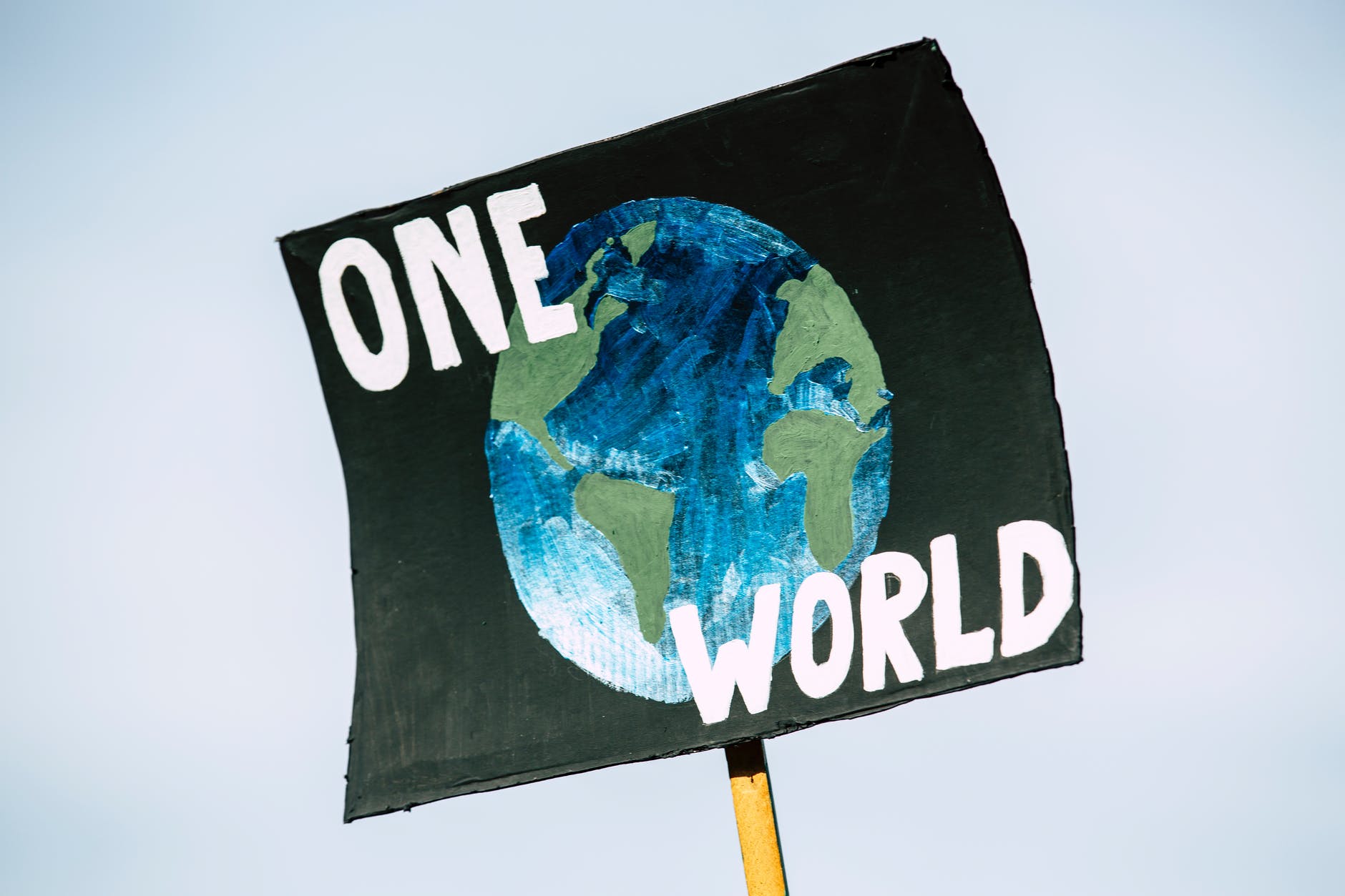
Picture of "one world" text with image of the Earth as a sign.

In celebration of the start of the UN International Decade of Indigenous Languages, the UNESCO Chair on Multimodal Learning and OER contributed to extending access to resources on metaliteracy by facilitating the translation of the Metaliteracy Goals and Learning Objectives into all official languages of South Africa.

Prof. J.A.K. Olivier, UNESCO Chair on Multimodal Learning and OER, Research Unit Self-Directed Learning, North-West University (NWU), South Africa, arranged for the translation of the Metaliteracy Goals and Learning Objectives into eight additional South African languages: isiNdebele, isiXhosa, isiZulu, Sesotho, Sesotho sa Leboa, Siswati, Tshivenda, and Xitsonga.

This substantial expansion of the translated Metaliteracy Goals and Learning Objectives builds upon previous translations in two other official South African languages (the 11th official language is English), Afrikaans and Setswana, as well as French, German, Italian, Portuguese, and Spanish.

Thanks to all of our translators! If you would like to contribute to this metaliteracy global project, just let us know!

-Trudi and Tom

Zielsetzungen und Lernziele: German Translation of the Metaliteracy Goals and Learning Objectives

We are delighted to be able to offer the Metaliteracy goals and learning objectives in a German translation! Theresia Woltermann, who works for the Goethe-Institut, a German cultural association that promotes German language study abroad and encourages international cultural exchange, accomplished the translation in record time during the summer of 2021. Theresia has also been the 2021 research associate extraordinaire for the Intercultural Perspectives on Information Literacy project. Many thanks, Theresia!

This is the seventh translation of the Metaliteracy goals and learning objectives. We appreciate the previous translations in French, Afrikaans, Italian, Setswana, Spanish, and Portuguese. This work demonstrates the international interest in Metaliteracy and the transferability of these ideas to different educational settings.

Are you interested in translating the Metaliteracy goals and objectives in a language that has not been completed yet? Feel free to reach out to us!

Trudi and Tom

The Roles of Metaliteracy and Wikipedia Editing in Overcoming Imposter Syndrome

“Anyone could make edits, and anyone could challenge those edits…This helped me feel less like an outsider trying to fit into a conversation and more like one of a million voices that were working together towards a shared goal of information creation and consumption.”

It is not only illuminating, but also vital to hear from learners about the impact of their encounters with metaliteracy. Asking them to write reflective pieces is one way to find out how components of metaliteracy may have had an effect on their learning. A recent Wiki Edu blog post by Corrin Baker, a graduating senior at The University at Albany, provides such insight. Corrin expanded a wonderfully written course reflection for this post about a course taught by Prof. Trudi Jacobson.

In describing metaliteracy’s producer role, Ms. Baker wrote:

The shared roles of producer and consumer were present in every step of the course. I was fully engaged in locating and evaluating sources, and then finding ways to make that information both understandable and accessible. I felt a great sense of responsibility to the audience and to the authors whose work I was using. I was also far more aware of diversity in a global audience, especially as I found myself struggling to find non-male authors to cite. 

The course, which lasts just seven weeks, is challenging for students, but aims to have a lasting effect on their understanding of information and their roles in producing and sharing it. Corrin’s reflection testifies to the incredible impact that the blend of metaliteracy, information literacy, and the wonderful Wiki Education program can have.

Read the full post here: Overcoming imposter syndrome by editing Wikipedia

Wiki. edu logo by David Peters of EXBROOK for Wiki Education Foundation – Wiki Education Foundation, Public Domain, https://commons.wikimedia.org/w/index.php?curid=33179189

Metaliteracy Resources for Online or Remote Teaching & Learning

As educators respond to the COVID-19 crisis and transition to online and remote learning, or expand what they are doing at a distance, consider several metaliteracy resources that are adaptable for these purposes. We’ve seen an increase in the use of our MOOCs during these unprecedented times and would like to highlight those resources and other OER that were designed for teaching and learning with metaliteracy:

iSucceed College Success – SUNY OER Services recently launched this expanded College Success course with a new metaliteracy module to prepare students for the college environment. The Metaliteracy Module is adaptable to K-12 and college environments and provides open content, learning objects, videos, and assignments that are adaptable to your educational setting.

Metaliteracy: Empowering Yourself in a Connected World – This was our first Coursera MOOC that introduces metaliteracy and was recently revised with updated content and streamlined to a four-module format.

Empowering Yourself in a Post-Truth World – This Coursera MOOC addresses the challenges of the post-truth world and is especially relevant now that accurate and reliable information is paramount during this global pandemic.

Metaliteracy Digital Badging – All of the content developed for our Metaliteracy Digital Badging system is openly available to apply online and through remote learning.

Metaliteracy Learning Goals and Objectives – This resource is at the heart of metaliteracy and has undergone revisions to address post-truth issues while expanding to include several new translations to address the international interest in metalieracy.

Metaliterate Learner Roles – This diagram features the essential metaliterate learner roles and associated questions that spark reflection and online discussion in multiple disciplines.

Metaliteracy and Your Role as a Metaliterate Learner – This resource also features the learner roles and the four domains of metaliteracy and features reflective questions written and shared by Professor Sally Friedman, University at Albany.

Metaliterate Learner Characteristics – This interactive learning object highlights the characteristics that individuals strive toward as they develop as metaliterate learners.

Metaliterate Learner Characteristics Aligned with the ACRL Framework Dispositions – This open model is ideal for faculty and librarians teaching information literacy with the ACRL Framework while incorporating key elements of metaliteracy.

Metaliteracy YouTube Channel– All of the videos we’ve created for our MOOC projects are openly available in one location via the Metaliteracy Learning Collaborative YouTube Channel.

Additional resources are available through this blog and if you would like to share any open metaliteracy resources that you have developed be sure to let us know.

Take care and be well during this challenging time.

Tom, Trudi, and Kelsey

Portuguese Translation of Goals and Learning Objectives Available, More May Be Forthcoming

Hot on the heels of the Spanish translation so kindly provided by Dora Sales, Senior Lecturer in Information Literacy for Translators at Jaume I University in Spain, we now have available a Portuguese translation of the numbered goals and learning objectives, thanks to Maria Pinheiro, doctoral student at the Faculty of Information Science at the University of Brasília, Brazil. We very much appreciate this, Maria!

Florent Michelot, who translated the goals and learning objectives into French last year, has graciously shared with us some of his investigations into translation services. Based on his assistance, we are looking into this way of making the goals and learning objectives, and possibly other content, available to more people. Florent is a doctoral candidate at the University of Montreal.