Call for Chapters: AI and Metaliteracy Book Project!

We are excited to invite contributions to our forthcoming book, “AI and Metaliteracy: Empowering Learners for the Generative Revolution” edited by Dr. Nicola Marae Allain and Dr. Thomas P. Mackey. This new volume will be published in fall 2025 for the Innovations in Information Literacy series edited by Trudi E. Jacobson for Bloomsbury Publishing (Rowman & Littlefield).
This pioneering book will feature theories and case studies about empowering learners with metaliteracy as reflective producers, informed writers, and active participants for the technological, pedagogical, and cultural revolution inspired by generative AI (Heaven, 2022, Mackey & Jacobson, 2011, 2022).

We are interested in groundbreaking approaches to metaliteracy education that encourage learners to engage with innovative AI tools such as ChatGPT and DALL-E, among many others, for creating artistic, literary, scientific, and scholarly forms of generative text, image, and video. Each chapter will focus on developing ethical metaliterate learners with autonomy and agency who are capable of producing individual and collaborative knowledge with AI (Mackey & Jacobson, 2011, 2022). We encourage imaginative chapters about the effective use of AI through the lens of metaliteracy and related literacy models, such as the ACRL Framework for Information Literacy for Higher Education and the ACRL Visual Literacy Framework.

We welcome proposals from educators and practitioners, including librarians, teachers and professors worldwide, particularly those offering case studies with solid theoretical foundations and transferrable pedagogical strategies.  We are seeking authors from wide-ranging disciplines, such as the Arts and Humanities, Digital Media Arts, Social Sciences, Composition Studies, Library and Information Science, Nursing, Business, and STEM. Chapter themes will also address the relevance of AI and metaliteracy to adult learning and workforce development and the importance of designing inclusive AI-driven learning experiences to advance digital equity, and accessibility for students with disabilities. The book will present methods for assessing the effectiveness of teaching metaliteracy competencies and highlight collaborative, interdisciplinary projects. We aim to provide international perspectives on the challenges and opportunities of empowering learners with generative AI and metaliteracy, exploring innovative theories and case studies that provide future directions for AI-driven learning environments.

Submission Guidelines

Proposals should include the following information:

  1. Title: The concise and descriptive title for your proposed chapter.
  2. Abstract: A summary (300-500 words) outlining the main objectives, theoretical foundation, metaliteracy components, generative AI tools, assessment methodology, and expected contributions of your chapter.
  3. Author Information: Names, affiliations, and contact details of all authors.
  4. Biographical Note: A brief biography (150-200 words) of each author highlighting relevant expertise and experience.

Please submit your proposals by December 15, 2024, to Tom.Mackey@sunyempire.edu. Selected authors will be notified by February 1, 2024, and full chapters will be due by May 1, 2025. Final chapters should be between 20 and 25 pages (double-spaced) and follow the formatting guidelines that will be provided upon acceptance.

Important Dates

Proposal Submission Deadline: December 15, 2024

Notification of Acceptance: February 1, 2025

Full Chapter Submission Deadline: May 1, 2025

Expected Publication Date: November 1, 2025

We look forward to receiving your innovative and insightful contributions that will help shape the future of metaliteracy for the generative AI revolution. For any inquiries or further information, please contact Nicola Marae Allain at Nicola.Allain@sunyempire.edu or Tom Mackey at Tom.Mackey@sunyempire.edu.

Join us in this groundbreaking project to advance education and empower learners with metaliteracy worldwide for the generative AI revolution!

Editors

Nicola Marae Allain, Ph.D. is the Dean of the School of Arts and Humanities at SUNY Empire State University, where she has held faculty (tenured) and administrative roles since 2002. Her research and leadership have focused on digital learning, immersive and virtual environments, and emerging technologies. She holds a PhD in Media and Communication from the European Graduate School, a MA in Dramatic Art, Dance and Music from the University of California, and a BA in English from the University of Ottawa. Allain’s interdisciplinary background in arts and humanities complements expertise in higher education technologies and systems, digital media arts, visual pedagogy, and digital communication. Throughout her career, Allain has demonstrated a commitment to developing an aptitude for lifelong learning among students and faculty, while supporting the agency and autonomy of learners within active and authentic learning environments. Her leadership in faculty development and curriculum design has modeled innovative strategies that scale across disciplines, and were widely adopted by SUNY Empire and institutions in New Zealand. Her decade-long role on the SUNY Innovative Instruction Research Council led to collaborations with the SUNY Faculty and Teaching with Technology (FACT2) Committee AI Task Group. Allain co-authored the SUNY FACT² Guide “Optimizing AI in Higher Education” (May 2024), for which she contributed sections on the social impact and creative applications of AI. She has previously collaborated on metaliteracy initiatives, courses and publications. Her recent articles focus on curriculum innovations in digital humanities, mindfulness, and leadership in higher education settings. Fluent in several languages, Allain is also a translator of French poetry and Classical Chinese literary texts.

Thomas P. Mackey, Ph.D. is Professor of Arts and Media and Program Coordinator for the BA and BS programs in Digital Media Arts at Empire State University. He is Academic Coordinator for online courses in Arts and Media. Dr. Mackey is the recipient of the Chancellor’s Award for Scholarship and Creative Activities (2022) and the Dr. Susan H Turben Chair in Mentoring (2021–2022). He has an honorary appointment as Extraordinary Professor, Research Unit Self- Directed Learning, Faculty of Education, North-West University, South Africa. Dr. Mackey originated the metaliteracy framework with Prof. Trudi E. Jacobson to prepare learners as individual and collaborative producers of new knowledge. He has published four books with Prof. Jacobson on metaliteracy, including the first co-authored manuscript on this topic entitled Metaliteracy: Reinventing Information Literacy as a Metaliteracy (2014). They co-edited two volumes Metaliteracy in Practice (2016) and Metaliterate Learning for the Post-Truth World (2019). Their most recent book Metaliteracy in a Connected World: Developing Learners as Producers (2022) is the recipient of the 2024 Divergent Publication Award for Excellence in Literacy in a Digital Age Research. Dr. Mackey’s latest book is a co-edited volume with Dr. Sheila Marie Aird entitled Teaching Digital Storytelling: Inspiring Voices through Online Narratives (2024). He has presented both nationally and internationally about metaliteracy and generative AI and has designed learning assignments in several courses to engage learners in the generative AI revolution.

References

Association of College & Research Libraries. (2022). Visual literacy competency standards for higher education: Framework companion document. Retrieved July 20, 2024, from https://www.ala.org/sites/default/files/acrl/content/standards/Framework_Companion_Visual_Literacy.pdf

ACRL Association of College and Research Libraries. (2015). Framework for information literacy for higher education. American Library Association. Retrieved July 20, 2024, from http://www.ala.org/acrl/standards/ilframework

Heaven, W. D. (2022, December 16). Generative AI is changing everything. But what’s left when the hype is gone? MIT Technology Review. Retrieved July 20, 2024, from https://www.technologyreview.com/2022/12/16/1065005/generative-ai-revolution-art/

Mackey, T. P., & Jacobson, T. E. (2011). Reframing information literacy as a metaliteracy. College & Research Libraries, 72(1), 62–78. https://doi.org/10.5860/crl-76r1.

Mackey, T. P., & Jacobson, T. E. (2022). Metaliteracy in a Connected World: Developing Learners as Producers. ALA Neal-Schuman.

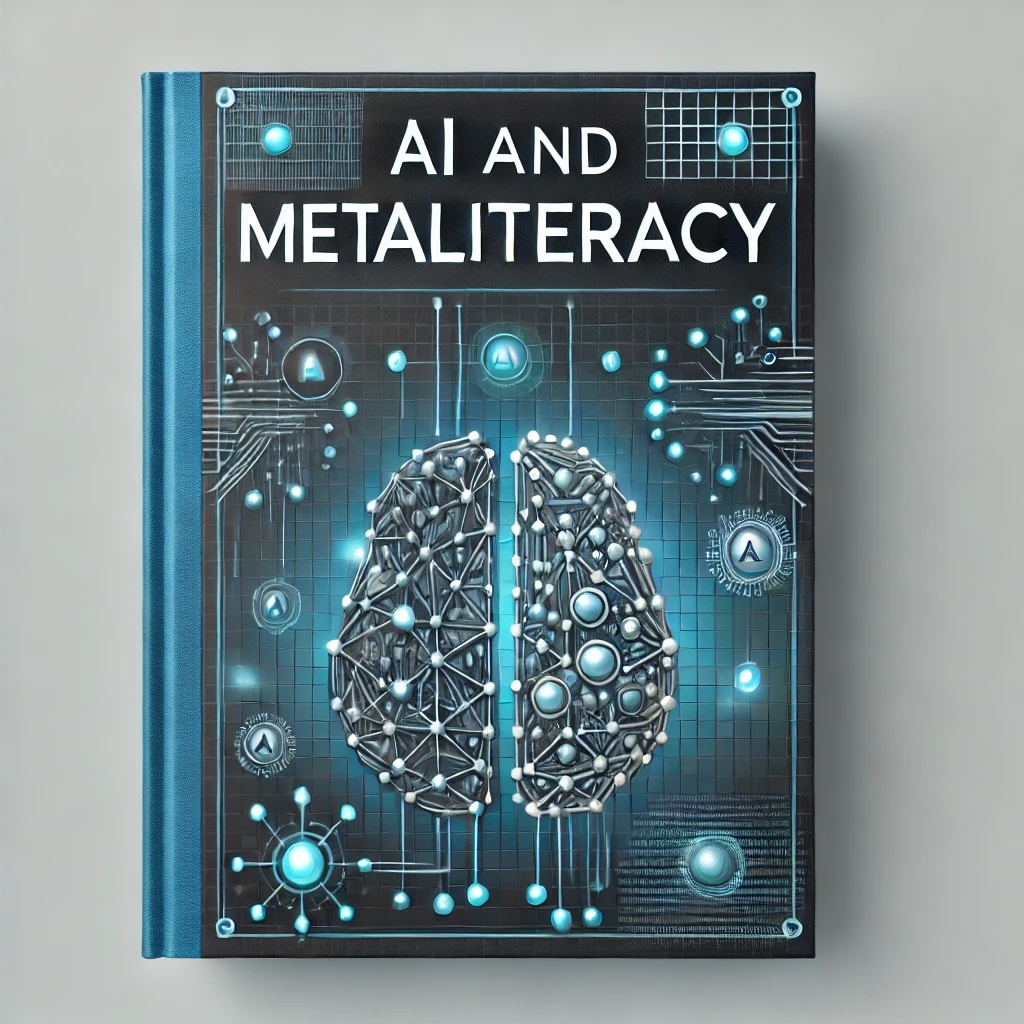
Book image created in DALL-E using the prompt: “Visualize a dynamic book cover for AI and Metaliteracy: Empowering Learners for the Generative Revolution” (October 28, 2024).

Feel free to share this Call for Chapters!

Metaliteracy’s Place in the Development of an Artist

Trudi Jacobson

Color and texture. They beguile me. Lure me. Tease me. Color and texture can enhance or detract. I weave. Weaving can be all about color and texture in the emerging cloth. Done well, it sizzles and shimmers. Otherwise, you might have a veritable reproduction of mud.

Art embraces color and texture. I collected art-themed postage stamps when I was young, arranged them by artist, and did research into each artist. I still have that collection. I visited museums with my mother when young, then on my own, with friends or my husband. I was entranced by much of what I saw. I took a college art history course in London, visiting the National Gallery to see the works we studied in person. I wanted to know why there seemed to be so few women artists. In my quest, I received a study grant to travel to England to learn more about Lady Elizabeth Butler.

But art was for others to produce, me to admire. I couldn’t even draw a realistic stick figure. I never considered aspiring to try to create art myself. Until I did.

I started with a popular book Learn to Paint in Acrylics with 50 Small Paintings by Mark Daniel Nelson and some 6” x 6” canvases. I began reproducing images from the book. Some were better, some worse. Each one of them, even if mediocre, excited me. Maybe, just maybe, I could do this. Of course, it would take time and practice. Did I have the courage to go forward, though? One can’t claim beginner status forever–eventually one has to take responsibility for one’s progress, or lack of progress.

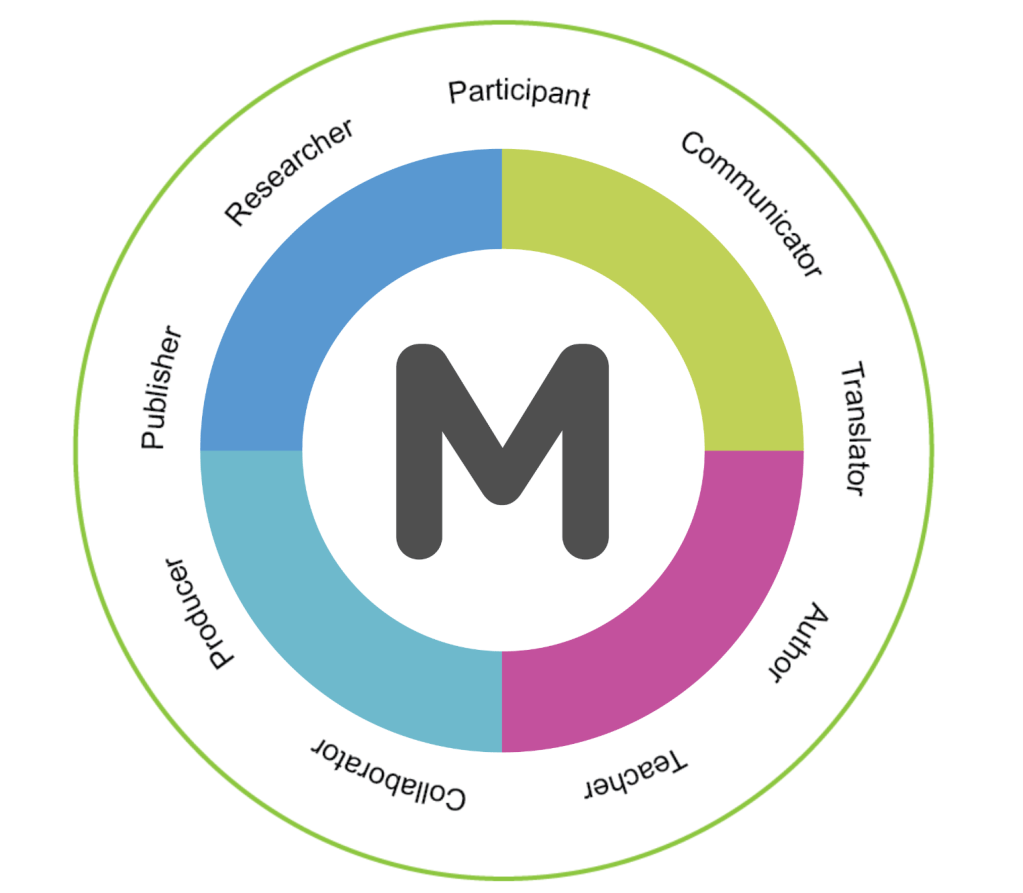
Where does metaliteracy fit into all of this? Its impact was subtle but substantive. I only started to think about this when Tom suggested I consider writing a blog post on this topic. When I was taking my first tentative forays in painting, I was heavily involved with shaping and sharing metaliteracy. Tom and I recognized and developed the metaliterate learner roles. At the time, Dr. Sally Friedman, a professor of political science and friend, was very interested in engaging her students with metaliteracy concepts. She asked them to consider their strengths and goals in connection with the metaliterate learner roles. Which role would they each like to become more comfortable with by the end of the course? We developed similar learning activities for our first global Coursera MOOC Metaliteracy: Empowering Yourself in a Connected World.

I realized I should be asking myself the same question. I’d always produced content, but mostly as an author dealing with the written word. But could I be brave and follow the path of a producer of art? Would the affective components of learning something so new and discomforting to me steer me away from this pursuit? Might I engage the metacognitive component to sort myself out?

It seemed I could. I sought online and in-person learning opportunities to help with my steep learning curve. I had to consider the metaliterate learner characteristics that would help me on my journey. The participatory characteristic is vital, closely aligned with being adaptable, reflective, collaborative, and civic-minded. These attributes were all critical when I was invited to join a group of women who met weekly to practice art and support one another’s efforts. At first, I felt like a fraud, masquerading as an artist but really just an artist wannabe. But I continued to participate. I brought my medium of choice at the time, watercolor. But when a group member suggested I try pastels and lent me the materials, I had to grapple with a medium that threw me back to being a beginner all over again. I focused on adaptability, reflecting that this established artist had her reasons for encouraging me to take this step in my learning process. As it turned out, she steered my artistic efforts in a crucial way. I love the immediacy and vibrant color of pastels.

As for the collaborative characteristic, group members work together to mount exhibits several times a year at local public libraries. Showing one’s work can be a bit scary, but the support of the group members makes it much easier. And civic-minded? I developed and maintain a website for the group as another means of sharing our work with a wide community. 

In the interest of length, I’ve just skimmed the surface of metaliteracy’s impact on me as a learner creating art. But perhaps it might prompt reflection on your part as you consider metaliteracy’s role in something new you are learning. 

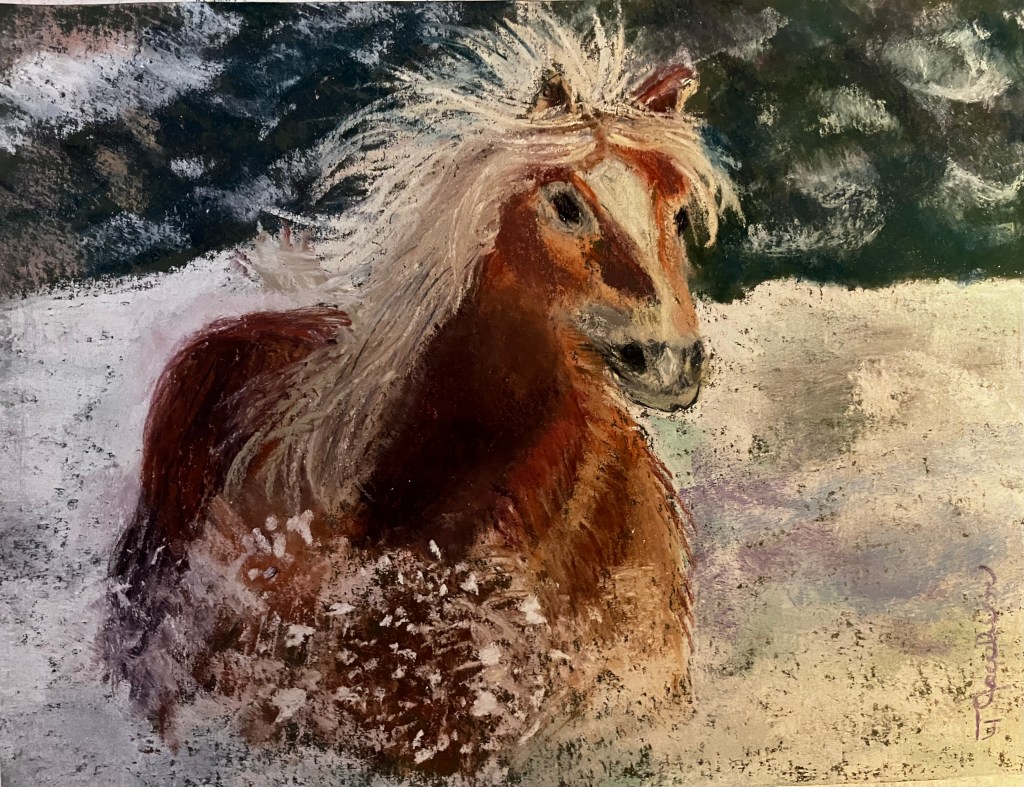
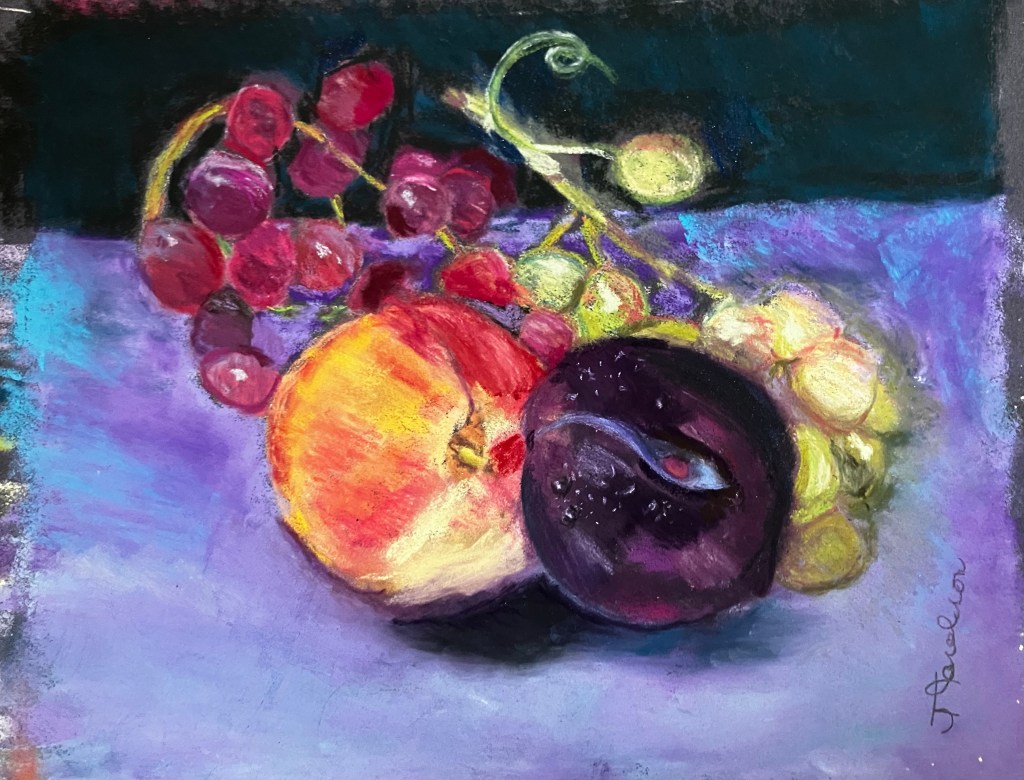
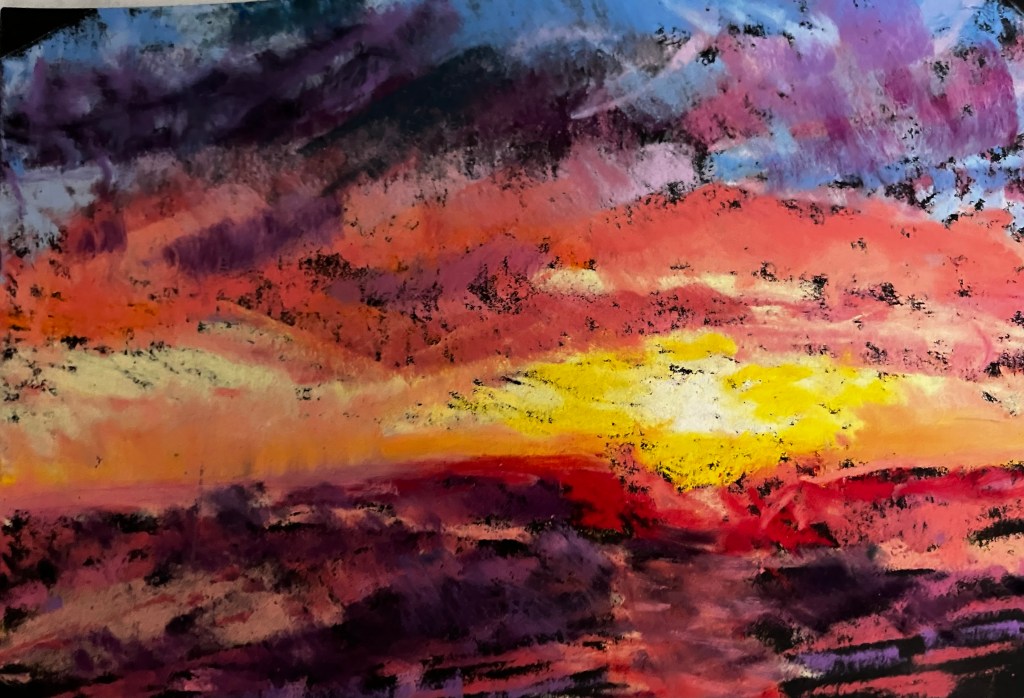
Let me share some works that document my continuing evolution as a painter. Other than the first two which are very early works, I am particularly happy with these paintings that just a few years ago I would never, ever have thought I could produce! And if you are engaged on your own development as an artist of any type, I highly recommend Art & Fear: Observations on the Perils (and Rewards) of Artmaking by David Bayles and Ted Orland.

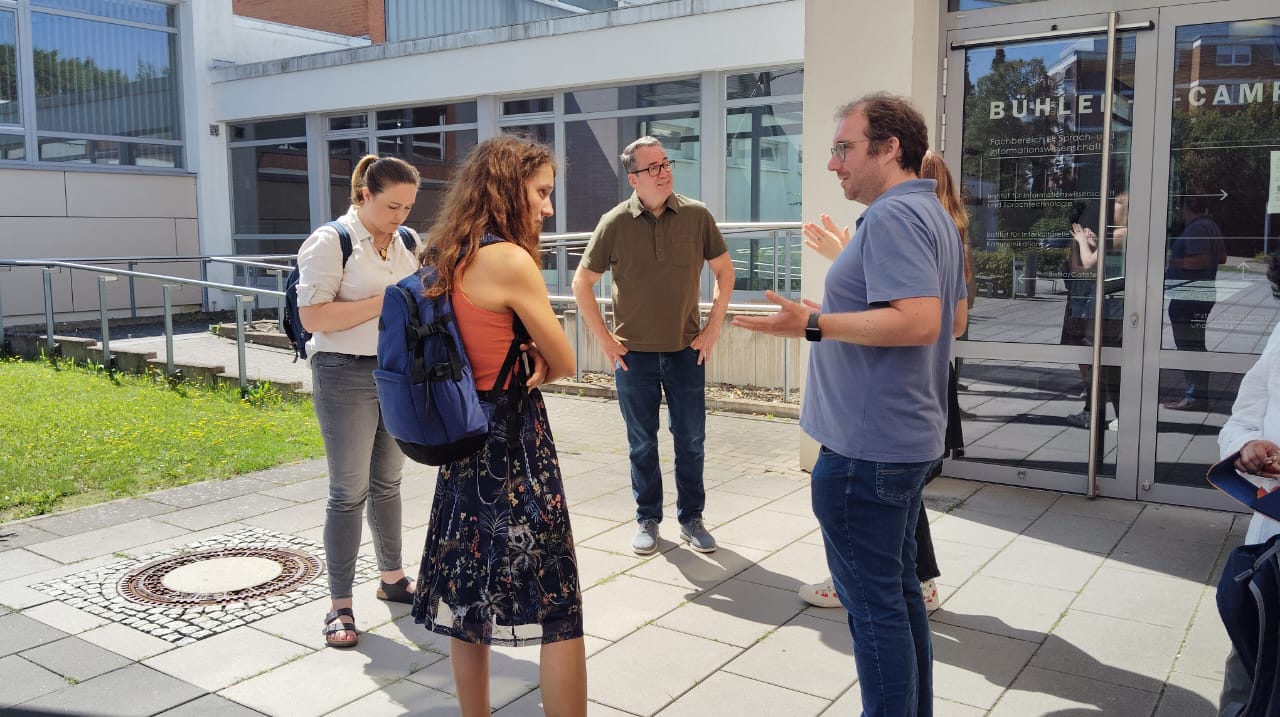
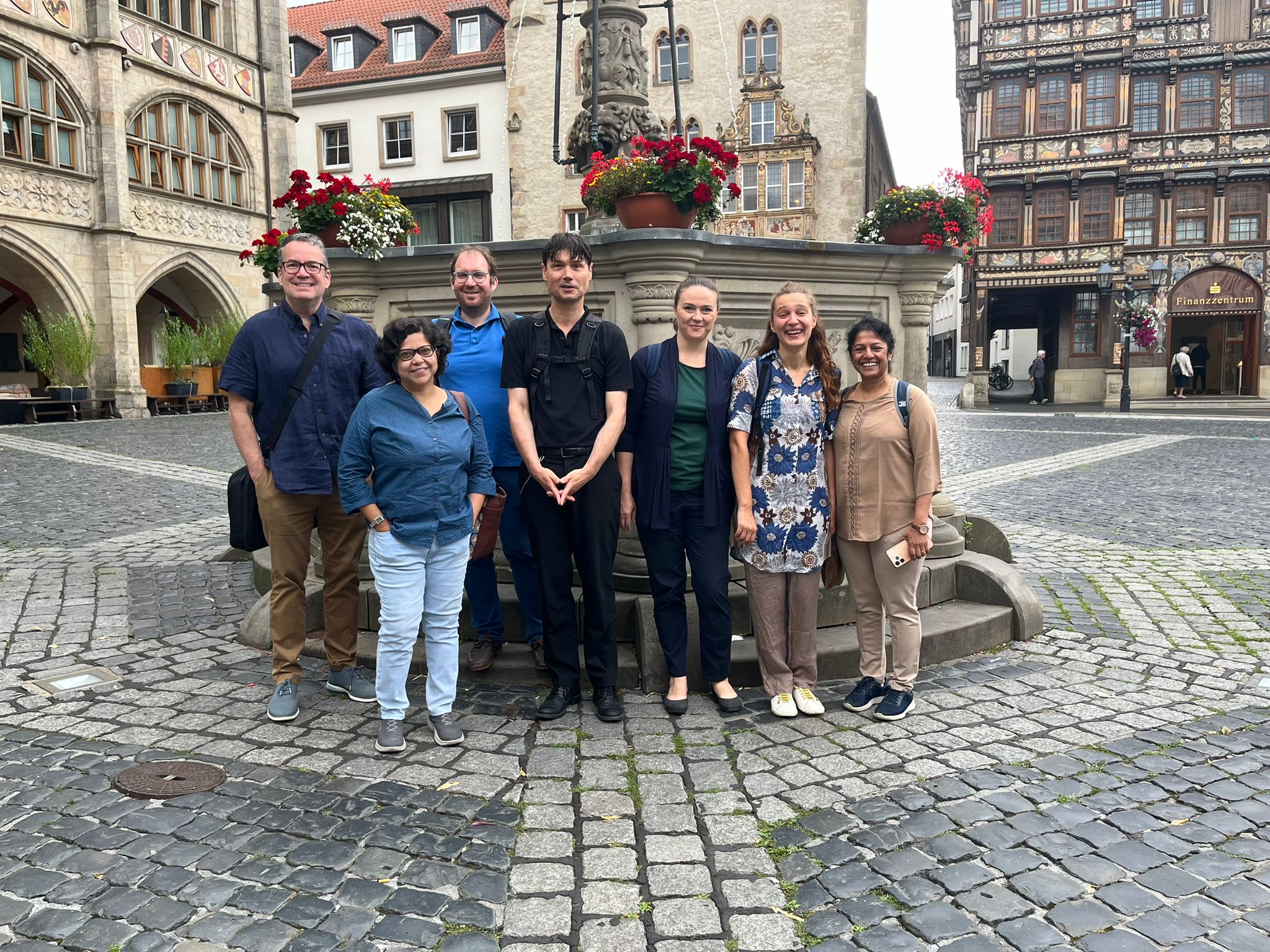
International Cooperation Workshop on Information Literacy and Metaliteracy at the University of Hildesheim

To learn more about this initiative, read the peer-reviewed article by members of the IPILM team:

Griesbaum, J., Dreisiebner, S., Mackey, T. P., Jacobson, T. E., Thadathil, T., Bhattacharya, S., & Adilović, E. (2023). Teaching Internationally, Learning Collaboratively: Intercultural Perspectives on Information Literacy and Metaliteracy (IPILM). Communications in Information Literacy, 17 (1), 260–278. https://doi.org/10.15760/comminfolit.2023.17.1.4

Designing Interactive Pedagogies of Play Through Metaliteracy

Trudi Jacobson and Tom Mackey co-authored the chapter Designing Interactive Pedagogies of Play Through Metaliteracy for a new book edited by Marietjie Havenga, Jako Olivier, and Byron J Bunt. The open access volume entitled Problem-based Learning and Pedagogies of Play: Active Approaches Towards Self-Directed Learning is published by AOSIS Scholarly Books. As noted in the synopsis: “The focus of this book is original research regarding the implementation of problem-based learning and pedagogies of play as active approaches to foster self-directed learning” (https://books.aosis.co.za/index.php/ob/catalog/book/409).

According to the abstract for Trudi and Tom’s chapter:

This chapter explores interactive pedagogies of play (PoPs) through the theory and practice of metaliteracy. As a holistic pedagogical framework for developing reflective and self-directed learners in collaborative social environments, metaliteracy supports individuals to become active knowledge producers. The structure of the metaliteracy model includes interrelated roles, domains and characteristics that reinforce the scaffolding of play- and problem-based learning in multimodal contexts. The core components of metaliteracy are applied in practice through a set of flexible and adaptable goals and learning objectives. Through this analysis of metaliteracy concerning PoPs, we will describe interactive meaning-making in pedagogical situations involving collaborative problem-based learning (PBL) in four courses at both foundational and advanced levels of the college experience.

https://doi.org/10.4102/aosis.2023.BK409.

We are thrilled to be a part of this exciting new open access book with such excellent editors and authors. It was a great experience to apply metaliteracy to this new context of pedagogies of play. The examples we provide from our own teaching in the Writing and Critical Inquiry course at The University at Albany and in the Digital Media Arts courses at Empire State University demonstrate how applicable these ideas are to a wide range of pedagogical contexts. Let us know what you think about this new application of the metaliteracy model and feel free to try it out in your own teaching!

-Trudi and Tom

Jacobson, TE & Mackey, TP 2023, ‘Designing interactive pedagogies of play through
metaliteracy’, in M Havenga, J Olivier & BJ Bunt (eds.), Problem-based learning and pedagogies of play: Active approaches towards Self-Directed Learning, NWU Self-Directed Learning Series, vol. 11, AOSIS Books, Cape Town, pp. 43–70. https://doi.org/10.4102/aosis.2023.BK409.03

Metaliteracy MOOCs Continue to Reach Learners Internationally


Since the launch of our two Coursera MOOCs, Metaliteracy: Empowering Yourself in a Connected World in 2016, and Empowering Yourself in a Post-Truth World in 2019, we have reached learners from around the world. So far, the first MOOC has enrolled 4,870 learners and the second has had 3,549 total learners worldwide. At times, we have been lucky enough to hear directly from the participants who successfully completed one or both of the MOOCs. Recently, Dr. Haleema Anwar from CMH Lahore Medical College and Institute of Dentistry in Lahore, Pakistan contacted us about her experience with the Coursera MOOC Empowering Yourself in a Post-Truth World. According to Haleema:

I am a final-year medical student, a researcher, and an author. I discovered the MOOC while going through the recommendation of courses for me on my app. This was a topic I wanted insight into. 

I learned that there is a diverse variety of roles that a person can take to create a community of trust in a Post truth world- leading to  prosperity.

Thank you!

Haleema Anwar

As part of the MOOC experience, participants apply the “learner as producer” role of metaliteracy to create a final digital media project. We share with permission, Haleema’s final project for the MOOC entitled “Metaliteracy in Action”:

Haleema describes this project in the following way:

This mind map is to walk us through the idea of meta-literacy and its practical implication.

The credit for the content is directed to a course by SUNY “Empowering yourself in a post-truth world”, a course I found on Coursera.

A central theme I learned is- “meta literacy is an integrated model for us to be a lifelong learner and to create a truthful community”

-Haleema Anwar

Thanks to Haleema for sharing such valuable insights about metaliteracy after completing our Coursera MOOC.

We always welcome this kind of feedback about our open metaliteracy projects! If you complete one of our MOOCs or any of our Metaliteracy Learning Resources, feel free to drop us a line and let us know if you would like to share your work via our blog.

To explore an analysis of the Post-Truth MOOC and how it was designed, read Embedding Metaliteracy in the Design of a Post-Truth MOOC: Building Communities of Trust (Mackey, 2020) in Communications in Information Literacy

Best,

Tom and Trudi

Zielsetzungen und Lernziele: German Translation of the Metaliteracy Goals and Learning Objectives

We are delighted to be able to offer the Metaliteracy goals and learning objectives in a German translation! Theresia Woltermann, who works for the Goethe-Institut, a German cultural association that promotes German language study abroad and encourages international cultural exchange, accomplished the translation in record time during the summer of 2021. Theresia has also been the 2021 research associate extraordinaire for the Intercultural Perspectives on Information Literacy project. Many thanks, Theresia!

This is the seventh translation of the Metaliteracy goals and learning objectives. We appreciate the previous translations in French, Afrikaans, Italian, Setswana, Spanish, and Portuguese. This work demonstrates the international interest in Metaliteracy and the transferability of these ideas to different educational settings.

Are you interested in translating the Metaliteracy goals and objectives in a language that has not been completed yet? Feel free to reach out to us!

Trudi and Tom

Metaliterate 9th-Grade Learners Take a Stand Against Misinformation

A recent panel presentation by the Metaliteracy Learning Collaborative supports students in a Pathways in Technology (PTECH) Early College High School who are working on a Public Service Announcement (PSA) project related to misinformation. If you are interested in applying metaliteracy to your teaching practices, check out this interactive presentation and associated breakout sessions entitled Metaliterate Learners Take a Stand Against Misinformation. This model for applying metaliteracy in a problem-based learning scenario was developed by Tom Mackey from SUNY Empire State College, in collaboration with Trudi Jacobson, and Kelsey O’Brien from the University at Albany. Sandra Barkevich, Business and Career Explorations Instructor at HFM Pathways in Technology Early College High School (PTECH) invited the Metaliteracy Learning Collaborative to develop this interactive presentation. During this session, metaliteracy was introduced to reinforce the learner as producer role that the students take on as collaborative creators of PSA’s about misinformation.

During this session, the students and teachers were introduced to the core components of metaliteracy (roles, domains, characteristics, goals and learning objectives) and were then organized into three different breakout sessions. The organization of the breakouts was based on three of the components (roles, characteristics, goals and learning objectives). Members of each group also engaged with the learning domains as they thought about next steps for their project, what would be required of them, and how awareness of these domains might be used to enhance both their learning and their work. The students applied what they learned about these metaliteracy principles during the small group activities which included interactive surveys and an interactive padlet where each group shared one big takeaway.

We really enjoyed working with the 9th graders as they engaged with these metaliteracy ideas and look forward to the development of their PSAs! If you have any questions about this presentation and how to apply it to your pre-college or higher education setting, feel free to reach out to us at any time!

Tom, Trudi, & Kelsey

Metaliteracy Keynote at Virtual Teaching with Technology Showcase on April 24

The Annual Teaching with Technology Showcase: Excellence in Action, an entirely online event, will feature an invited keynote by Trudi Jacobson and Tom Mackey about metaliteracy on Friday, April 24. The keynote entitled Teaching Metaliteracy as a Vital Literacy for Today’s Digital World will explore metaliteracy and its relevance to educators and students, especially during this time of the COVID-19 crisis, when the ability to produce and share truthful and trusted information is essential. The keynote will examine metacognitive reflection and self-regulation as part of the scaffolding that metaliteracy provides for successful student participation in open pedagogical settings. Several open digital learning projects produced by the Metaliteracy Learning Collaborative will be introduced as part of this interactive presentation.

Roles of the Metaliterate Learner Figure (Mackey & Jacobson, 2014)

Registration is open for this virtual conference that is sponsored by Edge, the regional technology partner for colleges and universities in New Jersey. Edge responded quickly to the COVID-19 crisis and moved this conference to an entirely online format and will pilot the Run the World platform as part of this transition.

The conference starts at 9:30am with opening remarks by Nancy Zimmerman, Executive Director for EdgeEvents and Print Communications. Trudi and Tom’s keynote address is at 11:45 am. Throughout the day, presenters will address such relevant topics as: promoting the adoption of technology by faculty, video games for learning, technology preferences of Generation Z college students, virtual experiences in art and science, creating OER initiatives, interactive polling, using makerspaces in college, applying augmented reality and gamification to deepen learning, and much more!

We look forward to seeing you at the virtual conference and will share our slides after our keynote!

-Tom & Trudi

BiblioVerifica Blog Response to Metaliteracy Post-Truth MOOC

We welcome this guest posting from Damiano Orrù, librarian at Vilfredo Pareto Library School of Economics at the University of Rome “Tor Vergata,” Italy. We met Damiano at the Conference on Learning Information Literacy across the Globe in Frankfurt, Germany in May 2019 and he has since completed our Metaliteracy MOOC Empowering Yourself in a Post-Truth World. He wrote this post in response to the Coursera MOOC as part of his own BiblioVerifica blog. Thanks to Damiano for completing our MOOC and providing these excellent resources!

BiblioVerifica Blog for Fact-checking by Citizens

Damiano Orrù, librarian at Vilfredo Pareto Library
School of Economics,  University of Rome “Tor Vergata”,  Italy

As a Coursera MOOC student, I completed the course “Empowering Yourself in a Post-Truth World” in 6 weeks, deepening the themes of disinformation and verification of facts and news.

All these contents and tools are useful to teach “how to spot fake news”[1] by the cognitive and behavioral domanins of Metaliteracy.  The cognitive domain of the Metaliterate Learner is important to understand information and news, analyzing sources and contexts. The behavioral domain is essential for a conscious sharing and production of content through chat, social media, e-mail, forums, blogs. Several Metaliteracy practices are excellent tools for empowering citizens to use critical thinking and to evaluate sources.

The BiblioVerifica[2] blog aims to support citizens (not just students) in the autonomous practice of fact-checking, based on open access and open data resources.  Currently, this idea embraces dissemination of open data and open access content for all fact-checkers citizens by eight librarians as editorial staff[3]BiblioVerifica blog has developed a network of stakeholders in the library and school environment since 2017. For the future our intiative may involve teachers and librarians to develop and share open education oriented fact-chekcing practices and tools. This free digital reference activity will engage citizens and schools in Italy.  

The blog engaged citizenzs also by serious gamification app: BiblioVerifica Olympics[4] a contest based on 15 multiple choice quizzes, open to all citzens, for self assesment, available for free, without money prize or sponsor. In 2018 the first olympics quizzes covered the topics of reliable sources, verification strategies, research tools, etc…  The second edition covered the topics of Sustainable Development Goals (SDGs)[5] in the current year.  For the future may improve this tool for engage learners by Metaliteracy contents or debunking practices. 

Around European countries BiblioVerifica blog launched CrowdSearcher[6], an international platform supporting the European policy Tackling online disinformation[7] by open education resources, open contents, open data.

In the next weeks the BiblioVerifica bloggers will continue to support European citizens, also suggesting Metaliteracy’s tools, so useful, almost indispensable, to create tutorial and videos, serious games and infographics about media and information literacy.

This media and information literacy against misinformation is disseminated by librarians, without sponsor, without remuneration for posts or tutorial, by “BiblioVolontari“. As librarians the bloggers stick to IFLA Code of Ethics for Librarians and other Information Workers[8]:
a) access to information
b) open access and intellectual property
c) neutrality, personal integrity and professional skills

BiblioVerifica blog is open to all volunteer librarians around the world, fostering critical thinking, analysing personal BIAS, suggesting reliable sources, fighting propaganda and misinformation by empowering citizens in a Post-Truth World!

[1] https://www.ifla.org/publications/node/11174

[2] http://biblioverifica.altervista.org/

[3] http://biblioverifica.altervista.org/bibliovolontari/

[4] http://biblioverifica.altervista.org/olympics/

[5] https://sustainabledevelopment.un.org/?menu=1300

[6] http://crowdsearcher.altervista.org/

[7] https://ec.europa.eu/digital-single-market/en/tackling-online-disinformation

[8] https://www.ifla.org/publications/node/11092

orru@economia.uniroma2.it 
http://orcid.org/0000-0002-7493-5648 
https://linkedin.com/in/orrudamiano
Rome, October 27th 2019

New Metaliteracy Keynotes in June 2016!

Tom Mackey and Trudi Jacobson both presented on metaliteracy in June at two separate keynote presentations during the same week! Tom presented Developing Metaliteracy to Engage Citizens in a Connected World at the University of Delaware Summer Faculty Institute 2016 and Trudi presented Envisioning the Possibilities: Educational Trends and Information Literacy in Academic Libraries at the 3er Congreso de Bibliotecas Universitarias y Especializadas in Santiago, Chile! Trudi’s presentation also considered new modes and methods of teaching (including digital badges and MOOCs) and the ACRL Framework. Trudi’s slides are available via SlideShare. Tom’s keynote is available online at the SFI 2016 Sessions Recording Page and his slides are available via SlideShare and this blog posting.