Finalized 2025 Metaliteracy Goals and Objectives: Empowering Learners for Generative AI

We are excited to announce the final version of the 2025 Metaliteracy Goals and Learning Objectives. After an open comment period and extensive discussions, we have carefully reviewed the insightful feedback from the community and incorporated valuable suggestions into this finalized version. This update builds upon the 2018 goals and objectives while addressing the evolving nature of metaliteracy, particularly in response to revolutionary developments in artificial intelligence (AI) and the rapidly changing information environment.

AI-generated image to illustrate the idea of AI and Metaliteracy 2025.

Discussing the Role of AI

As we worked through these revisions, we had several intensive meetings in December and January to discuss not only specific updates but also how we conceptualize this version. One key topic of discussion was the role of AI. Although AI is specifically mentioned in the document, our focus extends beyond it to emphasize a broader understanding of metaliteracy. Our overarching goal is to acknowledge AI’s significant influence while ensuring that metaliteracy fosters a comprehensive and adaptable approach to learning in social information environments. Many of the revised objectives inherently address the need for metacognitive reflection and the ethical production of information, which are essential when engaging with AI-driven technologies.

Streamlining the Objectives

Through our collaborative efforts, we have refined this document to make it more actionable and adaptable for today’s educators and learners. This latest version of the Metaliteracy Goals and Learning Objectives streamlines the previous iteration by reducing the number of objectives from 34 to 20, providing greater clarity and focus. It further enhances self-awareness, critical thinking, and adaptability, ensuring that learners are prepared to engage with the complex information environments of today and the future. We made difficult decisions about which objectives to retain, eliminate, or merge, ultimately arriving at a more concise and focused approach. This process reinforced the “meta” perspective that distinguishes metaliteracy from traditional information literacy, aligning the framework with its continued evolution. This latest version underscores the essential ways in which metaliteracy supports continuous reflection, ethical participation in digital environments, and the responsible creation of knowledge.

How We Used AI

It is worth noting that we applied generative AI as a writing assistant to enhance clarity, refine the structure of ideas, and assess how certain objectives align with learning domains which provided valuable insights. Rather than allowing AI to dictate content, we used it as a tool for reflection and refinement, ensuring that our revisions remained true to the principles of metaliteracy that we have been developing for several years. This process serves as a model for how learners can engage with generative AI in a thoughtful, ethical, and collaborative manner—leveraging its strengths while maintaining critical oversight and intellectual ownership of ideas.

Call for Translations

As a next step, we welcome translation assistance to make the 2025 Metaliteracy Goals and Learning Objectives accessible globally. Translations will support a wider group of educators, learners, and researchers to integrate metaliteracy into their work, fostering international collaboration and engagement. If you can help, please leave a comment or contact us directly. Your support in broadening access to metaliteracy is invaluable. We invite you to review the final version of the 2025 Metaliteracy Goals and Learning Objectives and share your thoughts in the comments.

Thanks to the Metaliteracy Community

We want to extend our sincere gratitude to everyone who contributed during the open comment period. Your feedback was instrumental in shaping this final version, and we truly appreciate the thoughtful engagement from the metaliteracy community. Your insights helped refine the goals and objectives, making certain that they are relevant and impactful in educational and professional settings. Thank you for being part of this important process and for your ongoing support of metaliteracy. We look forward to continuing this important conversation with you. We invite you to review the final version of the 2025 Metaliteracy Goals and Learning Objectives and share your thoughts in the comments.

Now that the final version is available, we encourage you to explore the document and consider how these revised goals and objectives can be applied in your own teaching and learning. How do they support your approach to integrating metaliteracy and AI in education? What kinds of assignments or learning activities could be developed based on these insights? We invite you to share how you plan to apply these ideas in your work, teaching, or learning journey!

We look forward to hearing from you and keeping the dialogue going!

-Tom and Trudi

Revised Metaliteracy Goals and Learning Objectives for 2025: Share Your Feedback!

-Trudi Jacobson and Tom Mackey

Exploring Metaliteracy and AI at ICIL 2024 Africa Conference

The 3rd international Conference on Information Literacy (ICIL – Africa 2024) took place at Bibliotheca Alexandrina in Egypt. It featured a virtual presentation by Prof. Tom Mackey from Empire State University. The topic of Tom’s talk was Artificial Intelligence and the Future of Literacy. This presentation explored the revolutionary changes in generative artificial intelligence (AI). It highlighted the groundbreaking potential of information literacy, AI literacy, and especially metaliteracy to transform learning. This talk explored the core theme of the conference “Information Literacy Revolution: Get Ready.” It also looked ahead to the future of literacy in a world of generative AI. Metaliteracy serves as a comprehensive pedagogical framework that prepares meditative learners as individual and collaborative producers of digital information. It also prepares them as effective communicators and participants in rapidly-evolving information environments.

Tom’s presentation examined several key themes:

  • AI offers considerable potential for supporting artistic creativity and learning
  • AI challenges our understanding of originality and the original production of information
  • The problem of mis- and dis-information is exacerbated through AI
  • Metaliteracy offers a holistic model for effectively engaging learners with AI technologies
  • The metaliteracy goals and learning objectives reinforce the application of metaliteracy in practice

Metaliteracy emerged from information literacy and developed into a comprehensive model with several core components. It aligns with emerging AI Literacy models while focusing on learning in wide-ranging information environments. This approach provides a holistic and open framework to prepare learners as ethical producers of generative content.

We want to know how you engage with metaliteracy in your teaching and learning with AI. To share your techniques for applying AI and metaliteracy, please contact Tom Mackey or Trudi Jacobson directly. We welcome your ideas about a guest blog post!

Metaliteracy’s Place in the Development of an Artist

Trudi Jacobson

Color and texture. They beguile me. Lure me. Tease me. Color and texture can enhance or detract. I weave. Weaving can be all about color and texture in the emerging cloth. Done well, it sizzles and shimmers. Otherwise, you might have a veritable reproduction of mud.

Art embraces color and texture. I collected art-themed postage stamps when I was young, arranged them by artist, and did research into each artist. I still have that collection. I visited museums with my mother when young, then on my own, with friends or my husband. I was entranced by much of what I saw. I took a college art history course in London, visiting the National Gallery to see the works we studied in person. I wanted to know why there seemed to be so few women artists. In my quest, I received a study grant to travel to England to learn more about Lady Elizabeth Butler.

But art was for others to produce, me to admire. I couldn’t even draw a realistic stick figure. I never considered aspiring to try to create art myself. Until I did.

I started with a popular book Learn to Paint in Acrylics with 50 Small Paintings by Mark Daniel Nelson and some 6” x 6” canvases. I began reproducing images from the book. Some were better, some worse. Each one of them, even if mediocre, excited me. Maybe, just maybe, I could do this. Of course, it would take time and practice. Did I have the courage to go forward, though? One can’t claim beginner status forever–eventually one has to take responsibility for one’s progress, or lack of progress.

Where does metaliteracy fit into all of this? Its impact was subtle but substantive. I only started to think about this when Tom suggested I consider writing a blog post on this topic. When I was taking my first tentative forays in painting, I was heavily involved with shaping and sharing metaliteracy. Tom and I recognized and developed the metaliterate learner roles. At the time, Dr. Sally Friedman, a professor of political science and friend, was very interested in engaging her students with metaliteracy concepts. She asked them to consider their strengths and goals in connection with the metaliterate learner roles. Which role would they each like to become more comfortable with by the end of the course? We developed similar learning activities for our first global Coursera MOOC Metaliteracy: Empowering Yourself in a Connected World.

I realized I should be asking myself the same question. I’d always produced content, but mostly as an author dealing with the written word. But could I be brave and follow the path of a producer of art? Would the affective components of learning something so new and discomforting to me steer me away from this pursuit? Might I engage the metacognitive component to sort myself out?

It seemed I could. I sought online and in-person learning opportunities to help with my steep learning curve. I had to consider the metaliterate learner characteristics that would help me on my journey. The participatory characteristic is vital, closely aligned with being adaptable, reflective, collaborative, and civic-minded. These attributes were all critical when I was invited to join a group of women who met weekly to practice art and support one another’s efforts. At first, I felt like a fraud, masquerading as an artist but really just an artist wannabe. But I continued to participate. I brought my medium of choice at the time, watercolor. But when a group member suggested I try pastels and lent me the materials, I had to grapple with a medium that threw me back to being a beginner all over again. I focused on adaptability, reflecting that this established artist had her reasons for encouraging me to take this step in my learning process. As it turned out, she steered my artistic efforts in a crucial way. I love the immediacy and vibrant color of pastels.

As for the collaborative characteristic, group members work together to mount exhibits several times a year at local public libraries. Showing one’s work can be a bit scary, but the support of the group members makes it much easier. And civic-minded? I developed and maintain a website for the group as another means of sharing our work with a wide community. 

In the interest of length, I’ve just skimmed the surface of metaliteracy’s impact on me as a learner creating art. But perhaps it might prompt reflection on your part as you consider metaliteracy’s role in something new you are learning. 

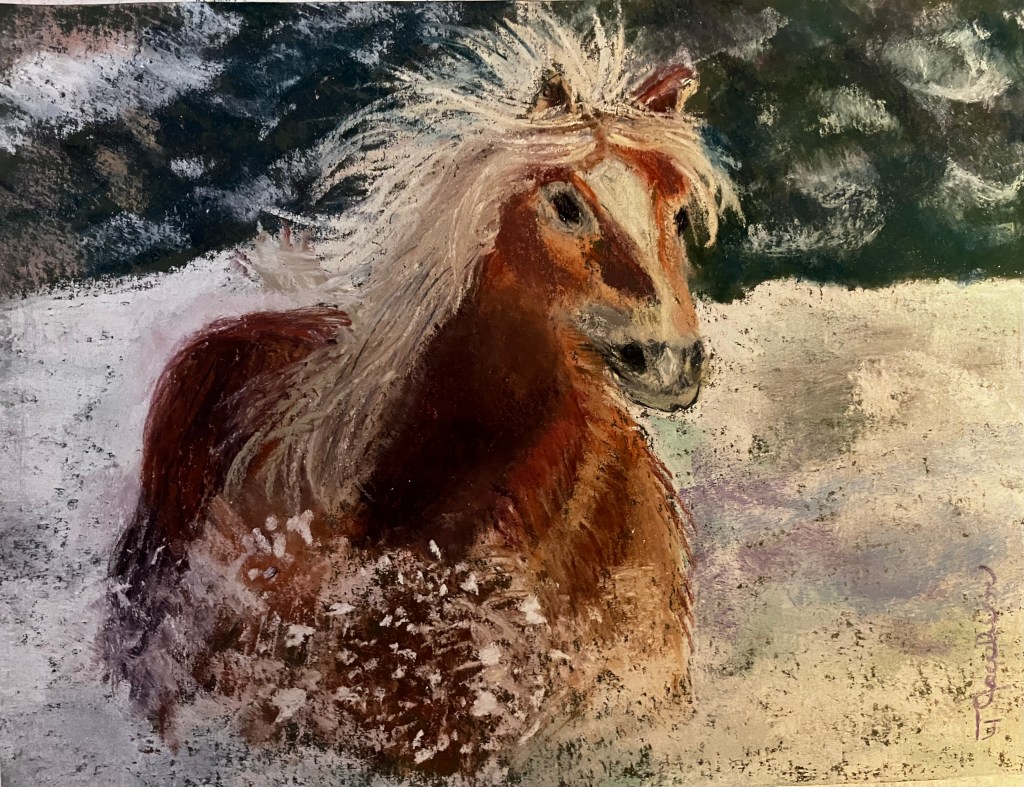
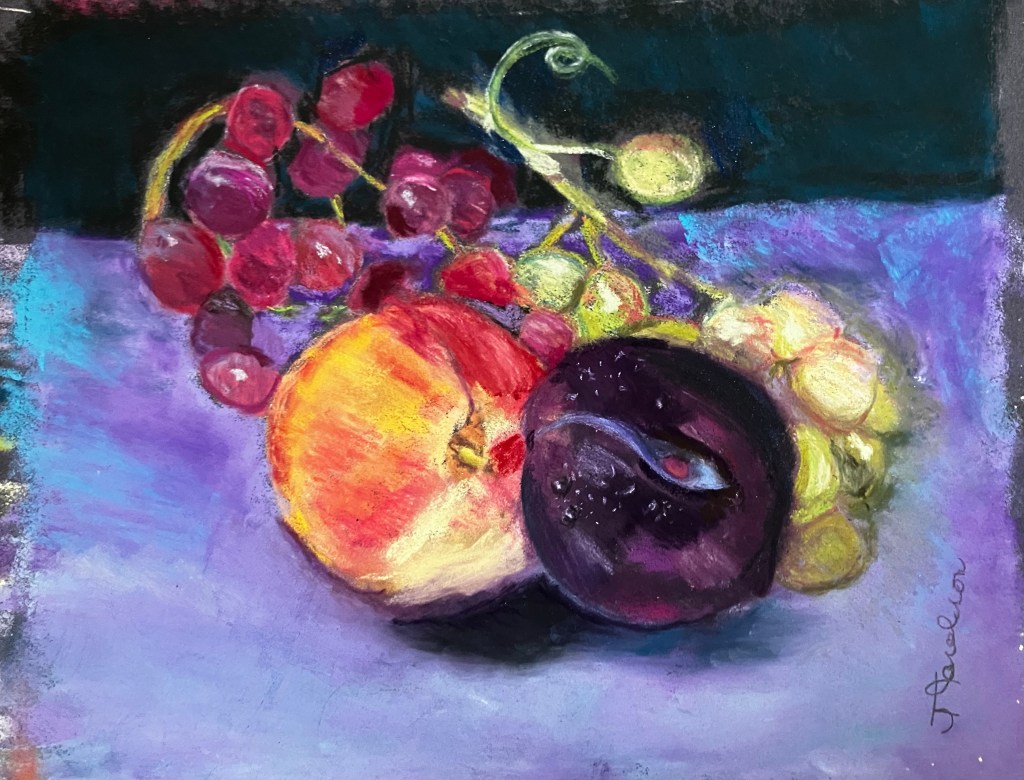
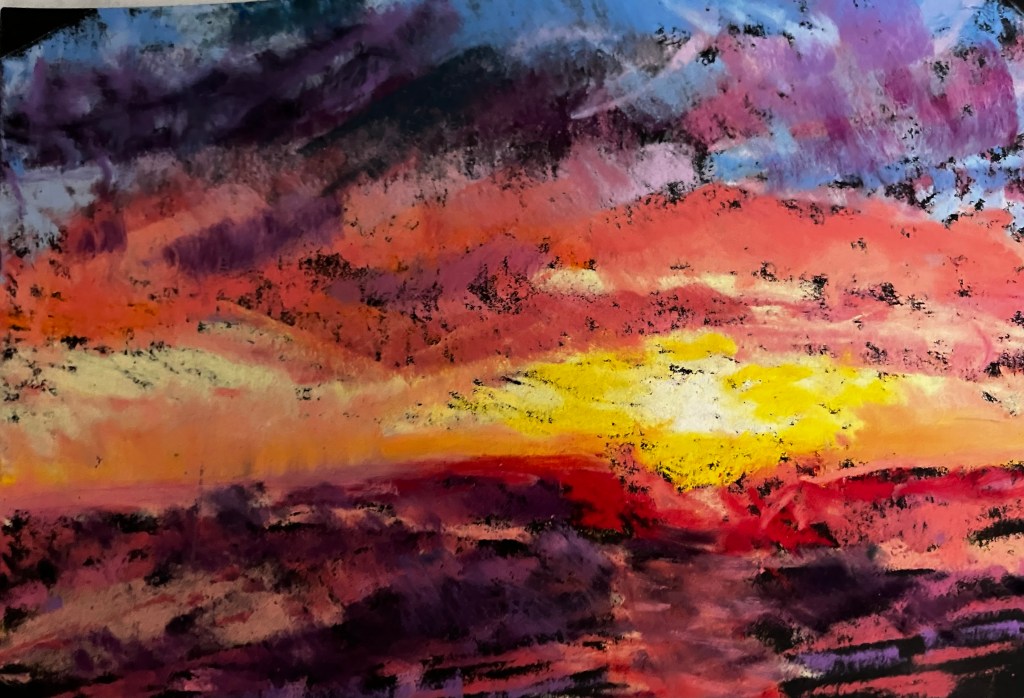
Let me share some works that document my continuing evolution as a painter. Other than the first two which are very early works, I am particularly happy with these paintings that just a few years ago I would never, ever have thought I could produce! And if you are engaged on your own development as an artist of any type, I highly recommend Art & Fear: Observations on the Perils (and Rewards) of Artmaking by David Bayles and Ted Orland.

Developing Metaliteracy to Teach and Learn with Generative Artificial Intelligence (GenAI)

This year’s Annual Meeting of the Alabama Association of College & Research Libraries (AACRL) featured a presentation by Tom Mackey entitled Developing Metaliteracy to Teach and Learn with Generative Artificial Intelligence (GenAI). The talk explores the challenges of GenAI including issues related to authoring, accuracy, and attribution and reviews two models for AI Literacy. In addition, the metaliteracy framework is discussed as a comprehensive approach to support teaching and learning with GenAI. As examples of metaliteracy in practice, student images that applied GenAI are introduced from the course Ethics of Digital Art and Design in the Digital Media Arts Program at Empire State University.

Here’s the complete slide deck for the presentation:

Designing Interactive Pedagogies of Play Through Metaliteracy

Trudi Jacobson and Tom Mackey co-authored the chapter Designing Interactive Pedagogies of Play Through Metaliteracy for a new book edited by Marietjie Havenga, Jako Olivier, and Byron J Bunt. The open access volume entitled Problem-based Learning and Pedagogies of Play: Active Approaches Towards Self-Directed Learning is published by AOSIS Scholarly Books. As noted in the synopsis: “The focus of this book is original research regarding the implementation of problem-based learning and pedagogies of play as active approaches to foster self-directed learning” (https://books.aosis.co.za/index.php/ob/catalog/book/409).

According to the abstract for Trudi and Tom’s chapter:

This chapter explores interactive pedagogies of play (PoPs) through the theory and practice of metaliteracy. As a holistic pedagogical framework for developing reflective and self-directed learners in collaborative social environments, metaliteracy supports individuals to become active knowledge producers. The structure of the metaliteracy model includes interrelated roles, domains and characteristics that reinforce the scaffolding of play- and problem-based learning in multimodal contexts. The core components of metaliteracy are applied in practice through a set of flexible and adaptable goals and learning objectives. Through this analysis of metaliteracy concerning PoPs, we will describe interactive meaning-making in pedagogical situations involving collaborative problem-based learning (PBL) in four courses at both foundational and advanced levels of the college experience.

https://doi.org/10.4102/aosis.2023.BK409.

We are thrilled to be a part of this exciting new open access book with such excellent editors and authors. It was a great experience to apply metaliteracy to this new context of pedagogies of play. The examples we provide from our own teaching in the Writing and Critical Inquiry course at The University at Albany and in the Digital Media Arts courses at Empire State University demonstrate how applicable these ideas are to a wide range of pedagogical contexts. Let us know what you think about this new application of the metaliteracy model and feel free to try it out in your own teaching!

-Trudi and Tom

Jacobson, TE & Mackey, TP 2023, ‘Designing interactive pedagogies of play through
metaliteracy’, in M Havenga, J Olivier & BJ Bunt (eds.), Problem-based learning and pedagogies of play: Active approaches towards Self-Directed Learning, NWU Self-Directed Learning Series, vol. 11, AOSIS Books, Cape Town, pp. 43–70. https://doi.org/10.4102/aosis.2023.BK409.03

Looking for Workshop Ideas About Metaliteracy?

If you are interested developing workshop ideas about metaliteracy or would like to participate in a metaliteracy workshop asynchronously, check out this latest presentation! On Tuesday, September 5, Trudi Jacobson and Tom Mackey facilitated an interactive workshop entitled Adapting Metaliteracy OER to Multimodal Teaching and Learning Practices as part of their honorary appointments as Extraordinary Professors at North-West University (NWU). This virtual event was recorded and is now available to watch at your own pace. The ideas presented in the slideshow are easily adaptable to different learning scenarios and it is fine to follow along with the video as an asynchronous workshop participant! Feel free to apply the slides to your own setting (as long as you cite the source) and be sure to let us know if you have any questions! We would love to hear your feedback! -Trudi and Tom

Metaliteracy Featured in Virtual Prestige Lecture at North-West University in South Africa

As part of their honorary appointments as Extraordinary Professors at North-West University in South Africa, Tom Mackey and Trudi Jacobson delivered a new Prestige Lecture about Metaliteracy and Multimodality. The slides, audio file, and video recording for this lecture entitled Combining Metaliteracy and Multimodality to Develop Metaliterate Producers are now available. This newest Prestige Lecture is based on the second chapter from Tom and Trudi’s book Metaliteracy in a Connected World: Developing Learners as Producers that was published by ALA Neal-Schuman in 2022.

Look for Trudi and Tom’s follow-up workshop entitled Adapting Metaliteracy OER to Multimodal Teaching and Learning Practices on September 5 at 9am EDT.

Prestige Lecture to Feature Metaliteracy and Multimodality

Registration is now open for a new Prestige Lecture by Tom Mackey and Trudi Jacobson entitled Combining Metaliteracy and Multimodality to Develop Metaliterate Producers. This online event scheduled for August 17, 2023 at 9am EDT is part of their honorary appointments as Extraordinary Professors at Research Unit Self-Directed Learning, Faculty of Education, North-West University, South Africa. This Prestige Lecture is based on a chapter from their latest book Metaliteracy in a Connected World: Developing Learners as Producers published by ALA Neal-Schuman. In early September, Trudi and Tom will present a follow-up workshop entitled Adapting Metaliteracy OER to Multimodal Teaching and Learning Practices (additional details about the workshop to follow in a later post).

To learn more about the upcoming Prestige Lecture and to register, review the poster for the event:

Metaliteracy Presentation at OLC Accelerate Explores Online Courses in the Digital Media Arts

How does metaliteracy support creative and collaborative learning in fully online courses? This year’s Online Learning Consortium’s Accelerate 2022 conference featured a presentation by Tom Mackey about applying metaliteracy in Digital Media Arts courses at SUNY Empire State College. The presentation, entitled Effective Strategies in the Digital Media Arts to Inspire Creativity and Collaboration examines how metaliteracy influenced the development of several online courses that envision learners as knowledge producers. According to the abstract for this presentation:

Online courses in the Digital Media Arts offer effective models for designing innovative learning activities in a wide range of disciplinary settings. Several courses in the Digital Media Arts at SUNY Empire State College, such as Digital Storytelling, Ethics of Digital Art and Design, and Information Design have been developed to include open educational resources (OER) to replace textbooks. In addition, openly-available digital resources have been curated in these courses to support individual and collaborative learning activities for producing original and remixed information. 

As part of this presentation, the learning outcomes for each course are shared along with specific pedagogical strategies that have proven to be effective in each class. These techniques are transferrable to a wide range of modalities and disciplinary settings beyond those described. The presentation includes several digital media projects produced by students as well as feedback from learners about the experience.

If you have questions about these fully online courses taught by Tom Mackey at SUNY Empire State College, feel free to reach out any time.