Framed around the idea of learners as “humans in the loop” (Wu, et. al., 2022), the session highlighted diverse case studies that offered practical strategies for empowering individuals to engage with AI critically, ethically, and collaboratively.
Representing the team in person were Matt Moyo (North-West University, South Africa), Kristine N. Stewart (Zayed University, United Arab Emirates), and Tom Mackey (Empire State University, USA), (all pictured above). The panel also drew on the important contributions of Brenda Van Wyk (University of Pretoria, South Africa), Megan Eberhardt-Alstot (Pepperdine Graduate School of Education and Psychology, USA), and Kristen Schuster (University of Southampton, UK).
The case studies showcased during the session reflected a wide range of perspectives and areas of inquiry, including Generative AI and the Metaliterate Learner, Responsible Use of AI in Postgraduate Research, Misrepresentation in AI, Inclusive Curriculum Design, and the Ethics of AI in Digital Media Arts. Together, these themes underscored the value of metaliteracy as a framework for engaging with AI while emphasizing the human capacity for metacognitive reflection, ethical responsibility, and collaborative knowledge construction.
If you would like to share your own explorations with AI and Metaliteracy, feel free to reach out to us and we would be happy to share via our Metaliteracy.org blog.
Tom and Trudi
Reference
Wu, X., Xiao, L., Sun, Y., Zhang, J., Ma, T., & He, L. (2022). A survey of human-in-the-loop for machine learning. Future Generation Computer Systems, 135, 364–381. https://doi.org/10.1016/j.future.2022.05.014
The two metaliteracy panels are featured as part of the full conference agenda and include:
Panel Presentation: Humans in the Loop: Advancing Metaliteracy for Generative AI Learning Environments
This international panel on Tuesday, Sept. 23 2025 will explore the transformative potential of metaliteracy as a holistic framework for addressing the global challenges and opportunities presented by artificial intelligence (AI). The panelists will present descriptive case studies from around the world that demonstrate actionable strategies for empowering learners as humans in the loop through metaliteracy.
Panelists:
Thomas P. Mackey, Empire State University, USA
Brenda Van Wyk, University of Pretoria, South Africa
Megan Eberhardt-Alstot, Pepperdine Graduate School of Education and Psychology, USA
Kristine N. Stewart, Zayed University, United Arab Emirates
Kristen Schuster, University of Southampton, UK
Matt Moyo, North-West University, South Africa
Paper Presentation: Combining Information Literacy and Metaliteracy to Advance Transnational Group Learning about AI. Learning Process and Learning Outcomes, Results from a Case Study
The global panel on Thursday, September 25, 2025, will present findings from a co-authored transnational case study on learning about AI. The paper combines insights from information literacy and metaliteracy to highlight collaborative learning processes and outcomes across cultures. Panelists will discuss collaborative teaching and learning in the global virtual exchange Intercultural Perspectives on Information Literacy and Metaliteracy (IPILM).
Authors:
Joachim Griesbaum, University of Hildesheim, Germany
Stefan Dreisiebner, Carinthia University of Applied Sciences, Austria
Emina Adilović, University of Sarajevo, Bosnia and Herzegovina
Justyna Berniak-Woźny, SWPS University Kraków, Poland
Subarna Bhattacharya, Kalinga Institute of Industrial Technology, India
Jini Jacob, Symbiosis College of Arts & Commerce, India
Thomas P. Mackey, Empire State University, SUNY, USA
Tessy Thadathil, Symbiosis College of Arts & Commerce, India
These two sessions underscore the growing importance of metaliteracy in addressing the opportunities and challenges of AI in global education. They also highlight the collaborative work of international scholars who are shaping future directions for learning in the age of generative AI.
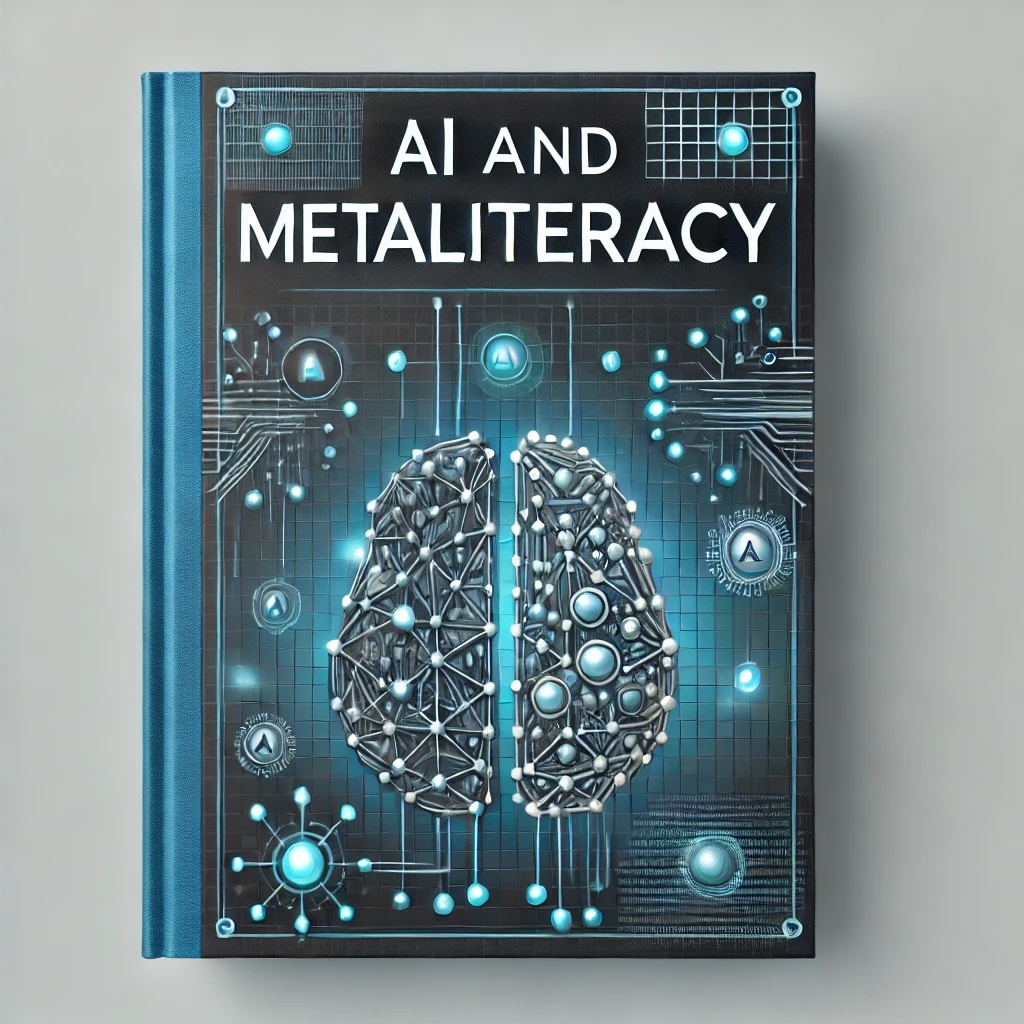
(AI-generated image “AI and Metaliteracy” created using ChatGPT)
The metaverse is rapidly expanding and even young children are immersed in worlds like Minecraft and Roblox. Adult learners have utilized Second Life as a learning space for building in 3D for years now. Educators and librarians must utilize these evolving information landscapes for teaching and learning. The metaverse is ideal for embedding metaliteracy and is a real, albeit virtual, place where critical thinking is needed. To that end, the Winter 2025 issue of the Virtual Education Journal has focused on metaliteracy.
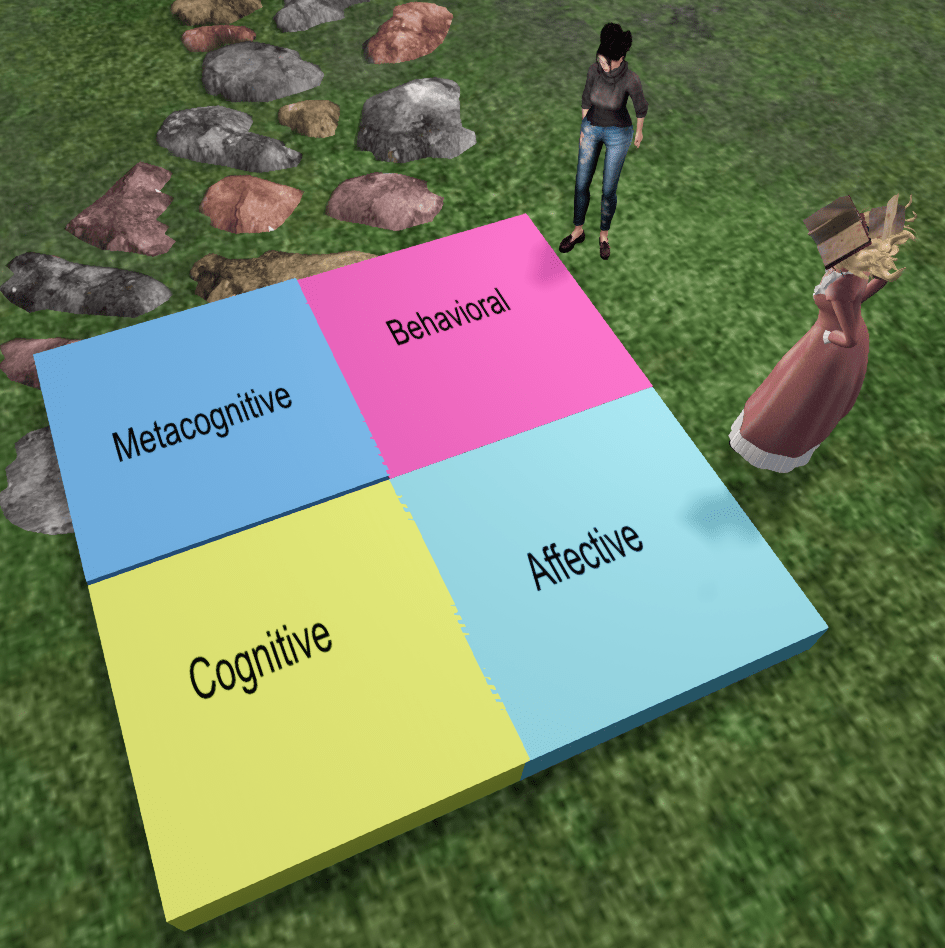
The domains of metaliteracy can be taught in the metaverse and vocabulary can be modified for even very young students. For example, metacognition is “thinking about our thinking” and one might simplify the metacognitive domain to the word THINK. The cognitive domain might be simplified to the word KNOW. The affective domain deals with our emotional intelligence and could be simplified to the word FEEL. Finally, the behavioral domain deals with what students can act upon or simply put, what they DO.
A short video demonstrates these themes, and how they could be taught, by visualizing the four domains on virtual flags.
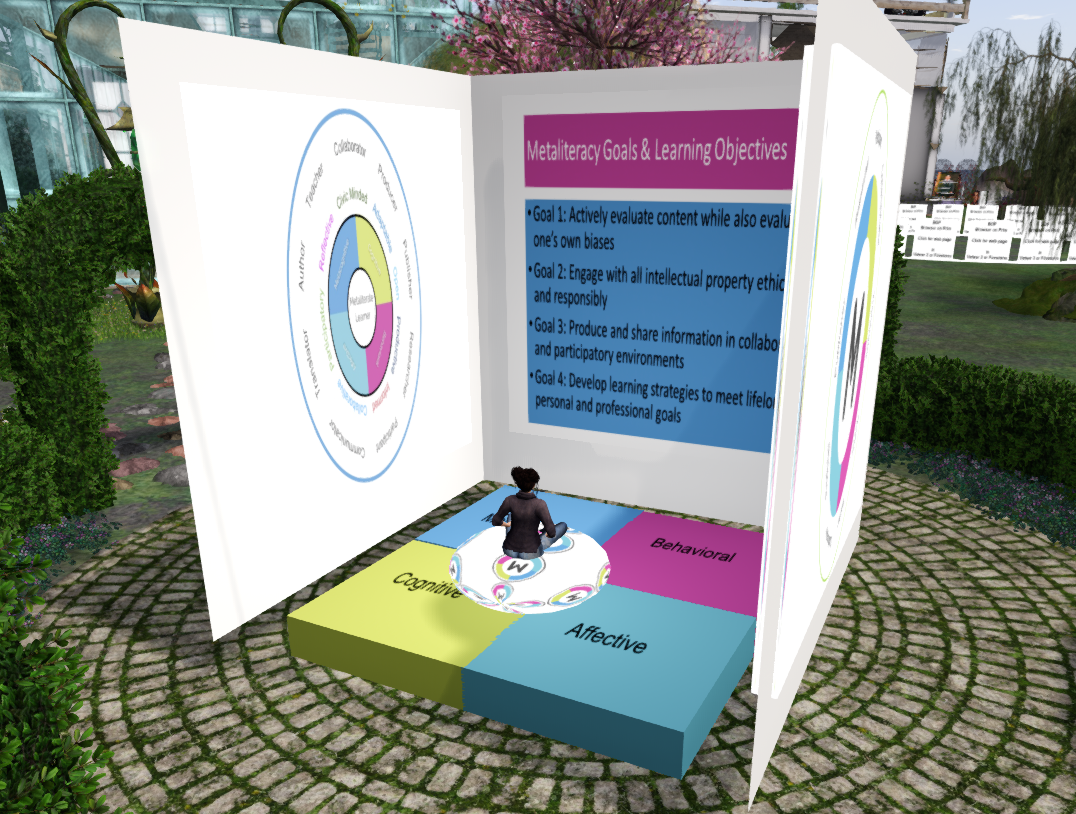
The metaverse is a perfect place to introduce metaliteracy because metaphors can be built in 3D. (Note the 3D model on page 76 in the Winter issue of VEJ). When students, embodied as avatars, can enter a model showing the roles, characteristics, and learning objectives of metaliteracy, they are able to better see how these relate to their own personal learning and their responsibilities for digital citizenship. The learner picture below is sitting on the foundational domains of metaliteracy.
By building a prototype model, one can envision how AI will impact metaliteracy. Soon other 3D builders will have the opportunity to revise the 3D model of AI and Metaliteracy in Second Life. Building in 3D is a great way to dig into the metaliteracy domains, roles, and characteristics of the learner. The picture below depicts AI as a large bubble in which we may navigate in and out of AI applications and still be aware of our own metaliterate roles and characteristics and the domains of our learning process. The learner is sitting on a beanbag that is scripted to allow the individual to move in and out of AI to illustrate that we can learn to control how we use AI and be aware of when AI is gathering information and producing new content.
A video demonstration of this prototype 3D metaliteracy model was provided at the Nonprofit Commons in Second Life and recorded here:
This prototype demonstrates the power of building in 3D and how we can produce and consume content as prosumers—both individually and collaboratively. This is metaliteracy in action. To become a good digital citizen, one must be metaliterate (whether you call it by that name or not!).
We appreciate this guest post from Dr. Valerie Hill, Director of the Community Virtual Library and researcher of changing literacy in digital culture. She has been innovative in applying metaliteracy in the virtual world of Second Life and the metaverse. Dr. Hill’s book, Metamodernism and Changing Literacy: Emerging Research and Opportunities, explores the relationship between metaliteracy and metamodernism.
We are excited to announce the final version of the 2025 Metaliteracy Goals and Learning Objectives. After an open comment period and extensive discussions, we have carefully reviewed the insightful feedback from the community and incorporated valuable suggestions into this finalized version. This update builds upon the 2018 goals and objectives while addressing the evolving nature of metaliteracy, particularly in response to revolutionary developments in artificial intelligence (AI) and the rapidly changing information environment.
Discussing the Role of AI
As we worked through these revisions, we had several intensive meetings in December and January to discuss not only specific updates but also how we conceptualize this version. One key topic of discussion was the role of AI. Although AI is specifically mentioned in the document, our focus extends beyond it to emphasize a broader understanding of metaliteracy. Our overarching goal is to acknowledge AI’s significant influence while ensuring that metaliteracy fosters a comprehensive and adaptable approach to learning in social information environments. Many of the revised objectives inherently address the need for metacognitive reflection and the ethical production of information, which are essential when engaging with AI-driven technologies.
Streamlining the Objectives
Through our collaborative efforts, we have refined this document to make it more actionable and adaptable for today’s educators and learners. This latest version of the Metaliteracy Goals and Learning Objectives streamlines the previous iteration by reducing the number of objectives from 34 to 20, providing greater clarity and focus. It further enhances self-awareness, critical thinking, and adaptability, ensuring that learners are prepared to engage with the complex information environments of today and the future. We made difficult decisions about which objectives to retain, eliminate, or merge, ultimately arriving at a more concise and focused approach. This process reinforced the “meta” perspective that distinguishes metaliteracy from traditional information literacy, aligning the framework with its continued evolution. This latest version underscores the essential ways in which metaliteracy supports continuous reflection, ethical participation in digital environments, and the responsible creation of knowledge.
How We Used AI
It is worth noting that we applied generative AI as a writing assistant to enhance clarity, refine the structure of ideas, and assess how certain objectives align with learning domains which provided valuable insights. Rather than allowing AI to dictate content, we used it as a tool for reflection and refinement, ensuring that our revisions remained true to the principles of metaliteracy that we have been developing for several years. This process serves as a model for how learners can engage with generative AI in a thoughtful, ethical, and collaborative manner—leveraging its strengths while maintaining critical oversight and intellectual ownership of ideas.
Call for Translations
As a next step, we welcome translation assistance to make the 2025 Metaliteracy Goals and Learning Objectives accessible globally. Translations will support a wider group of educators, learners, and researchers to integrate metaliteracy into their work, fostering international collaboration and engagement. If you can help, please leave a comment or contact us directly. Your support in broadening access to metaliteracy is invaluable. We invite you to review the final version of the 2025 Metaliteracy Goals and Learning Objectives and share your thoughts in the comments.
Thanks to the Metaliteracy Community
We want to extend our sincere gratitude to everyone who contributed during the open comment period. Your feedback was instrumental in shaping this final version, and we truly appreciate the thoughtful engagement from the metaliteracy community. Your insights helped refine the goals and objectives, making certain that they are relevant and impactful in educational and professional settings. Thank you for being part of this important process and for your ongoing support of metaliteracy. We look forward to continuing this important conversation with you. We invite you to review the final version of the 2025 Metaliteracy Goals and Learning Objectives and share your thoughts in the comments.
Now that the final version is available, we encourage you to explore the document and consider how these revised goals and objectives can be applied in your own teaching and learning. How do they support your approach to integrating metaliteracy and AI in education? What kinds of assignments or learning activities could be developed based on these insights? We invite you to share how you plan to apply these ideas in your work, teaching, or learning journey!
We look forward to hearing from you and keeping the dialogue going!
We are excited to share the newest draft of the Metaliteracy Goals and Learning Objectives (2025) with you! Through our collaborative work and plenty of our favorite tea, we’ve revised this document based on the progression of metaliteracy. It also addresses the revolutionary developments in artificial intelligence (AI). This update builds on the 2018 version, addressing the needs of educators and learners in rapidly changing information environments. We would love to hear your feedback! Please take a moment to review the draft. Then share your thoughts in the comment box at the end of that page. Do you find the revised goals and objectives useful? Any suggestions for revision? What did we miss? You may also want to add your thoughts concerning others’ suggestions and comments.
The world is evolving rapidly, especially with advancements in artificial intelligence (AI) and the growing concerns around mis- and disinformation. This led us to revisit the original goals and objectives published in 2018. Our aim was to tackle these trends head-on and consider the broader development of the metaliteracy model itself. We wanted a forward-thinking, adaptable approach for educators and learners to thrive in an increasingly complex information environment. This new version prepares learners for the challenges they will face in a world deeply influenced by AI. Metaliteracy’s emphasis on the “learner as producer” is central to the effective and ethical use of new tools and technologies.
As we worked through these revisions, we realized that the 2018 version was out-of -date and overly detailed. We streamlined the document by reducing the number of objectives from 34 to 20, focusing on clarity and purpose. This revision aligns with the evolution of metaliteracy itself and makes the framework more actionable for educators. We believe this new version is more focused and better suited to the needs of today’s learners. It has a sharper focus on critical thinking, self-awareness, and adaptability. We want learners to engage with and critically assess the technologies and influences shaping their world.
We’ve opted for an open comment period instead of a closed survey. This is a transparent process that encourages a collaborative exchange of ideas. We appreciate your thoughts and insights on these revisions, which will help guide the final version of the document.
So now, it’s your turn! We invite you to offer feedback on the draft Metaliteracy Goals and Learning Objectives (2025). What do you think about the revised document? Are there areas that need further refinement? How would these revised goals and objectives support you in teaching with AI? What kinds of assignments would you develop with these new insights? How would you revise existing assignments to apply these changes? The comment period will be open until February 28, 2025. After we analyze all of the feedback, we’ll share the final iteration of the 2025 document via this blog. We greatly appreciate your feedback as we continue to refine and evolve the metaliteracy framework for the future.
Thank you for your ongoing support and for being part of this exciting process! Please leave your comments on the page containing the new draft—let’s continue the conversation!
We are excited to invite contributions to our forthcoming book, “AI and Metaliteracy: Empowering Learners for the Generative Revolution” edited by Dr. Nicola Marae Allain and Dr. Thomas P. Mackey. This new volume will be published in fall 2025 for the Innovations in Information Literacy series edited by Trudi E. Jacobson for Bloomsbury Publishing (Rowman & Littlefield).
This pioneering book will feature theories and case studies about empowering learners with metaliteracy as reflective producers, informed writers, and active participants for the technological, pedagogical, and cultural revolution inspired by generative AI (Heaven, 2022, Mackey & Jacobson, 2011, 2022).
We are interested in groundbreaking approaches to metaliteracy education that encourage learners to engage with innovative AI tools such as ChatGPT and DALL-E, among many others, for creating artistic, literary, scientific, and scholarly forms of generative text, image, and video. Each chapter will focus on developing ethical metaliterate learners with autonomy and agency who are capable of producing individual and collaborative knowledge with AI (Mackey & Jacobson, 2011, 2022). We encourage imaginative chapters about the effective use of AI through the lens of metaliteracy and related literacy models, such as the ACRL Framework for Information Literacy for Higher Education and the ACRL Visual Literacy Framework.
We welcome proposals from educators and practitioners, including librarians, teachers and professors worldwide, particularly those offering case studies with solid theoretical foundations and transferrable pedagogical strategies. We are seeking authors from wide-ranging disciplines, such as the Arts and Humanities, Digital Media Arts, Social Sciences, Composition Studies, Library and Information Science, Nursing, Business, and STEM. Chapter themes will also address the relevance of AI and metaliteracy to adult learning and workforce development and the importance of designing inclusive AI-driven learning experiences to advance digital equity, and accessibility for students with disabilities. The book will present methods for assessing the effectiveness of teaching metaliteracy competencies and highlight collaborative, interdisciplinary projects. We aim to provide international perspectives on the challenges and opportunities of empowering learners with generative AI and metaliteracy, exploring innovative theories and case studies that provide future directions for AI-driven learning environments.
Submission Guidelines
Proposals should include the following information:
Title: The concise and descriptive title for your proposed chapter.
Abstract: A summary (300-500 words) outlining the main objectives, theoretical foundation, metaliteracy components, generative AI tools, assessment methodology, and expected contributions of your chapter.
Author Information: Names, affiliations, and contact details of all authors.
Biographical Note: A brief biography (150-200 words) of each author highlighting relevant expertise and experience.
Please submit your proposals by December 15, 2024, to Tom.Mackey@sunyempire.edu. Selected authors will be notified by February 1, 2024, and full chapters will be due by May 1, 2025. Final chapters should be between 20 and 25 pages (double-spaced) and follow the formatting guidelines that will be provided upon acceptance.
Important Dates
Proposal Submission Deadline: December 15, 2024
Notification of Acceptance: February 1, 2025
Full Chapter Submission Deadline: May 1, 2025
Expected Publication Date: November 1, 2025
We look forward to receiving your innovative and insightful contributions that will help shape the future of metaliteracy for the generative AI revolution. For any inquiries or further information, please contact Nicola Marae Allain at Nicola.Allain@sunyempire.edu or Tom Mackey at Tom.Mackey@sunyempire.edu.
Join us in this groundbreaking project to advance education and empower learners with metaliteracy worldwide for the generative AI revolution!
Editors
Nicola Marae Allain, Ph.D. is the Dean of the School of Arts and Humanities at SUNY Empire State University, where she has held faculty (tenured) and administrative roles since 2002. Her research and leadership have focused on digital learning, immersive and virtual environments, and emerging technologies. She holds a PhD in Media and Communication from the European Graduate School, a MA in Dramatic Art, Dance and Music from the University of California, and a BA in English from the University of Ottawa. Allain’s interdisciplinary background in arts and humanities complements expertise in higher education technologies and systems, digital media arts, visual pedagogy, and digital communication. Throughout her career, Allain has demonstrated a commitment to developing an aptitude for lifelong learning among students and faculty, while supporting the agency and autonomy of learners within active and authentic learning environments. Her leadership in faculty development and curriculum design has modeled innovative strategies that scale across disciplines, and were widely adopted by SUNY Empire and institutions in New Zealand. Her decade-long role on the SUNY Innovative Instruction Research Council led to collaborations with the SUNY Faculty and Teaching with Technology (FACT2) Committee AI Task Group. Allain co-authored the SUNY FACT² Guide “Optimizing AI in Higher Education” (May 2024), for which she contributed sections on the social impact and creative applications of AI. She has previously collaborated on metaliteracy initiatives, courses and publications. Her recent articles focus on curriculum innovations in digital humanities, mindfulness, and leadership in higher education settings. Fluent in several languages, Allain is also a translator of French poetry and Classical Chinese literary texts.
Thomas P. Mackey, Ph.D. is Professor of Arts and Media and Program Coordinator for the BA and BS programs in Digital Media Arts at Empire State University. He is Academic Coordinator for online courses in Arts and Media. Dr. Mackey is the recipient of the Chancellor’s Award for Scholarship and Creative Activities (2022) and the Dr. Susan H Turben Chair in Mentoring (2021–2022). He has an honorary appointment as Extraordinary Professor, Research Unit Self- Directed Learning, Faculty of Education, North-West University, South Africa. Dr. Mackey originated the metaliteracy framework with Prof. Trudi E. Jacobson to prepare learners as individual and collaborative producers of new knowledge. He has published four books with Prof. Jacobson on metaliteracy, including the first co-authored manuscript on this topic entitled Metaliteracy: Reinventing Information Literacy as a Metaliteracy (2014). They co-edited two volumes Metaliteracy in Practice (2016) and Metaliterate Learning for the Post-Truth World (2019). Their most recent book Metaliteracy in a Connected World: Developing Learners as Producers (2022) is the recipient of the 2024 Divergent Publication Award for Excellence in Literacy in a Digital Age Research. Dr. Mackey’s latest book is a co-edited volume with Dr. Sheila Marie Aird entitled Teaching Digital Storytelling: Inspiring Voices through Online Narratives (2024). He has presented both nationally and internationally about metaliteracy and generative AI and has designed learning assignments in several courses to engage learners in the generative AI revolution.
ACRL Association of College and Research Libraries. (2015). Framework for information literacy for higher education. American Library Association. Retrieved July 20, 2024, from http://www.ala.org/acrl/standards/ilframework.
Mackey, T. P., & Jacobson, T. E. (2011). Reframing information literacy as a metaliteracy. College & Research Libraries, 72(1), 62–78. https://doi.org/10.5860/crl-76r1.
Mackey, T. P., & Jacobson, T. E. (2022). Metaliteracy in a Connected World: Developing Learners as Producers. ALA Neal-Schuman.
Book image created in DALL-E using the prompt: “Visualize a dynamic book cover for AI and Metaliteracy: Empowering Learners for the Generative Revolution” (October 28, 2024).
Here’s the slideshow of the Metaliteracy and AI Keynote:
Tom’s keynote offered several takeaways:
The development of AI is both a revolution and evolution
Several international organizations have defined ethical frameworks for engaging with AI
Generative AI contributes to the proliferation of mis- and disinformation
Metaliteracy supports the design of effective learning activities with generative AI
Metacognitive reflection is key to the learning process when working with AI
Reflecting on their learner roles, especially the producer role, reinforces active engagement with AI
The analysis of AI ethics is reinforced through metaliteracy’s civic-minded characteristic
Digital storytelling and the inventive production of AI-generated content support learners in discovering their authentic voice
This international conference offered a chance to engage with educators and learners from around the world. It emphasized the value of exploring generative AI through the lens of metaliteracy. The keynote emphasized the core components of metaliteracy including the learning domains, roles, and characteristics. It focused on how these elements work together to support learners in developing a metaliteracy mindset. This mindset prepares them for wide ranging information environments that are increasingly mediated by AI.
If you are interested in learning more about metaliteracy, please explore the many open resources via this blog as a starting point. Additionally, we want to know how you engage with metaliteracy in your teaching and learning with AI. If you have an idea for a guest blog post, feel free to reach out to Tom Mackey or Trudi Jacobson directly.
Color and texture. They beguile me. Lure me. Tease me. Color and texture can enhance or detract. I weave. Weaving can be all about color and texture in the emerging cloth. Done well, it sizzles and shimmers. Otherwise, you might have a veritable reproduction of mud.
Art embraces color and texture. I collected art-themed postage stamps when I was young, arranged them by artist, and did research into each artist. I still have that collection. I visited museums with my mother when young, then on my own, with friends or my husband. I was entranced by much of what I saw. I took a college art history course in London, visiting the National Gallery to see the works we studied in person. I wanted to know why there seemed to be so few women artists. In my quest, I received a study grant to travel to England to learn more about Lady Elizabeth Butler.
But art was for others to produce, me to admire. I couldn’t even draw a realistic stick figure. I never considered aspiring to try to create art myself. Until I did.
I started with a popular book Learn to Paint in Acrylics with 50 Small Paintings by Mark Daniel Nelson and some 6” x 6” canvases. I began reproducing images from the book. Some were better, some worse. Each one of them, even if mediocre, excited me. Maybe, just maybe, I could do this. Of course, it would take time and practice. Did I have the courage to go forward, though? One can’t claim beginner status forever–eventually one has to take responsibility for one’s progress, or lack of progress.
Where does metaliteracy fit into all of this? Its impact was subtle but substantive. I only started to think about this when Tom suggested I consider writing a blog post on this topic. When I was taking my first tentative forays in painting, I was heavily involved with shaping and sharing metaliteracy. Tom and I recognized and developed the metaliterate learner roles. At the time, Dr. Sally Friedman, a professor of political science and friend, was very interested in engaging her students with metaliteracy concepts. She asked them to consider their strengths and goals in connection with the metaliterate learner roles. Which role would they each like to become more comfortable with by the end of the course? We developed similar learning activities for our first global Coursera MOOC Metaliteracy: Empowering Yourself in a Connected World.
I realized I should be asking myself the same question. I’d always produced content, but mostly as an author dealing with the written word. But could I be brave and follow the path of a producer of art? Would the affective components of learning something so new and discomforting to me steer me away from this pursuit? Might I engage the metacognitive component to sort myself out?
It seemed I could. I sought online and in-person learning opportunities to help with my steep learning curve. I had to consider the metaliterate learner characteristics that would help me on my journey. The participatory characteristic is vital, closely aligned with being adaptable, reflective, collaborative, and civic-minded. These attributes were all critical when I was invited to join a group of women who met weekly to practice art and support one another’s efforts. At first, I felt like a fraud, masquerading as an artist but really just an artist wannabe. But I continued to participate. I brought my medium of choice at the time, watercolor. But when a group member suggested I try pastels and lent me the materials, I had to grapple with a medium that threw me back to being a beginner all over again. I focused on adaptability, reflecting that this established artist had her reasons for encouraging me to take this step in my learning process. As it turned out, she steered my artistic efforts in a crucial way. I love the immediacy and vibrant color of pastels.
As for the collaborative characteristic, group members work together to mount exhibits several times a year at local public libraries. Showing one’s work can be a bit scary, but the support of the group members makes it much easier. And civic-minded? I developed and maintain a website for the group as another means of sharing our work with a wide community.
In the interest of length, I’ve just skimmed the surface of metaliteracy’s impact on me as a learner creating art. But perhaps it might prompt reflection on your part as you consider metaliteracy’s role in something new you are learning.
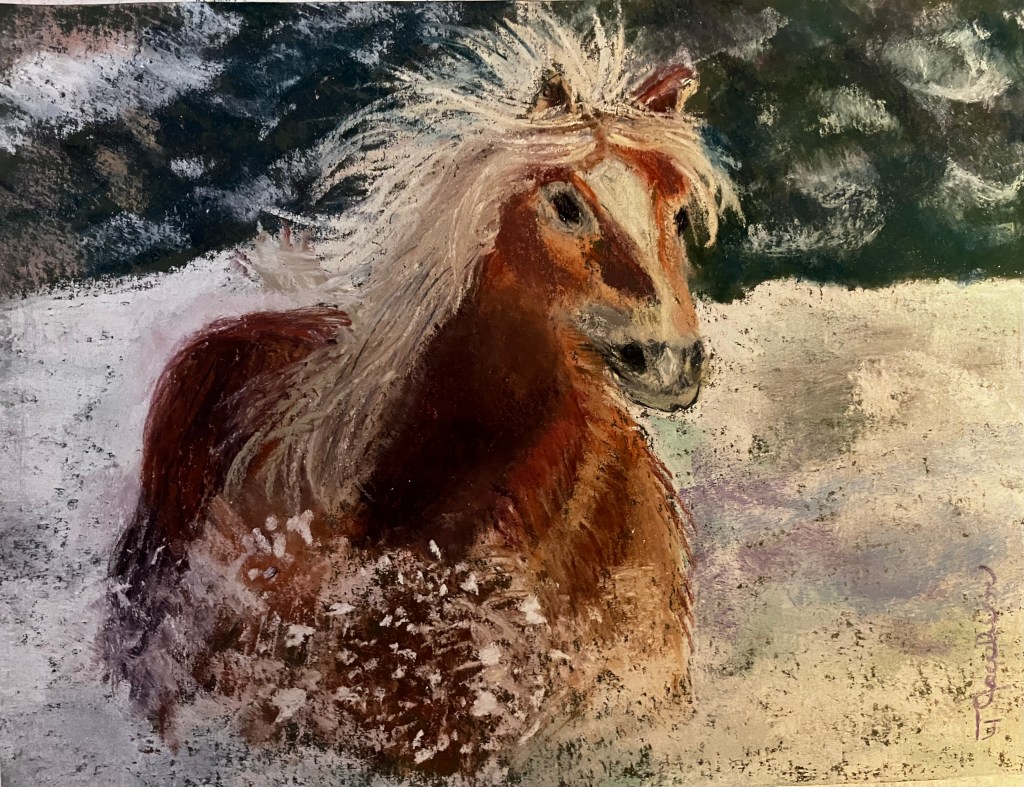
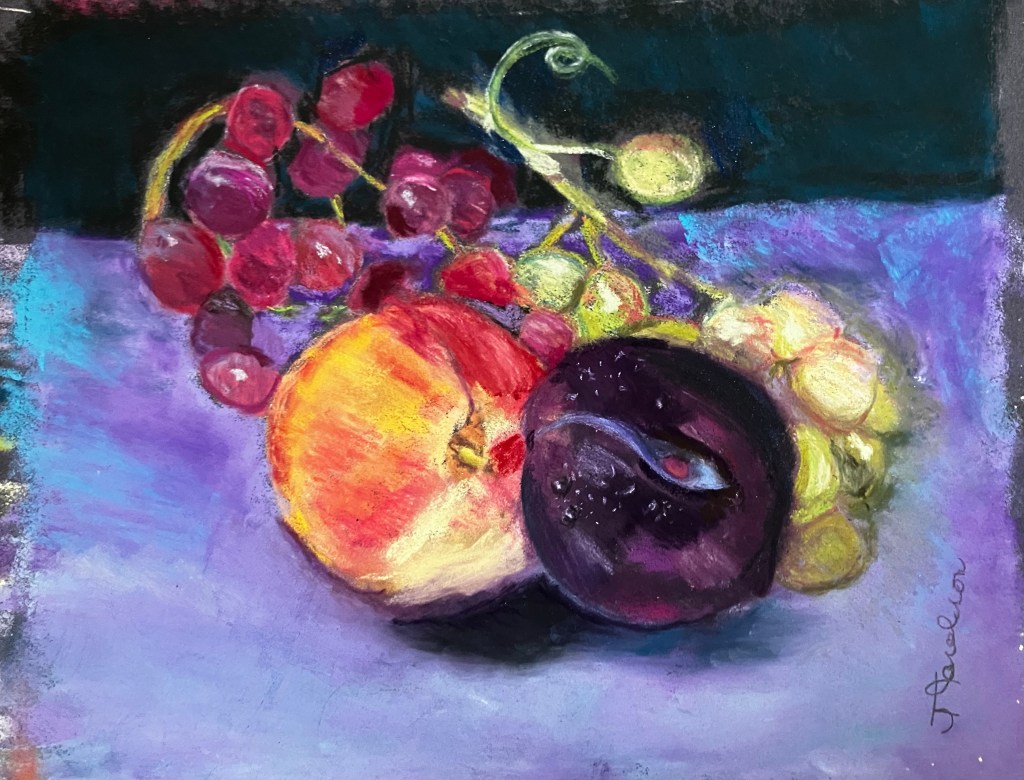
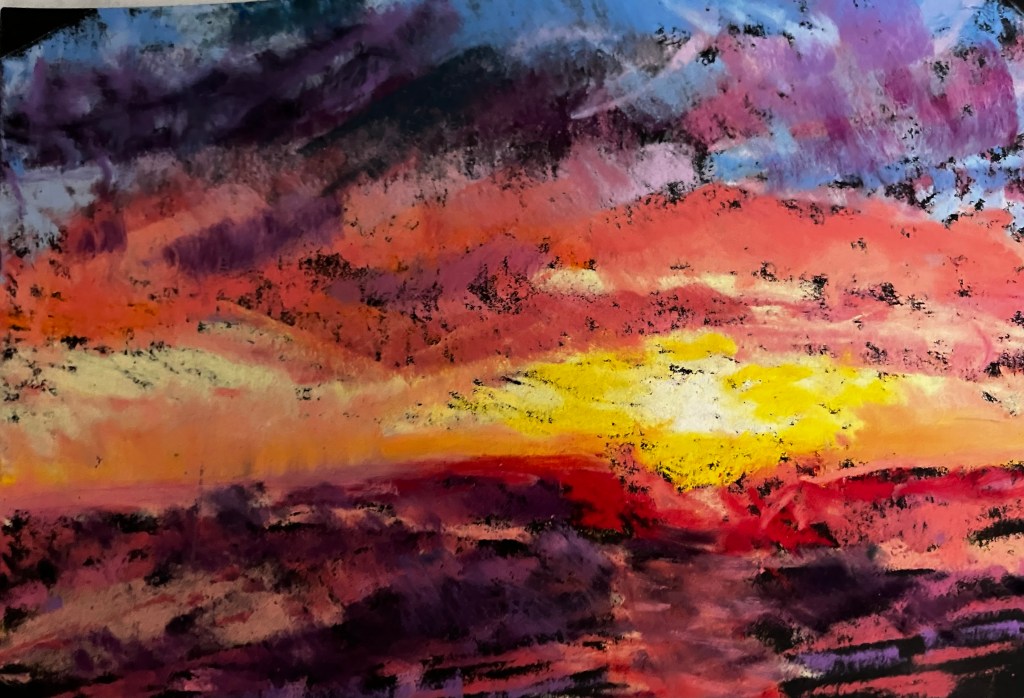
Let me share some works that document my continuing evolution as a painter. Other than the first two which are very early works, I am particularly happy with these paintings that just a few years ago I would never, ever have thought I could produce! And if you are engaged on your own development as an artist of any type, I highly recommend Art & Fear: Observations on the Perils (and Rewards) of Artmaking by David Bayles and Ted Orland.
Keynote Welcome to the XI INTERNATIONAL SYMPOSIUM ON CURRICULUM AND EDUCATIONAL POLICIES
The international symposium is presented by the The Universidad del Magdalena and the Vice-Rectorate for Research, through the Faculty of Education Sciences. According to the conference organizers:
Our main objective is to disseminate the results and advances of educational research and innovations in the fields of theory and curricular development, as well as in educational policies. We seek to foster collaboration between academic communities at national and international level and contribute to the ongoing debate and reflection in the constant search for high-quality education.
Registration for the symposium is now open and call for proposals is available until 08/20/2024. Both in person and virtual participation options are available.








 Metaliteracy.org