Call for Chapters: AI and Metaliteracy Book Project!

We are excited to invite contributions to our forthcoming book, “AI and Metaliteracy: Empowering Learners for the Generative Revolution” edited by Dr. Nicola Marae Allain and Dr. Thomas P. Mackey. This new volume will be published in fall 2025 for the Innovations in Information Literacy series edited by Trudi E. Jacobson for Bloomsbury Publishing (Rowman & Littlefield).
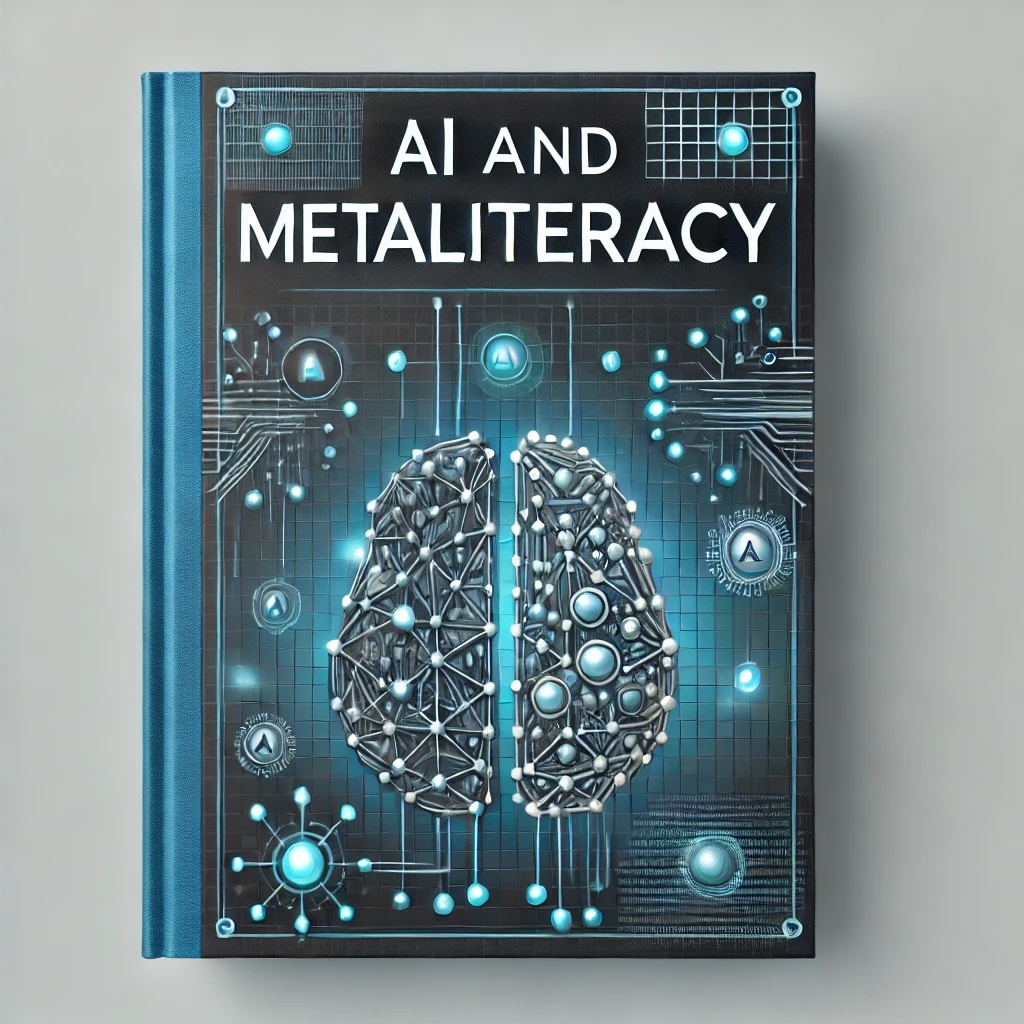
This pioneering book will feature theories and case studies about empowering learners with metaliteracy as reflective producers, informed writers, and active participants for the technological, pedagogical, and cultural revolution inspired by generative AI (Heaven, 2022, Mackey & Jacobson, 2011, 2022).

We are interested in groundbreaking approaches to metaliteracy education that encourage learners to engage with innovative AI tools such as ChatGPT and DALL-E, among many others, for creating artistic, literary, scientific, and scholarly forms of generative text, image, and video. Each chapter will focus on developing ethical metaliterate learners with autonomy and agency who are capable of producing individual and collaborative knowledge with AI (Mackey & Jacobson, 2011, 2022). We encourage imaginative chapters about the effective use of AI through the lens of metaliteracy and related literacy models, such as the ACRL Framework for Information Literacy for Higher Education and the ACRL Visual Literacy Framework.

We welcome proposals from educators and practitioners, including librarians, teachers and professors worldwide, particularly those offering case studies with solid theoretical foundations and transferrable pedagogical strategies.  We are seeking authors from wide-ranging disciplines, such as the Arts and Humanities, Digital Media Arts, Social Sciences, Composition Studies, Library and Information Science, Nursing, Business, and STEM. Chapter themes will also address the relevance of AI and metaliteracy to adult learning and workforce development and the importance of designing inclusive AI-driven learning experiences to advance digital equity, and accessibility for students with disabilities. The book will present methods for assessing the effectiveness of teaching metaliteracy competencies and highlight collaborative, interdisciplinary projects. We aim to provide international perspectives on the challenges and opportunities of empowering learners with generative AI and metaliteracy, exploring innovative theories and case studies that provide future directions for AI-driven learning environments.

Submission Guidelines

Proposals should include the following information:

  1. Title: The concise and descriptive title for your proposed chapter.
  2. Abstract: A summary (300-500 words) outlining the main objectives, theoretical foundation, metaliteracy components, generative AI tools, assessment methodology, and expected contributions of your chapter.
  3. Author Information: Names, affiliations, and contact details of all authors.
  4. Biographical Note: A brief biography (150-200 words) of each author highlighting relevant expertise and experience.

Please submit your proposals by December 15, 2024, to Tom.Mackey@sunyempire.edu. Selected authors will be notified by February 1, 2024, and full chapters will be due by May 1, 2025. Final chapters should be between 20 and 25 pages (double-spaced) and follow the formatting guidelines that will be provided upon acceptance.

Important Dates

Proposal Submission Deadline: December 15, 2024

Notification of Acceptance: February 1, 2025

Full Chapter Submission Deadline: May 1, 2025

Expected Publication Date: November 1, 2025

We look forward to receiving your innovative and insightful contributions that will help shape the future of metaliteracy for the generative AI revolution. For any inquiries or further information, please contact Nicola Marae Allain at Nicola.Allain@sunyempire.edu or Tom Mackey at Tom.Mackey@sunyempire.edu.

Join us in this groundbreaking project to advance education and empower learners with metaliteracy worldwide for the generative AI revolution!

Editors

Nicola Marae Allain, Ph.D. is the Dean of the School of Arts and Humanities at SUNY Empire State University, where she has held faculty (tenured) and administrative roles since 2002. Her research and leadership have focused on digital learning, immersive and virtual environments, and emerging technologies. She holds a PhD in Media and Communication from the European Graduate School, a MA in Dramatic Art, Dance and Music from the University of California, and a BA in English from the University of Ottawa. Allain’s interdisciplinary background in arts and humanities complements expertise in higher education technologies and systems, digital media arts, visual pedagogy, and digital communication. Throughout her career, Allain has demonstrated a commitment to developing an aptitude for lifelong learning among students and faculty, while supporting the agency and autonomy of learners within active and authentic learning environments. Her leadership in faculty development and curriculum design has modeled innovative strategies that scale across disciplines, and were widely adopted by SUNY Empire and institutions in New Zealand. Her decade-long role on the SUNY Innovative Instruction Research Council led to collaborations with the SUNY Faculty and Teaching with Technology (FACT2) Committee AI Task Group. Allain co-authored the SUNY FACT² Guide “Optimizing AI in Higher Education” (May 2024), for which she contributed sections on the social impact and creative applications of AI. She has previously collaborated on metaliteracy initiatives, courses and publications. Her recent articles focus on curriculum innovations in digital humanities, mindfulness, and leadership in higher education settings. Fluent in several languages, Allain is also a translator of French poetry and Classical Chinese literary texts.

Thomas P. Mackey, Ph.D. is Professor of Arts and Media and Program Coordinator for the BA and BS programs in Digital Media Arts at Empire State University. He is Academic Coordinator for online courses in Arts and Media. Dr. Mackey is the recipient of the Chancellor’s Award for Scholarship and Creative Activities (2022) and the Dr. Susan H Turben Chair in Mentoring (2021–2022). He has an honorary appointment as Extraordinary Professor, Research Unit Self- Directed Learning, Faculty of Education, North-West University, South Africa. Dr. Mackey originated the metaliteracy framework with Prof. Trudi E. Jacobson to prepare learners as individual and collaborative producers of new knowledge. He has published four books with Prof. Jacobson on metaliteracy, including the first co-authored manuscript on this topic entitled Metaliteracy: Reinventing Information Literacy as a Metaliteracy (2014). They co-edited two volumes Metaliteracy in Practice (2016) and Metaliterate Learning for the Post-Truth World (2019). Their most recent book Metaliteracy in a Connected World: Developing Learners as Producers (2022) is the recipient of the 2024 Divergent Publication Award for Excellence in Literacy in a Digital Age Research. Dr. Mackey’s latest book is a co-edited volume with Dr. Sheila Marie Aird entitled Teaching Digital Storytelling: Inspiring Voices through Online Narratives (2024). He has presented both nationally and internationally about metaliteracy and generative AI and has designed learning assignments in several courses to engage learners in the generative AI revolution.

References

Association of College & Research Libraries. (2022). Visual literacy competency standards for higher education: Framework companion document. Retrieved July 20, 2024, from https://www.ala.org/sites/default/files/acrl/content/standards/Framework_Companion_Visual_Literacy.pdf

ACRL Association of College and Research Libraries. (2015). Framework for information literacy for higher education. American Library Association. Retrieved July 20, 2024, from http://www.ala.org/acrl/standards/ilframework

Heaven, W. D. (2022, December 16). Generative AI is changing everything. But what’s left when the hype is gone? MIT Technology Review. Retrieved July 20, 2024, from https://www.technologyreview.com/2022/12/16/1065005/generative-ai-revolution-art/

Mackey, T. P., & Jacobson, T. E. (2011). Reframing information literacy as a metaliteracy. College & Research Libraries, 72(1), 62–78. https://doi.org/10.5860/crl-76r1.

Mackey, T. P., & Jacobson, T. E. (2022). Metaliteracy in a Connected World: Developing Learners as Producers. ALA Neal-Schuman.

Book image created in DALL-E using the prompt: “Visualize a dynamic book cover for AI and Metaliteracy: Empowering Learners for the Generative Revolution” (October 28, 2024).

Feel free to share this Call for Chapters!

Metaliteracy and GenAI Talk to be Featured at Alabama Association of College & Research Libraries (AACRL) Annual Meeting!

Register today for the upcoming virtual event Developing Metaliteracy to Teach and Learn with Generative Artificial Intelligence (GenAI) presented by Tom Mackey on April 24 (1pm CDT and 2pm EDT) at the Alabama Association of College & Research Libraries (AACRL) Annual Meeting. Registration is free and open so sign up today for this engaging and interactive conversation about metaliteracy in a world of GenAI.

Here’s the registration link:

https://uab.zoom.us/meeting/register/tZ0vceqprjwuHtMnBZ5cSuqaHg9N-oJQN6sX

According to the event description:

As generative artificial intelligence (GenAI) transforms higher education, how do we prepare learners for this rapidly evolving technology? How do librarians, faculty, and learners analyze the ethical dimension of GenAI? What does it mean to be an active producer and participant in these dynamic information environments? How does metaliteracy prepare reflective metaliterate learners to address such revolutionary changes to our learning communities?

https://aacrl.org/news-events/annual-meetings/

Thanks to Jennifer Long, Vice-President of the Alabama Association of College & Research Libraries (AACRL) and the Executive Board of the Alabama ACRL Chapter for the invitation to present!

Digital Storytelling and Metaliteracy Explored in New Book!

The new book edited by Dr. Sheila Marie Aird and Dr. Thomas P. Mackey Teaching Digital Storytelling: Inspiring Voices Through Online Narratives has been published by Rowman & Littlefield. The editors worked with an exceptional team of authors from SUNY schools, Temple University, and universities in South Africa to share their narratives about teaching with digital storytelling through the lens of information literacy and metaliteracy. The new book features a Foreword written by futurist and digital storytelling pioneer Dr. Bryan Alexander. This is the newest book to be included in Trudi Jacobson’s Innovations in Information Literacy Series at Rowman & Littlefield.

This book project emerged from the collaborative teaching by the Drs. Aird and Mackey to design a fully online course in Digital Storytelling to unite Empire State University students studying in Prague, Czech Republic and the United States. This course fully integrates the metaliteracy framework and features learning objects available at the metaliteracy.org blog. The editors wrote the framing chapter about this case study Metaliteracy and Global Digital Storytelling: Building Shared Learning Communities.

As noted in the book overview and description:

This book presents the stories of educators who through digital storytelling inspire students from diverse communities to construct their empowering digital narratives. Educators from a wide range of disciplines present innovative case studies of teaching digital storytelling through the lens of personal narratives, metaliteracy, and information literacy. They describe how teaching students to tell their personal digital stories prepares them as learners who are reflective while playing active learner roles such as producer, publisher, and collaborator. 

https://rowman.com/ISBN/9781538172919/Teaching-Digital-Storytelling-Inspiring-Voices-through-Online-Narratives

We invite you to explore this new book and tell us about your own digital storytelling adventures!

-Sheila and Tom

Development of a Metaliteracy Course for Online Ed.D. Students and Beyond

Metaliteracy, as introduced by Mackey and Jacobson in 2011, has been instrumental in developing metaliterate learners in a variety of contexts. The ACRL Framework for Information Literacy for Higher Education, published in 2016, transformed the previous Information Literacy Competency Standards for Higher Education (ACRL, 2000) into frames that build upon each other and were not prescriptive in how to assess students’ learning. Many librarians turn to the Framework as a guideline for developing information literacy courses, tutorials, guided studies, and assessments. Libraries and librarians create assessments of the Framework that are varied and individualized.

Using the Framework in conjunction with metaliteracy goals and learning objectives can enhance the student experience as well as give librarians a standard to follow that ensures development of skills needed in a participatory, connected environment (Mackey & Jacobson, 2011). Notes that reference metaliteracy and metacognition can be found in the Framework (2016). The Framework does have its strengths, but incorporating metaliteracy goals and learning objectives into the frames can aid in assessment and add to the knowledge and skills students should develop throughout their lifetime, not just when they are participating in higher education.

Using the original set of metaliteracy goals and learning objectives found on metaliteracy.org (Forte, et al, 2014), a metaliteracy course was developed in the Learning Management System (LMS) Canvas, specifically for fully online Ed.D. students, preparing them for research-related content encountered in their courses (Atkinson, 2019). The original course by Atkinson (2019) compared pretest, posttest, and metacognitive skills, using the Metacognitive Strategies for Library Research Skills Scale (MS-LRSS) developed by Catalano (2017). 

The course was designed using backward design methods (Wiggins & McTighe, 2006) to introduce online doctoral students to common library terminology, metaliteracy, and metacognitive concepts. The metaliteracy course was not intended to take the place of library tutorials, individualized instruction, or research consultations–all of which are critical to meet the needs of doctoral students in an online environment.

The metaliteracy course consists of five modules, four of which are directly related to the metaliteracy goals and learning objectives from 2014 (Forte, et. al., 2014). The fifth module relates to specific skills students need to be successful, particularly in the Ed.D. program such as requesting materials through InterLibrary Loan, identifying research methods, and recognizing specific library databases. Each module consists of a pretest, an overview and videos (most of which are three minutes or less), and a posttest. Each module name, the video titles, and learning objectives are listed below.

Module 1: Evaluate Content Critically
Two Videos: Scholarly Resources; Peer Review

Objective: Metaliterate learners evaluate information critically by determining authority, relevancy, accuracy, and validity of each source regardless of the information’s delivery method.

By the end of this module, learners will be able to:

1) Recognize the criteria for evaluating authority, relevancy, accuracy, and validity of information sources

2) Determine context of an information source by considering purpose and format

3) Distinguish between scholarly and non-scholarly sources

4) Understand the process of peer review and its purpose in scholarly research

Module 2: Information Ethics

Two Videos: Academic Integrity, Copyright, and Plagiarism; APA Style

Objective: Metaliterate learners understand and differentiate between their own intellectual property and others’ intellectual property, and give credit to others’ work using proper citation style methods.

By the end of this module, learners will be able to:

1) Understand the concepts of academic integrity, copyright, and plagiarism

2) Differentiate between various forms of attribution

3) Identify parts of a citation in APA style

4) Recognize elements of APA style in context

Module 3: Information Creation, Sharing, and Collaboration

Three videos: Social Media; Digital and Visual Literacy; Creating Original Content

Objective: Metaliterate learners are aware of their online environments, participate collaboratively, transfer information from one format to another, and produce and share original content.

By the end of this module, learners will be able to:

1) Understand the various ways of sharing original content

2) Consciously participate in social media environments

3) Describe digital and visual literacy and their importance to metaliterate learning

4) Identify digital and media formats and the uses and purposes of each

Module 4: Lifelong Learning Research Strategies

Two videos: Information Needs; Metacognition

Objective: Metaliterate learners connect learning with personal, professional, and lifelong goals using their experiences. Metaliterate learners recognize metacognitive principles of learning by acknowledging that learning is a process and can reflect on research difficulties to improve strategies.

By the end of this module, learners will be able to:

1) Know which search strategies are appropriate for the information needs

2) Determine tasks involved to develop research questions

3) Reflect on one’s own knowledge and determine ways to increase metacognition skills

4) Recognize the process of critical thinking that leads to metaliterate learning

Module 5: Research Skills Proficiency

Three videos: Types of Sources; Requesting Materials and ILL; Research Methods

Objective: Metaliterate learners are proficient in distinguishing between types of sources, describing research methods, and understanding how to request materials to find relevant, scholarly, and authoritative information sources.

By the end of this module, learners will be able to:

1) Describe research methods, including quantitative, qualitative, and mixed methods

2) Distinguish between primary, secondary, and tertiary sources

3) Recognize ACU library’s databases, authentication process, and InterLibrary Loan procedures

4) Understand how to request physical materials

The original course has been modified to reach other fully online student audiences such as undergraduate students and Doctor of Nursing Practice (DNP) students. The undergraduate metaliteracy course is embedded in a critical thinking course that is taken by all online undergraduates. The program directors for the Ed.D. and DNP programs encourage students to self-enroll in the Canvas metaliteracy course specifically designed for those students in each program. Currently, a LibGuide is being developed to bring the metaliteracy course to a wider audience than is currently reached in Canvas. The full metaliteracy course will be available at this link (forthcoming), https://guides.acu.edu/metaliteracy, and currently includes all of the learning objectives and videos for each module.

A mapping of the ACRL Framework to the metaliteracy course objectives can help expand the knowledge and skills students need to succeed in their courses and beyond. The concept of metaliteracy is important for either an introduction for undergraduate students to library and research terminology or for graduate and doctoral students who already have these concepts developed as well as students who have not been to school for a long time and need a refresher on these concepts. Future plans include updating the metaliteracy course to incorporate the updated metaliteracy goals and learning objectives from 2018 (Jacobson, et al, 2018) as well as an update to the mapping of the Framework.

References

Association of College and Research Libraries. (2000). Information literacy competency standards for higher education. Retrieved September 29, 2023, from https://alair.ala.org/handle/11213/7668

Association of College and Research Libraries. (2016). Framework for information literacy for higher education. Retrieved September 29, 2023, from https://www.ala.org/acrl/standards/ilframework

Atkinson, M. D. (2019). The relationship between metaliteracy pretest, posttest, and Metacognitive Strategies for Library Research Skills Scale: Creating a metaliteracy course for online Ed.D. students [Doctoral dissertation, Regent University]. https://digitalcommons.acu.edu/library_pub/32

Catalano, A. A. (2017). Development and validation of the Metacognitive Strategies for Library Research Skills Scale (MS-LRSS). Journal of Academic Librarianship, 43(3), 178–183. https://doi.org/10.1016/j.acalib.2017.02.017

Forte, M., Jacobson, T., Mackey, T.,  O’Keeffe, E., & Stone, K. (2014). 2014 Metaliteracy Goals and Learning Objectives. Retrieved September 29, 2023, from https://metaliteracy.org/learning-objectives/2014-metaliteracy-goals-and-learning-objectives/.

Fulkerson, D. M., Ariew, S. A., & Jacobson, T. E. (2017). Revisiting metacognition and metaliteracy in the ACRL Framework. Communications in Information Literacy, 11(1), 21-41. https://doi.org/10.15760/comminfolit.2017.11.1.45

Jacobson, T., Mackey, T., O’Brien, K., Forte, M., & O’Keeffe, E. (2018). 2018 Metaliteracy Goals and Learning Objectives. Retrieved September 29, 2023, from https://metaliteracy.org/learning-objectives/2018-metaliteracy-goals-and-learning-objectives/

Mackey, T. P., & Jacobson, T. E. (2011). Reframing information literacy as a metaliteracy. College & Research Libraries, 72(1), 62–78. https://doi.org/10.5860/crl-76r1

Wiggins, G., & McTighe, J. (2006). Understanding by design (2nd ed.). Pearson.

From the Literature No. 2

This second From the Literature post brings to your attention a 2022 article by Alison Hicks and Annemaree Lloyd, “Reaching into the basket of doom: Learning outcomes, discourse and information literacy,” published in the Journal of Librarianship and Information Science.

Hicks’ and Lloyd’s article, the third in a series, “employs the theory of practice architectures and a discourse analytical approach to examine the learning goals of five recent English-language models of information literacy” (p.1). The five models, all developed since 2010, include two from the UK: ANCIL and SCONUL’s Seven Pillars, and three from the US: AACU, the ACRL Framework, and Metaliteracy. Table 1 provides an illuminating overview of the origins and characteristics of each of the models, which is then explored in more detail in the literature review section. The authors compare these new models from the “second wave of constructivist-focussed information literacy models (Hicks and Lloyd, 2016)” with first wave models, including the ACRL Standards. [Hicks A and Lloyd A (2016) It takes a community to build a framework: Information literacy within intercultural settings. Journal of Information Science 42(3): 334–343.]

The authors state that

“Since their creation, these models have been widely implemented within North American and UK systems of higher education and have been welcomed by teaching librarians…and teaching faculty, particularly in the area of writing and composition studies…. However, somewhat surprisingly, given the role that models play within teaching librarianship, there have been few attempts to examine and critique these guidelines” (p.4)

(Please see their article for the authors they cite in connection with these statements.) Grounding their work in the theory of practice architecture, they use discourse analysis to examine the learning goals and outcomes of the five models.

This analysis suggests that there are 12 common dimensions across the five models, and the authors provide details of these dimensions in Appendix 1. Hicks and Lloyd assert that the 12 dimensions can be grouped into two categories, Mappying and Applying (p. 6).

The Mapping category encompasses learning outcomes that introduce the learner to accepted ways of knowing or what is valued by and how things work within higher education. Comprised of seven dimensions, including Access, Comply, Disseminate, Evaluate, Identify, Manage and Search, this category inculcates induction into the ways in which information is understood, interpreted and organised within new or specific academic cultures. One of the most prominent emphases within this category is on the mapping of information systems that will contribute to academic success, whether this is the information tools or the information sources that will be useful for academic study. (p. 6)

They continue,

The Applying category encompasses learning outcomes that encourage the learner to implement or integrate ideas into their own practice, including to their own questions, to themselves or to their experience. Forming a more personally focussed approach to learning, this category comprises five dimensions including Analyse, Determine need, Maintain, Reflect and Transfer. (p. 7)

The discussion section not only examines these findings, but also touches upon those aspects of information literacy from the first wave that were not found in the analysis of the five models.

The implications from the authors’ research have a potential major impact on information literacy in higher education:

Beyond helping to demonstrate areas of practice that have been overlooked, this research provides insight into how the writing of learning outcomes could be improved, including by making the language more specific. This research also calls for the broadening of research methods that are used to create institutional models and guidelines…. (p. 9)

As with our first look into the literature, we encourage you to read this critically important article, as this brief overview can not hope to capture the full impact of the authors’ work. It will also afford you the opportunity to understand the article’s title.

Citation:

Hicks, Alison, and Annemaree Lloyd. 2022. “Reaching Into the Basket of Doom: Learning Outcomes, Discourse and Information Literacy.” Journal of Librarianship and Information Science 0(0). 10.1177/09610006211067216

Interactive Metaliteracy Workshop for Developing Learners as Producers

Trudi Jacobson and Tom Mackey facilitated an interactive webinar entitled Teaching with Metaliteracy: Developing Learners as Producers for the American Library Association (ALA) eLearning Solutions continuing education program on July 14, 2022. The webinar was based on Tom and Trudi’s latest book for ALA Neal-Schuman, Metaliteracy in a Connected World: Developing Learners as Producers.

You may want to walk through the slide show asynchronously to gain new insights about the content presented. All of the interactive components are still available so feel free to jump in and contribute to the following:

Feel free to explore the ideas generated, contribute your own, and/or develop your own metaliteracy workshop based on this model!

Connecting Metaliteracy and the ACRL Framework for Information Literacy

Visualizations, whether figures, graphs, or charts, can convey meaning and explore connections in a vivid manner, A recent book edited by Jannette L. Finch, Envisioning the Framework: A Graphic Guide to Information Literacy (ACRL, 2021) contains chapters that provide a variety of visualizations of the ACRL Frameworik for Information Literacy for Higher Education (ACRL 2105) One of the chapters, Visualizing the Convergence of Metaliteracy and the Information Literacy Framework is written by Trudi Jacobson, Tom Mackey, and Kelsey O’Brien. The chapter delves into specifics that help to show how metaliteracy influenced the Framework. It includes this visualization that allows readers to see at a glance where metaliteracy’s characteristics and the Framework’s dispositions align.

Information Has Value: Engaging Students as Wikipedia Editors

Trudi and Jackson Grey, a student in her fall 2021 Information Literacy in the Humanities and Fine Arts course, presented at the virtual 2021 WikiConference North America in October. This course uses a combination of the Wiki Education program, metaliteracy, and frames from the ACRL Information Literacy Framework for Higher Education to encourage students to see themselves as ethical and responsible information producers.

The Wiki Education program provides excellent training for novice Wikipedia editors, but a conceptual understanding of the value of information, as well as scaffolding to recognize themselves as information producers, can provide a rich underpinning for this new set of skills, a background that will help them to see the value of their contributions, and encourage them to continue as metaliterate Wikipedia editors.

Jackson, a senior at the University at Albany majoring in philosophy, provided a student’s viewpoint in such a learning situation where It is possible to share growing knowledge in a field of study. He also explored the differing values of information, inherent vs. as a means to an end, and the disconnect between the availability of information and its importance.

The presentation is available on YouTube as part of a day of programs. It starts at 6:05, and this link is set to start at that point.

Metaliteracy Workshop at the European Conference on Information Literacy (ECIL) Online

As part of this year’s ECIL Online, Trudi Jacobson and Tom Mackey present an interactive workshop entitled “Teaching with Metaliteracy: Developing Informed, Reflective, and Participatory Citizens.” This session applies the core components of the metaliteracy model and feature surveys and padlets to engage the audience. According to the description:

In this interactive workshop, participants will explore metaliteracy, including the metaliterate learner model and characteristics, review the goals and learning objectives and their value, touch upon differences between metaliteracy and the ACRL (2015) and CILIP (2018) conceptions of information literacy, and consider both open metaliteracy resources and sample open educational practice models that they support. Participants will explore options that will meet the needs of their students, and start a plan for incorporating metaliteracy in their formal or informal teaching. They will be able to learn from one another and share ideas on an online, open platform for continuing consultation, reporting of results, and idea-sharing.

(Jacobson & Mackey, 2021)

The ideas and techniques applied in this workshop are flexible and transferrable to different pedagogical settings and situations. If you would like to talk with us about ways to adapt this workshop to your setting, feel free to contact us.

Trudi and Tom

The Roles of Metaliteracy and Wikipedia Editing in Overcoming Imposter Syndrome

“Anyone could make edits, and anyone could challenge those edits…This helped me feel less like an outsider trying to fit into a conversation and more like one of a million voices that were working together towards a shared goal of information creation and consumption.”

It is not only illuminating, but also vital to hear from learners about the impact of their encounters with metaliteracy. Asking them to write reflective pieces is one way to find out how components of metaliteracy may have had an effect on their learning. A recent Wiki Edu blog post by Corrin Baker, a graduating senior at The University at Albany, provides such insight. Corrin expanded a wonderfully written course reflection for this post about a course taught by Prof. Trudi Jacobson.

In describing metaliteracy’s producer role, Ms. Baker wrote:

The shared roles of producer and consumer were present in every step of the course. I was fully engaged in locating and evaluating sources, and then finding ways to make that information both understandable and accessible. I felt a great sense of responsibility to the audience and to the authors whose work I was using. I was also far more aware of diversity in a global audience, especially as I found myself struggling to find non-male authors to cite. 

The course, which lasts just seven weeks, is challenging for students, but aims to have a lasting effect on their understanding of information and their roles in producing and sharing it. Corrin’s reflection testifies to the incredible impact that the blend of metaliteracy, information literacy, and the wonderful Wiki Education program can have.

Read the full post here: Overcoming imposter syndrome by editing Wikipedia

Wiki. edu logo by David Peters of EXBROOK for Wiki Education Foundation – Wiki Education Foundation, Public Domain, https://commons.wikimedia.org/w/index.php?curid=33179189