In a second metaliteracy presentation, Prof. Tom Mackey collaborated with Prof. Sheila Marie Aird on Collaborating to Teach Global Digital Storytelling Online. Tom and Sheila’s presentation explores how they applied metaliteracy to the design of a Digital Storytelling course they co-teach at SUNY Empire State College as a fully online international experience. Their slideshow is available via their Global Digital Stories blog.
“Anyone could make edits, and anyone could challenge those edits…This helped me feel less like an outsider trying to fit into a conversation and more like one of a million voices that were working together towards a shared goal of information creation and consumption.”
It is not only illuminating, but also vital to hear from learners about the impact of their encounters with metaliteracy. Asking them to write reflective pieces is one way to find out how components of metaliteracy may have had an effect on their learning. A recent Wiki Edu blog post by Corrin Baker, a graduating senior at The University at Albany, provides such insight. Corrin expanded a wonderfully written course reflection for this post about a course taught by Prof. Trudi Jacobson.
In describing metaliteracy’s producer role, Ms. Baker wrote:
The shared roles of producer and consumer were present in every step of the course. I was fully engaged in locating and evaluating sources, and then finding ways to make that information both understandable and accessible. I felt a great sense of responsibility to the audience and to the authors whose work I was using. I was also far more aware of diversity in a global audience, especially as I found myself struggling to find non-male authors to cite.
The course, which lasts just seven weeks, is challenging for students, but aims to have a lasting effect on their understanding of information and their roles in producing and sharing it. Corrin’s reflection testifies to the incredible impact that the blend of metaliteracy, information literacy, and the wonderful Wiki Education program can have.
As educators strive to deal with this information flood in a world of partisan politics and questionable content, critical and reflective thinking are required to better understand this philosophical moment and one’s role in it. Metaliteracy promotes the development of metaliterate digital citizens who are civic-minded and effectively produce content in a participatory networked culture (Hill & Mackey, 2021, p. 220).
As part of this article, the Community Virtual Library (CVL) in Second Life is analyzed through the four primary goals of metaliteracy. Valerie J. Hill is the director of the CVL and provides insights about related programming in this virtual library community such as the annual Dickens Project that features a reading of A Christmas Carol and historical simulations.
Thanks to Trudi E. Jacobson for reading a draft of the article and providing feedback!
Hill, V., & Mackey, T. (2021). Embracing metaliteracy: Metamodern libraries and virtual learning communities. College & Research Libraries News, 82(5), 219.
Profs. Trudi Jacobson and Tom Mackey delivered the keynote address entitled Metaliteracy: Engaging Students through Assessment as Learning at the Second Virtual Training Session 4th National Meeting of Information Literacy Competencies. This virtual event was hosted by the University of Puerto Rico in February and the presentation is now available as a recording on YouTube.
This presentation explores both the theory and practice of metaliteracy with a particular emphasis on assessment as learning. The following topics are covered:
Engaging Students in Learning
Developing a Metaliterate Mindset
Metaliteracy and Open Learning
Metaliteracy and Assessment
Integrating Assessment through Metaliteracy in Your Setting
In addition to the recording, feel free to explore the slide deck for ideas about ways to apply metaliteracy to your own teaching strategies.
We welcome any feedback or ideas that you have and when you adapt one of these techniques to your own setting let us know!
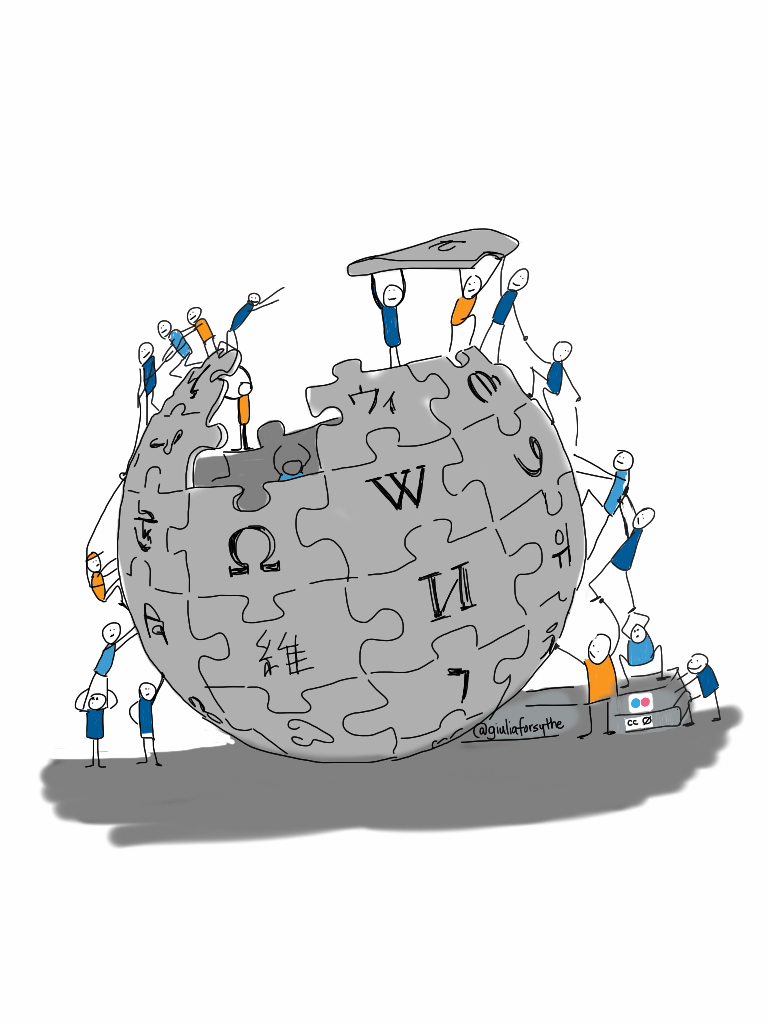
Wikipedia is used by so many people to learn about topics they are interested in. But if they want to learn more about Metaliteracy, they won’t have much luck. A search on the word “metaliteracy” in Wikipedia yields two results, very brief mentions in the Information Literacy and Transliteracy articles. There have been efforts in the past to get an article included specifically on Metaliteracy. Now, once more, the draft Metaliteracy article that began with these earlier efforts has been restored for editing. This latest draft needs additional content before being considered for permanent status. It would be tremendous if the effort this time were successful.
Are you available to work on a new draft of a Wikipedia article about metaliteracy? An educator in Canada is analyzing how the article might be shaped to address the reasons earlier efforts were unsuccessful. Her analysis can be seen on the Talk page for the draft. She is continuing to work on the page, but is new to metaliteracy and would love to have assistance. Tom, Trudi, and Kelsey are unable to work on it, as per Wikipedia’s policies. While we post all of our open content via Metaliteracy.org, including a concise definition at our About page, our latest Publications, and Metaliteracy in Practice, it would be great to reach an even wider audience through Wikipedia. Types of additions that are particularly needed are information about metaliteracy applications by others, and connections between metaliteracy and other pedagogical frameworks.
If you have already edited Wikipedia, feel free to jump right in and join the conversation on the Talk page. If you’ve never edited Wikipedia, learning to do so is not hard, and it is actually quite fun and satisfying! There are numerous resources available to help you learn how to edit. Here are just a few of them:
The Wikipedia Adventure: Learn to edit Wikipedia in under an hour! Accomplish 7 missions and you are good to go! Unfortunately, the adventure doesn’t work on tablets and other mobile devices.
Student training modules: Trudi’s students learn quite quickly how to edit Wikipedia by working through some of these concise yet extraordinarily helpful modules. Ignore the mention of the student dashboard, and jump right in. If you’ve completed The Wikipedia Adventure and want a refresher on some topics, this would be a great way to access that information.
The new metaliteracy book written by Tom Mackey and Trudi Jacobson will be published by ALA/Neal Schuman in summer 2021!
The fourth metaliteracy book in a series is entitled Metaliteracy in a Connected World: Developing Learners as Producers and will focus specifically on the metaliterate learner as informed and ethical producer of information in collaborative social settings. The Foreword to this book will be written by Jako Olivier, UNESCO Chair on Multimodal Learning, and OER Professor in Multimodal Learning, North-West University, South Africa.
In this newest book in their series, the authors carefully examine the central role of learners as producers of information, a foundational idea for the metaliteracy framework and one that’s more important than ever in our current media and information environment. They emphasize the active role today’s learners play as individual and collaborative metaliterate producers of information in various forms, including writing, digital stories, digital artifacts, and multimedia productions. The authors explore a range of connected social settings from online courses to social media to open learning environments.
We are excited to announce the forthcoming publication of our next book and will provide updates via Metaliteracy.org as we get closer to the publication date so stay tuned!
SUNY Online has just published their schedule of events for 2021’s Open Education Week.There are a number of presentations from Monday, March 1 to Friday March 5, several of which fit in well with the very metaliterate idea of learner as producer.
On Tuesday, March 2 at 10:00 ET, Trudi will be presenting “Enhancing Student Engagement Through Scaffolded Non-Disposable Assignments,” in which metaliteracy will be playing a starring role! At least one of her current students plans to participate, providing his views as a counterpoint.
Perhaps you will be able to attend one or more of the sessions. The registration link is available on the schedule of events page.
Metaliterate Learner Characteristics CC-BY The Metaliteracy Learning Collaborative
The videos depict metaliterate learning in action: a learner considers the impact of the affective domain when seeking information on a topic about which they are particularly passionate (and perhaps biased); a metaliterate author creates a digital story that ethically incorporates repurposed content; and civic-minded citizens work together to create trusting online spaces by developing and enacting community guidelines. The examples in the videos, by no means exhaustive, encourage self-reflection as viewers contemplate the roles, characteristics, and domains they employ as metaliterate learners. The videos also emphasize that metaliterate learning is a continual, reflective process and prompt learners to consider the aspects with which they identify as well as those toward which they aspire.
Do you have ideas for how you might incorporate these resources into your teaching? Please feel free to embed the videos into your lessons and tell us about it in the comments! We’d love to know more about your ideas and practices.
Profs. Trudi Jacobson and Tom Mackey have been invited to provide a keynote address on metaliteracy at a virtual event hosted by the University of Puerto Rico on February 11, 2021. This new presentation, entitled Metaliteracy: Engaging Students through Assessment as Learning, will occur during the Second Virtual Training Session 4th National Meeting of Information Literacy Competencies. Registration for this event is open at: https://lnkd.in/eeyEtjt. We look forward to seeing you virtually! – Trudi & Tom
This new presentation addresses today’s fractured information environment and how metaliteracy can be applied in these challenging times. Trudi and Tom talk about ways to rebuild trust in these environments through metaliteracy and to share ideas about how to design open learning initiatives with this model.




 Metaliteracy.org