Metaliteracy, Mmetaliteracy, or Metagramotnost?

by Trudi E. Jacobson

There is an article about metaliteracy on Wikipedia. Actually, there are four. But let’s start at the beginning, with the one that was never officially published. While there are millions of articles on Wikipedia, there are also guidelines about what might appropriately be added to the site.

First, the subject must be notable. In other words, it must have gained sufficiently significant attention by the world at large and over time, and secondly, it must fall within Wikipedia’s scopeNotability involves these elements:

  • Significant coverage in reliable sources suggests it would merit its own Wikipedia article
  • This significant coverage directly addresses the topic, in some detail, so no original research is needed
  • Reliable sources “means that sources need editorial integrity to allow verifiable evaluation of notability”
  • Sources must be secondary sources, which might be either online or in print, in English or not
  • Being “independent of the subject” means that “works produced by the article’s subject or someone affiliated with it” cannot be the reliable secondary sources that justify the Wikipedia article.

While there is the perception that anyone can add anything to Wikipedia, this clearly is not the case. It can be an uphill struggle to get new articles approved. Two earlier blog posts document the struggle to get a metaliteracy article added to Wikipedia, one from December 2019 and the second from April 2021. There was also a celebratory post from May 2022 when the Metaliteracy Wikipedia article was accepted. Taking a look at the page that documents the history of edits to the article, there have been a modest number of changes since its publication. It took a while, but the resulting metaliteracy article is excellent.

Let’s return to the title of this blog post. The exciting news is that there are now translations of the metaliteracy article appearing on three additional language versions of Wikipedia: Spanish, Igbo (native to Nigeria), and Čeština (native to the Czech Republic). The revision history page for each of these indicates that the English version was translated as is, rather than new metaliteracy articles being created from scratch. However, a small number of edits have since been made in each article--they have taken on lives of their own.

Wikipedia has a resource page for translating English-language articles into other languages. There are automated tools to help create these translations. But machine translations can’t be relied on without some additional work. As mentioned on the resource page, “Mere machine translations, without substantial modification are highly undesirable. For that reason, you must have a reasonable level of fluency so that you can make appropriate changes to the tool’s automated output.” We would love to see translations appear in additional Wikipedia language versions to make information about metaliteracy available to all who are interested. Would you be able to help, if you are a speaker of languages beyond English? The metaliteracy learning goals and objectives are currently available in 15 different languages. It would be great if the number of metaliteracy Wikipedia articles reached that level!

The Wikipedia logo is from Wikimedia Commons: https://commons.wikimedia.org/wiki/File:Wikipedia-logo-v2-en.svg.

Metaliteracy Goals and Learning Objectives Now Available in All Eleven Official Languages of South Africa!

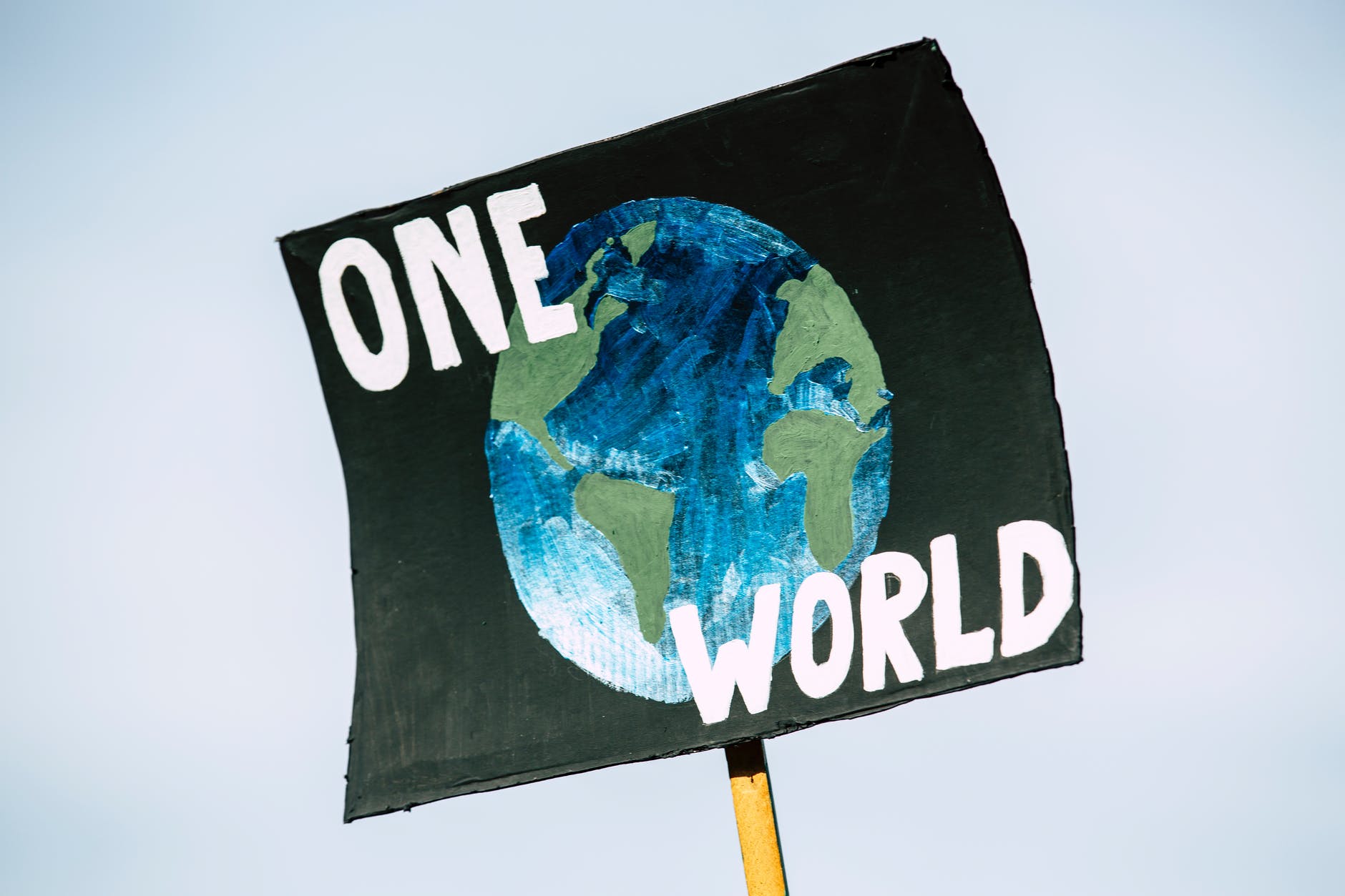
Picture of "one world" text with image of the Earth as a sign.

In celebration of the start of the UN International Decade of Indigenous Languages, the UNESCO Chair on Multimodal Learning and OER contributed to extending access to resources on metaliteracy by facilitating the translation of the Metaliteracy Goals and Learning Objectives into all official languages of South Africa.

Prof. J.A.K. Olivier, UNESCO Chair on Multimodal Learning and OER, Research Unit Self-Directed Learning, North-West University (NWU), South Africa, arranged for the translation of the Metaliteracy Goals and Learning Objectives into eight additional South African languages: isiNdebele, isiXhosa, isiZulu, Sesotho, Sesotho sa Leboa, Siswati, Tshivenda, and Xitsonga.

This substantial expansion of the translated Metaliteracy Goals and Learning Objectives builds upon previous translations in two other official South African languages (the 11th official language is English), Afrikaans and Setswana, as well as French, German, Italian, Portuguese, and Spanish.

Thanks to all of our translators! If you would like to contribute to this metaliteracy global project, just let us know!

-Trudi and Tom

Portuguese Translation of the First Metaliteracy Book is Published Online

Metaletramento (Metaliteracy) is available online! 

The full-text version of Metaletramento is presented as an open and fully online resource at: http://www.valentim.bsb.br/metaletramento/. This dynamic site features an interactive Table of Contents, annotation tools, QR code, and link to the virtual presentation entitled Metaliteracy and the Perspectives of Information Science in the Digital Age. This roundtable discussion celebrated the publication of book and took place at the XXI National Meeting of Research and Postgraduate Studies in Information Science (ENANCIB 2021) – Brazil  This Portuguese translation of the first metaliteracy book by Tom Mackey and Trudi Jacobson was supported by The Brazilian Institute of Information in Science and Technology (IBICT), Research Unit of the Ministry of Science, Technology and Innovation (MCTI) in partnership with UNESCO and ALA/Neal-Schuman Publishing. Thanks to Helda Pinheiro and Dr. Cecília Leite, Director of Ibict, and the Faculty of Information Science at the University of Brasília.

Presentation to Launch the Publication of Portuguese Translation of the first Metaliteracy Book

In a virtual roundtable to launch the Portuguese translation of the first metaliteracy book, Metaletramento (Metaliteracy), Tom Mackey and Trudi Jacobson presented Metaliteracy and the Perspectives of Information Science in the Digital Age (this is the full presentation with Portuguese translation via YouTube). This discussion was part of the XXI National Meeting of Research and Postgraduate Studies in Information Science (ENANCIB 2021) – Brazil and supported by The Brazilian Institute of Information in Science and Technology (Ibict), Research Unit of the Ministry of Science, Technology and Innovation (MCTI).

Thanks to Helda Pinheiro, Dr. Cecília Leite, Director of Ibict, and the Faculty of Information Science at the University of Brasília for the invitation to present.

Trudi and Tom

Zielsetzungen und Lernziele: German Translation of the Metaliteracy Goals and Learning Objectives

We are delighted to be able to offer the Metaliteracy goals and learning objectives in a German translation! Theresia Woltermann, who works for the Goethe-Institut, a German cultural association that promotes German language study abroad and encourages international cultural exchange, accomplished the translation in record time during the summer of 2021. Theresia has also been the 2021 research associate extraordinaire for the Intercultural Perspectives on Information Literacy project. Many thanks, Theresia!

This is the seventh translation of the Metaliteracy goals and learning objectives. We appreciate the previous translations in French, Afrikaans, Italian, Setswana, Spanish, and Portuguese. This work demonstrates the international interest in Metaliteracy and the transferability of these ideas to different educational settings.

Are you interested in translating the Metaliteracy goals and objectives in a language that has not been completed yet? Feel free to reach out to us!

Trudi and Tom

Portuguese Translation of Goals and Learning Objectives Available, More May Be Forthcoming

Hot on the heels of the Spanish translation so kindly provided by Dora Sales, Senior Lecturer in Information Literacy for Translators at Jaume I University in Spain, we now have available a Portuguese translation of the numbered goals and learning objectives, thanks to Maria Pinheiro, doctoral student at the Faculty of Information Science at the University of Brasília, Brazil. We very much appreciate this, Maria!

Florent Michelot, who translated the goals and learning objectives into French last year, has graciously shared with us some of his investigations into translation services. Based on his assistance, we are looking into this way of making the goals and learning objectives, and possibly other content, available to more people. Florent is a doctoral candidate at the University of Montreal.

Spanish Translation of Metaliteracy Goals and Learning Objectives Now Available

We would like to thank Dora Sales, Senior Lecturer in Information Literacy for Translators at Jaume I University in Spain for our newest translation of the Metaliteracy Goals and Learning Objectives. We have seen that much literature citing metaliteracy is produced in Spanish, and expect that having a Spanish translation will assist the work of Spanish-speaking researchers. Thank you very much, Dora.

Currently, we have translations of the goals and objectives into Afrikaans, French, Italian, Setswana, and Spanish. if you are able to assist in translating them into another language, we would love to hear from you. Please contact Trudi (tjacobson@albany.edu) and Tom (Tom.Mackey@esc.edu).