We welcome this guest post from Gabrielle Lerner, Student Government Association President and a graduate student in the MPA Program at Empire State University!
What is information? Is it the truth or perspective? What are we interpreting, and how do we know? Are we considering a lens or a fragment of something that is before us? I want to see information and feel that it is true—to discern its actuality. Can we feel information, like the vibration of a song? Is the goal for it to resonate and transcend our logical minds, or do we compare its intensity and velocity to standing on a mountain high up in the sky?
These were just some of the questions that stirred my curiosity during my metaliteracy course, an experience that transformed how I view and engage with information.
About three years ago, I had the incredible opportunity to take this course, and it remains one of the most profound educational experiences of my life. The course, Intercultural Perspectives on Information Literacy and Metaliteracy, brought together a diverse team of students from across the globe, including Germany, Bosnia-Herzegovina, Austria, Poland, India, and the United States. Our differences enriched our collaboration, offering a tapestry of perspectives as we navigated complex questions about truth, bias, and the framing of information. I am deeply grateful for the experience and for the chance to work with such a talented and thoughtful group of individuals.
As a group, we focused on the ways information is created, shared, and consumed, using an infographic as our lens. Our discussions delved into the complexities of citing general information, which can transform into something deeply specific with just the click of a button.
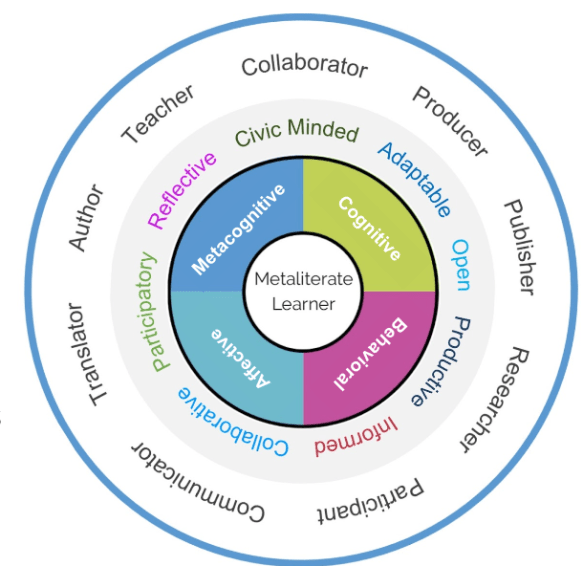
One of our most memorable exercises involved using the Metaliteracy wheel to assign roles within the group, ensuring that everyone contributed as a Teacher, Collaborator, Researcher, and Producer. This approach inspired us to be facilitators, speakers, and leaders. Together, we examined a controversial topic—climate change—from a perspective detached from the heated debates over causes or effects. Instead, we honed in on how information about climate change is produced, disseminated, and received.
The virtual landscape we explored was overwhelming at times, a maze of truths and half-truths that made us question what we thought we knew. We sought clarity amid the noise, sifting through scholarly articles, social media posts, and everything in between. We focused on how to identify credible channels, eliminate sensationalism, and help others do the same. We found fire in the footnotes of articles—the hidden truths buried in citations—and realized that even well-meaning authors could unknowingly perpetuate bias.
What truly united us as a group was our shared identity as truth seekers. We questioned assumptions, evaluated impacts, and guided each other through challenging topics. Our discussions were not just about information but also about who we are as learners and communicators. How do we ensure our voices contribute to a clearer understanding rather than adding to the clutter? How do we empower others to do the same?
The course was not only intellectually stimulating but also personally transformative. As we investigated the nuances of information, we, too, changed. Our group—the “metaliterate bunch”—became a microcosm of the literacy goals we sought to understand. We discovered that learning is as much about collaboration and introspection as it is about seeking answers. By the end, we had not only found the “key” to navigating the noise of the information age but also grown as individuals committed to a lifelong pursuit of truth.
Reflecting on this journey, I’m filled with gratitude for the experience and for my teammates, who inspired and challenged me every step of the way. The course taught me that being metaliterate is not just about understanding information; it’s about embracing the complexity of knowledge and striving to make sense of it with humility and curiosity.
Color and texture. They beguile me. Lure me. Tease me. Color and texture can enhance or detract. I weave. Weaving can be all about color and texture in the emerging cloth. Done well, it sizzles and shimmers. Otherwise, you might have a veritable reproduction of mud.
Art embraces color and texture. I collected art-themed postage stamps when I was young, arranged them by artist, and did research into each artist. I still have that collection. I visited museums with my mother when young, then on my own, with friends or my husband. I was entranced by much of what I saw. I took a college art history course in London, visiting the National Gallery to see the works we studied in person. I wanted to know why there seemed to be so few women artists. In my quest, I received a study grant to travel to England to learn more about Lady Elizabeth Butler.
But art was for others to produce, me to admire. I couldn’t even draw a realistic stick figure. I never considered aspiring to try to create art myself. Until I did.
I started with a popular book Learn to Paint in Acrylics with 50 Small Paintings by Mark Daniel Nelson and some 6” x 6” canvases. I began reproducing images from the book. Some were better, some worse. Each one of them, even if mediocre, excited me. Maybe, just maybe, I could do this. Of course, it would take time and practice. Did I have the courage to go forward, though? One can’t claim beginner status forever–eventually one has to take responsibility for one’s progress, or lack of progress.
Where does metaliteracy fit into all of this? Its impact was subtle but substantive. I only started to think about this when Tom suggested I consider writing a blog post on this topic. When I was taking my first tentative forays in painting, I was heavily involved with shaping and sharing metaliteracy. Tom and I recognized and developed the metaliterate learner roles. At the time, Dr. Sally Friedman, a professor of political science and friend, was very interested in engaging her students with metaliteracy concepts. She asked them to consider their strengths and goals in connection with the metaliterate learner roles. Which role would they each like to become more comfortable with by the end of the course? We developed similar learning activities for our first global Coursera MOOC Metaliteracy: Empowering Yourself in a Connected World.
I realized I should be asking myself the same question. I’d always produced content, but mostly as an author dealing with the written word. But could I be brave and follow the path of a producer of art? Would the affective components of learning something so new and discomforting to me steer me away from this pursuit? Might I engage the metacognitive component to sort myself out?
It seemed I could. I sought online and in-person learning opportunities to help with my steep learning curve. I had to consider the metaliterate learner characteristics that would help me on my journey. The participatory characteristic is vital, closely aligned with being adaptable, reflective, collaborative, and civic-minded. These attributes were all critical when I was invited to join a group of women who met weekly to practice art and support one another’s efforts. At first, I felt like a fraud, masquerading as an artist but really just an artist wannabe. But I continued to participate. I brought my medium of choice at the time, watercolor. But when a group member suggested I try pastels and lent me the materials, I had to grapple with a medium that threw me back to being a beginner all over again. I focused on adaptability, reflecting that this established artist had her reasons for encouraging me to take this step in my learning process. As it turned out, she steered my artistic efforts in a crucial way. I love the immediacy and vibrant color of pastels.
As for the collaborative characteristic, group members work together to mount exhibits several times a year at local public libraries. Showing one’s work can be a bit scary, but the support of the group members makes it much easier. And civic-minded? I developed and maintain a website for the group as another means of sharing our work with a wide community.
In the interest of length, I’ve just skimmed the surface of metaliteracy’s impact on me as a learner creating art. But perhaps it might prompt reflection on your part as you consider metaliteracy’s role in something new you are learning.
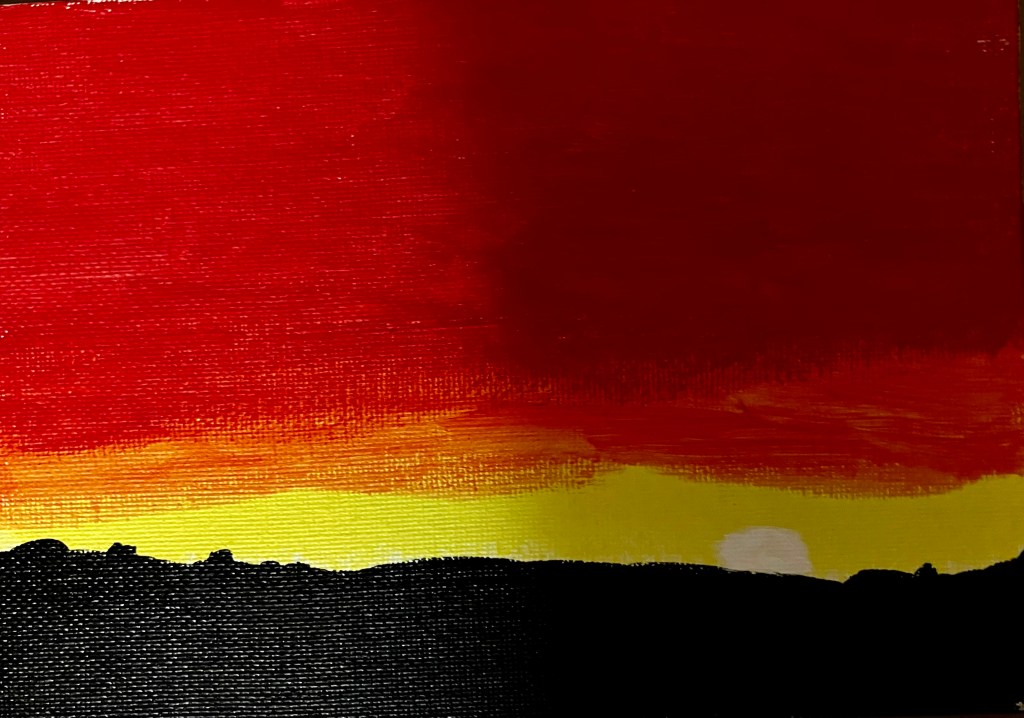
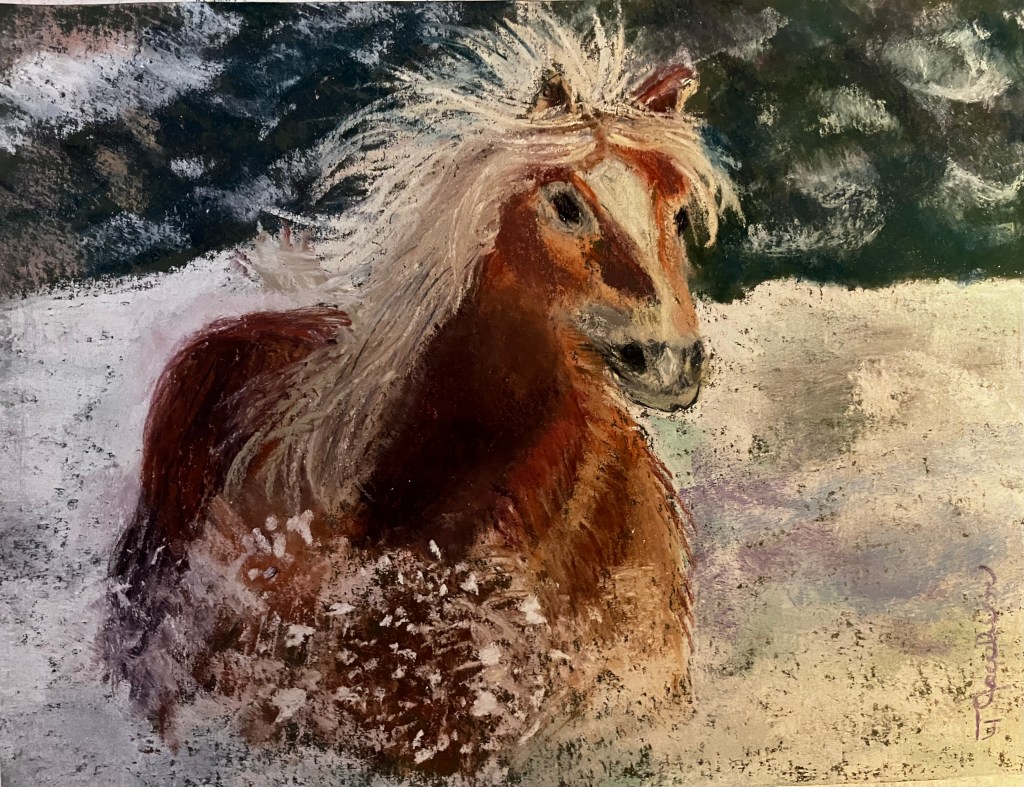
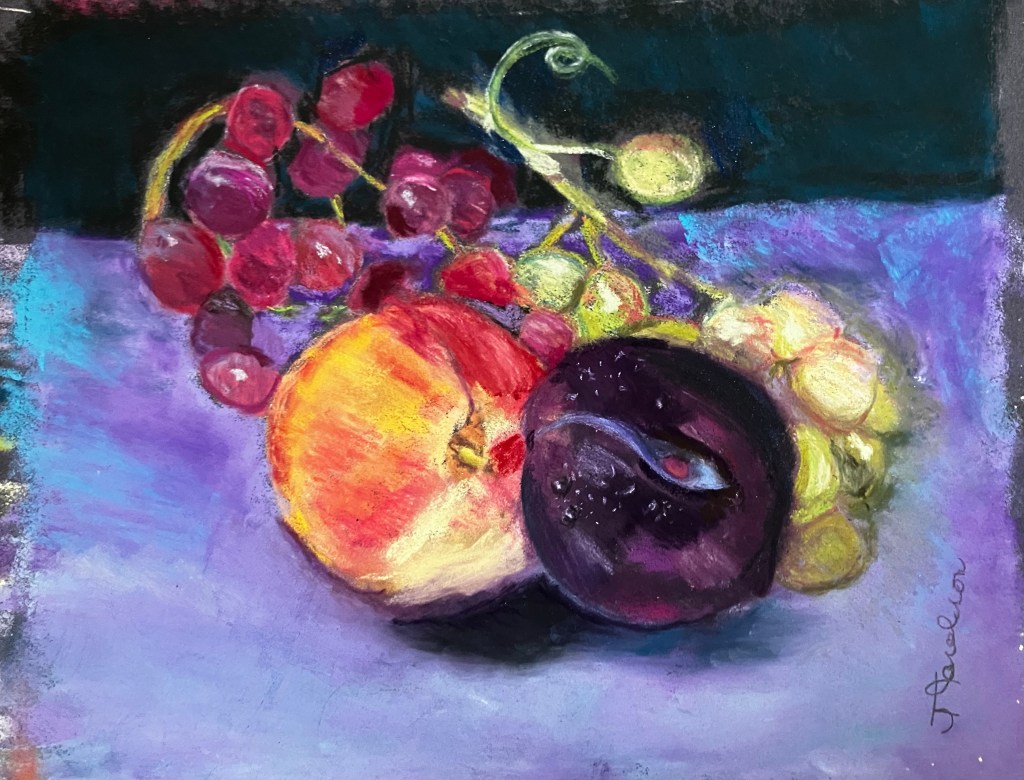
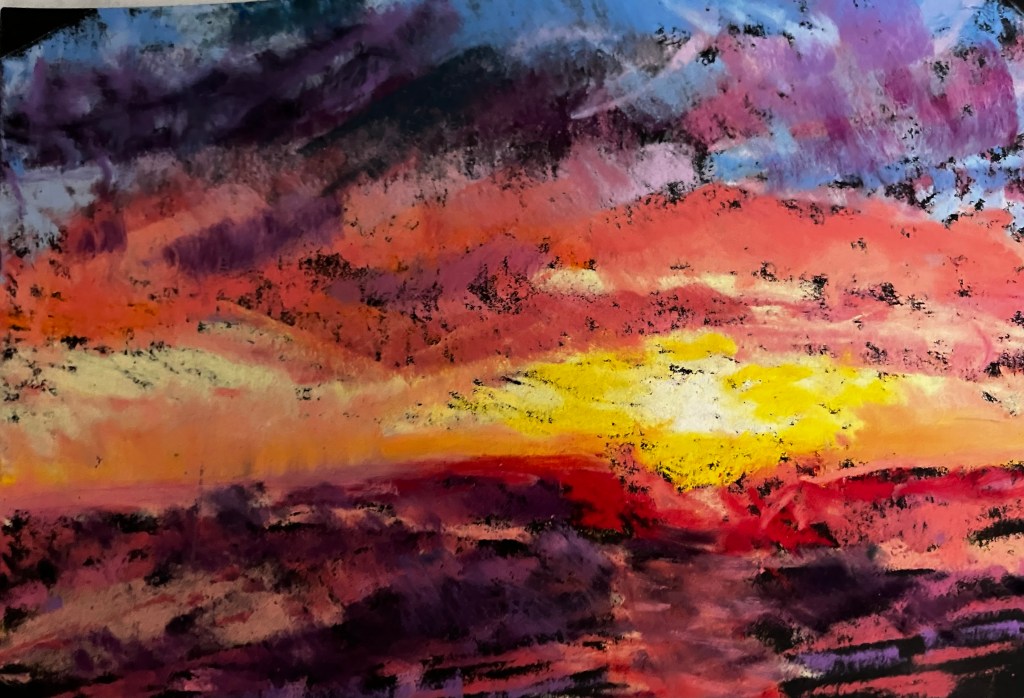
Let me share some works that document my continuing evolution as a painter. Other than the first two which are very early works, I am particularly happy with these paintings that just a few years ago I would never, ever have thought I could produce! And if you are engaged on your own development as an artist of any type, I highly recommend Art & Fear: Observations on the Perils (and Rewards) of Artmaking by David Bayles and Ted Orland.
Trudi Jacobson and Tom Mackey co-authored the chapter Designing Interactive Pedagogies of Play Through Metaliteracy for a new book edited by Marietjie Havenga, Jako Olivier, and Byron J Bunt. The open access volume entitled Problem-based Learning and Pedagogies of Play: Active Approaches Towards Self-Directed Learning is published by AOSIS Scholarly Books. As noted in the synopsis: “The focus of this book is original research regarding the implementation of problem-based learning and pedagogies of play as active approaches to foster self-directed learning” (https://books.aosis.co.za/index.php/ob/catalog/book/409).
According to the abstract for Trudi and Tom’s chapter:
This chapter explores interactive pedagogies of play (PoPs) through the theory and practice of metaliteracy. As a holistic pedagogical framework for developing reflective and self-directed learners in collaborative social environments, metaliteracy supports individuals to become active knowledge producers. The structure of the metaliteracy model includes interrelated roles, domains and characteristics that reinforce the scaffolding of play- and problem-based learning in multimodal contexts. The core components of metaliteracy are applied in practice through a set of flexible and adaptable goals and learning objectives. Through this analysis of metaliteracy concerning PoPs, we will describe interactive meaning-making in pedagogical situations involving collaborative problem-based learning (PBL) in four courses at both foundational and advanced levels of the college experience.
We are thrilled to be a part of this exciting new open access book with such excellent editors and authors. It was a great experience to apply metaliteracy to this new context of pedagogies of play. The examples we provide from our own teaching in the Writing and Critical Inquiry course at The University at Albany and in the Digital Media Arts courses at Empire State University demonstrate how applicable these ideas are to a wide range of pedagogical contexts. Let us know what you think about this new application of the metaliteracy model and feel free to try it out in your own teaching!
-Trudi and Tom
Jacobson, TE & Mackey, TP 2023, ‘Designing interactive pedagogies of play through metaliteracy’, in M Havenga, J Olivier & BJ Bunt (eds.), Problem-based learning and pedagogies of play: Active approaches towards Self-Directed Learning, NWU Self-Directed Learning Series, vol. 11, AOSIS Books, Cape Town, pp. 43–70. https://doi.org/10.4102/aosis.2023.BK409.03
Online courses in the Digital Media Arts offer effective models for designing innovative learning activities in a wide range of disciplinary settings. Several courses in the Digital Media Arts at SUNY Empire State College, such as Digital Storytelling, Ethics of Digital Art and Design, and Information Design have been developed to include open educational resources (OER) to replace textbooks. In addition, openly-available digital resources have been curated in these courses to support individual and collaborative learning activities for producing original and remixed information.
As part of this presentation, the learning outcomes for each course are shared along with specific pedagogical strategies that have proven to be effective in each class. These techniques are transferrable to a wide range of modalities and disciplinary settings beyond those described. The presentation includes several digital media projects produced by students as well as feedback from learners about the experience.
If you have questions about these fully online courses taught by Tom Mackey at SUNY Empire State College, feel free to reach out any time.
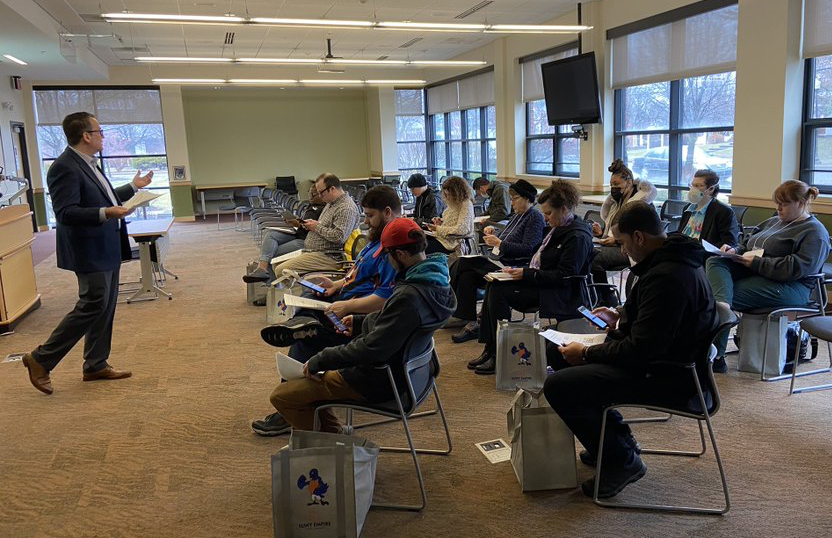
A new metaliteracy workshop was facilitated by Prof. Tom Mackey as a Deliberative Conversation at the SUNY Empire State College Student Academic Conference on April 7, 2022. This was the first in-person student conference at the college since the global pandemic prevented such face-to-face gatherings for two years.
The interactive workshop provided an excellent opportunity to engage with students directly about Developing Metaliteracy to Identify and Resist Misinformation. This most current Deliberative Conversation was organized by Anita DeCianni-Brown, Collegewide Career Development Coordinator at SUNY Empire.
The metaliteracy resources, questions, and techniques applied in this workshop are openly available and transferrable to a wide range of settings. Feel free to facilitate your own Deliberative Conversation at your institution based on this presentation.
Photo credit: Thanks to Anita DeCianni-Brown, Collegewide Career Development Coordinator at SUNY Empire.
This new presentation addresses today’s fractured information environment and how metaliteracy can be applied in these challenging times. Trudi and Tom talk about ways to rebuild trust in these environments through metaliteracy and to share ideas about how to design open learning initiatives with this model.
Tom Mackey’s presentation Advancing Metaliteracy to Rebuild Trust launched the Reason & Respect initiative at SUNY Empire State College. This series of online conversations “provides a forum for students, faculty, staff, and our broader communities to explore and discuss topics related to the election and learn about critical issues” (SUNY Empire). Tom’s presentation examines metaliteracy as a pedagogical strategy to address the challenges of misinformation and disinformation during this election cycle and a global pandemic. According to the World Health Organization, the COVID-19 pandemic is also an “infodemic” that is defined by the spread of false and misleading information. The sharing of deceptive and untruthful information during a global pandemic is especially problematic when accurate and reliable communication is essential for saving lives. Misinformation and disinformation are amplified by echo chambers, tribalism, and contentious partisan environments that reinforce mistrust and division. How do we rebuild trust based on reason and respect? How do we engage in difficult conversations about critical issues while reexamining fixed mindsets and understanding multiple perspectives?
During an age of misinformation and well-orchestrated disinformation campaigns, it is especially vital to make informed decisions based on accurate content from reliable and truthful sources. Metaliteracy is a comprehensive model that helps individuals to become both critical consumers and ethical producers of information in participatory environments (Mackey & Jacobson, 2011; Mackey & Jacobson, 2014). Metaliterate learners are reflective, well-informed, and civic-minded contributors to shared communities. They adapt to changing information technologies and work conscientiously to build communities of trust (Mackey, 2019). Metaliterate learners reflect on how they feel about information and the specific contexts of information environments (Jacobson, et. al., 2018). They develop a metaliteracy mindset and examine their own predispositions while consciously seeking information from multiple perspectives and sources (Jacobson, et. al., 2018). Metaliteracy has been applied in many different educational settings, from classrooms and libraries to online virtual environments, showing that it is possible to advance rational and reflective dialogue among engaged participants in shared spaces. This presentation explores how metaliteracy is a lifelong practice for building truthful and trusted communities based on a shared commitment to both empathy and understanding.
References
Jacobson, T., Mackey, T., O’Brien, K., Forte, M., & O’Keeffe, E. (2018). “Goals and Learning Objectives.” Metaliteracy.org, Retrieved from https://metaliteracy.org/learning-objectives/
Mackey, T.P., “Empowering Metaliterate Learners for the Post-Truth World.” In Mackey and Jacobson (Eds.). Metaliterate Learning for the Post-Truth World. New York: ALA Publishing, Inc., (2019).
This guest blog post is by Dr. Valerie Hill, Director of the Community Virtual Library (a library in virtual learning environments) and researcher of changing literacy in digital culture. Valerie believes metaliteracy aligns well to our philosophical era which many are beginning to call “metamodernism”.
Her recent book, Metamodernism and Changing Literacy: Emerging Research and Opportunities, focuses on metaliteracy for all age groups through an exploration of our metamodern moment. In the Foreword to this book, Thomas Mackey states, “Hill provides a fascinating exploration of metamodernism through the perspective of metaliteracy. This intersection between both theories is vital to our understanding of the relationship between digital culture and literacy.”
Certainly, over the past few months instructors and learners have been challenged by the need to plunge into virtual learning environments (like it or not!) due to Covid 19. Many educators have scrambled to learn new tech tools connecting to students through ZOOM and other apps. Obviously, lecturing online through a web camera has obstacles and limitations as there is little chance for interactive hands-on learning without a “shared space”. Entering virtual platforms for learning requires metaliteracy and the ability to reflect on information in multiple formats as we participate in digital spaces both consuming and producing information. We are surrounded by evidence that metaliteracy is essential, realizing that literacy is no longer defined as the ability to read and write. Options for online learning continue to evolve and a look at our philosophical era in relation to literacy helps us understand how deep learning can occur today and in the future.
The End of Postmodernism
Metaliteracy, as defined by Mackey and Jacobson (2014), is a term developed to better understand the need for digital citizens to reflect on their own literacy in globally networked culture through four domains: behavioral, cognitive, affective, and metacognitive. The ongoing process of learning through these domains takes place again and again over time. This need for metaliteracy was a perfect match to the changing era of postmodernism and the rise of networked culture; however, it is even more critical as we move beyond postmodernism. Several new concepts are emerging, such as: post-postmodernism, post-millennialism, trans-postmodernism, and the term used in this writing, metamodernism.
One of the hallmarks of postmodernism was deconstructionism and the tearing down of grand narratives and established belief systems. Postmodernism emphasized irony, engendered an abundance of dystopian literary works, and promoted a sense of the “death of history”. Metamodernism, in contrast, allows room for hope. Vermeulen and van den Akker (2010, p. 2) suggest, “History, it seems, is moving rapidly beyond its all too hastily proclaimed end.” Understanding changes in literacy may be better understood by exploring metamodernism and embracing metaliteracy.
Metaliteracy in Virtual Spaces
Literacy, we all know, has been revolutionized by digital culture bringing opportunities to access, create and curate content through a plethora of apps and digital platforms. Rapidly expanding digital tools have disrupted education, leading to the need for new nomenclature and a new look at literacy. As information landscapes continue to evolve, metaliteracy addresses goals and learning objectives for digital citizens which include 1) Evaluation of content and bias; 2) Advocating respect for intellectual property; 3) Producing and sharing through collaboration; and 4) Adapting to change through lifelong personal and professional goals.
While innovative learning spaces can be new and exciting, the metamodern individual seeks a balance of innovation with respect for history and tradition. Much can be gained by studying the past and reflecting on the learning journey of those who lived before us. These oscillations between the past and the present, between the physical and the virtual (or digital), and between numerous opposing concepts (the concrete and the abstract) surround us in our metamodern world and impact literacy as we juggle and swing between them in our minds. This juggling between modes of literacy and thinking influences our behavior, our knowledge and understanding, our feelings toward information, and our reflection on how we learn (notice the four domains of metaliteracy).
Choosing the best learning environment is challenging for educators and for learners as online classroom management platforms compete to provide educational applications and virtual spaces (even VR headsets) continue to rapidly expand. Many online spaces offer little interaction beyond observation through a webcam or interactive chat. Evaluating the criteria necessary for specific learning objectives is critical and a shared sense of place and presence can be of tremendous value.
3D virtual environments may play a greater role in simulating a shared learning experience using avatars, a simulated space across distance with the ability to learn in collaboration in a persistent environment (a space that remains over time rather than a one-time disposable experience). Research has documented the potential for high quality educational simulations for over fifteen years. Virtual worlds, such as Second Life or Kitely, offer learners tools to build alone or in collaboration with others. These virtual learning spaces require metaliteracy as users employ various new skills such as embedding online media, coding and scripting, using voice or text, collaborative building, applying the laws of physics, or back channeling through other platforms to communicate.
Learners in a 3D Virtual Environment (Second Life) 2020
Great potential for learning and creating in virtual environments is evident; yet, so too is the need for a balance between the virtual world and the physical world. Metamodernism calls for a balance of both worlds and an appreciation of both. The process of becoming metaliterate is lifelong and the metamodern individual must be aware of the personal responsibilities we each hold as digital citizens. As XR (Extended Reality), VR (Virtual Reality), AR (Augmented Reality) and MR (Mixed Reality) continue to evolve, metaliteracy will become essential to education and daily life. Certainly, the unprecedented shutdowns caused by Covid 19 have brought a new appreciation of our physical world and our social interactions. A deep appreciation for the physical world alongside multiple “realities” is a metamodern concept.
Metaliteracy for all Age Groups in Digital Culture
From infancy through old age, we are all called upon to become digital citizens in today’s globally connected culture. Tiny tots see digital devices around them from birth and elderly people are often expected to utilize digital modes of communication from email and online shopping to texting and social media. Much of our online interaction takes place through social media and networked communities. “Metaliteracy promotes critical thinking and collaboration in a digital age, providing a comprehensive framework to effectively participate in social media and online communities” (Mackey and Jacobson, 2011, p. 62).
Becoming metaliterate is a process that begins at birth with the modeling of literacy (print books preferred for infants and toddlers!) imperative to development. Parents, children, educators, students, and lifelong learners are challenged to develop a personal awareness of metaliteracy and to “apply metaliterate learning as a lifelong value and practice” (Metaliteracy Goal 4:9) (Jacobson, et. al., 2019).
References
Hill, V. J. (2020). Metamodernism and Changing Literacy: Emerging Research and Opportunities. Hershey, PA: IGI Global.
As educators respond to the COVID-19 crisis and transition to online and remote learning, or expand what they are doing at a distance, consider several metaliteracy resources that are adaptable for these purposes. We’ve seen an increase in the use of our MOOCs during these unprecedented times and would like to highlight those resources and other OER that were designed for teaching and learning with metaliteracy:
iSucceed College Success – SUNY OER Services recently launched this expanded College Success course with a new metaliteracy module to prepare students for the college environment. The Metaliteracy Module is adaptable to K-12 and college environments and provides open content, learning objects, videos, and assignments that are adaptable to your educational setting.
Empowering Yourself in a Post-Truth World – This Coursera MOOC addresses the challenges of the post-truth world and is especially relevant now that accurate and reliable information is paramount during this global pandemic.
Metaliteracy Digital Badging – All of the content developed for our Metaliteracy Digital Badging system is openly available to apply online and through remote learning.
Metaliteracy Learning Goals and Objectives – This resource is at the heart of metaliteracy and has undergone revisions to address post-truth issues while expanding to include several new translations to address the international interest in metalieracy.
Metaliterate Learner Roles – This diagram features the essential metaliterate learner roles and associated questions that spark reflection and online discussion in multiple disciplines.
Metaliteracy and Your Role as a Metaliterate Learner – This resource also features the learner roles and the four domains of metaliteracy and features reflective questions written and shared by Professor Sally Friedman, University at Albany.
Metaliterate Learner Characteristics – This interactive learning object highlights the characteristics that individuals strive toward as they develop as metaliterate learners.
Metaliteracy YouTube Channel– All of the videos we’ve created for our MOOC projects are openly available in one location via the Metaliteracy Learning Collaborative YouTube Channel.
Additional resources are available through this blog and if you would like to share any open metaliteracy resources that you have developed be sure to let us know.
Take care and be well during this challenging time.
Two Metaliteracy MOOCs are now available for registration via the Coursera platform. First, our original Coursera MOOC Metaliteracy: Empowering Yourself in a Connected World has been streamlined and enhanced with new video content, resources, and learning activities. Learners will be introduced to the metaliteracy model, learn about copyright, intellectual property, and open-licensing through the Creative Commons, and explore digital storytelling as a creative form of information production. By the end of this MOOC, learners will see themselves as content creators and develop a digital artifact or story of their own. Registration for this MOOC is open now for launch on October 14, 2019.
Second, the recently revised Empowering Yourself in a Post-Truth World MOOC is being offered on Coursera for the first time. Registration is open now for immediate launch. This course explores a wide range of issues related to the post-truth world and empowers learners to think about the role of experts in society, examine false representations in constructed media, reflect on their own biases, and explore ways to build collaborative communities of trust and reinvent a truthful world. Learners will be empowered to raise and share their own voice by creating a digital response to the post-truth world.
Both MOOCs provide dynamic video content, updated links to open readings and resources, discussions, and interactive learning activities. The MOOCs can be explored independently, or in sequence (if new to both MOOCs, you may want to start with the Connected World and move to Post-Truth World, but either sequence is fine). These updated resources are available to teachers, students, librarians, administrators, and lifelong learners interested in applying metaliteracy to a variety of teaching and learning situations and/or everyday life. Metaliteracy supports reflective learning and the active production of new knowledge in collaborative communities.







 Two Metaliteracy MOOCs are now available for registration via the Coursera platform. First, our original Coursera MOOC
  Metaliteracy.org