Metaliteracy, Mmetaliteracy, or Metagramotnost?

by Trudi E. Jacobson

There is an article about metaliteracy on Wikipedia. Actually, there are four. But let’s start at the beginning, with the one that was never officially published. While there are millions of articles on Wikipedia, there are also guidelines about what might appropriately be added to the site.

First, the subject must be notable. In other words, it must have gained sufficiently significant attention by the world at large and over time, and secondly, it must fall within Wikipedia’s scopeNotability involves these elements:

  • Significant coverage in reliable sources suggests it would merit its own Wikipedia article
  • This significant coverage directly addresses the topic, in some detail, so no original research is needed
  • Reliable sources “means that sources need editorial integrity to allow verifiable evaluation of notability”
  • Sources must be secondary sources, which might be either online or in print, in English or not
  • Being “independent of the subject” means that “works produced by the article’s subject or someone affiliated with it” cannot be the reliable secondary sources that justify the Wikipedia article.

While there is the perception that anyone can add anything to Wikipedia, this clearly is not the case. It can be an uphill struggle to get new articles approved. Two earlier blog posts document the struggle to get a metaliteracy article added to Wikipedia, one from December 2019 and the second from April 2021. There was also a celebratory post from May 2022 when the Metaliteracy Wikipedia article was accepted. Taking a look at the page that documents the history of edits to the article, there have been a modest number of changes since its publication. It took a while, but the resulting metaliteracy article is excellent.

Let’s return to the title of this blog post. The exciting news is that there are now translations of the metaliteracy article appearing on three additional language versions of Wikipedia: Spanish, Igbo (native to Nigeria), and Čeština (native to the Czech Republic). The revision history page for each of these indicates that the English version was translated as is, rather than new metaliteracy articles being created from scratch. However, a small number of edits have since been made in each article--they have taken on lives of their own.

Wikipedia has a resource page for translating English-language articles into other languages. There are automated tools to help create these translations. But machine translations can’t be relied on without some additional work. As mentioned on the resource page, “Mere machine translations, without substantial modification are highly undesirable. For that reason, you must have a reasonable level of fluency so that you can make appropriate changes to the tool’s automated output.” We would love to see translations appear in additional Wikipedia language versions to make information about metaliteracy available to all who are interested. Would you be able to help, if you are a speaker of languages beyond English? The metaliteracy learning goals and objectives are currently available in 15 different languages. It would be great if the number of metaliteracy Wikipedia articles reached that level!

The Wikipedia logo is from Wikimedia Commons: https://commons.wikimedia.org/wiki/File:Wikipedia-logo-v2-en.svg.

Help Needed to Publish a Metaliteracy Article in Wikipedia

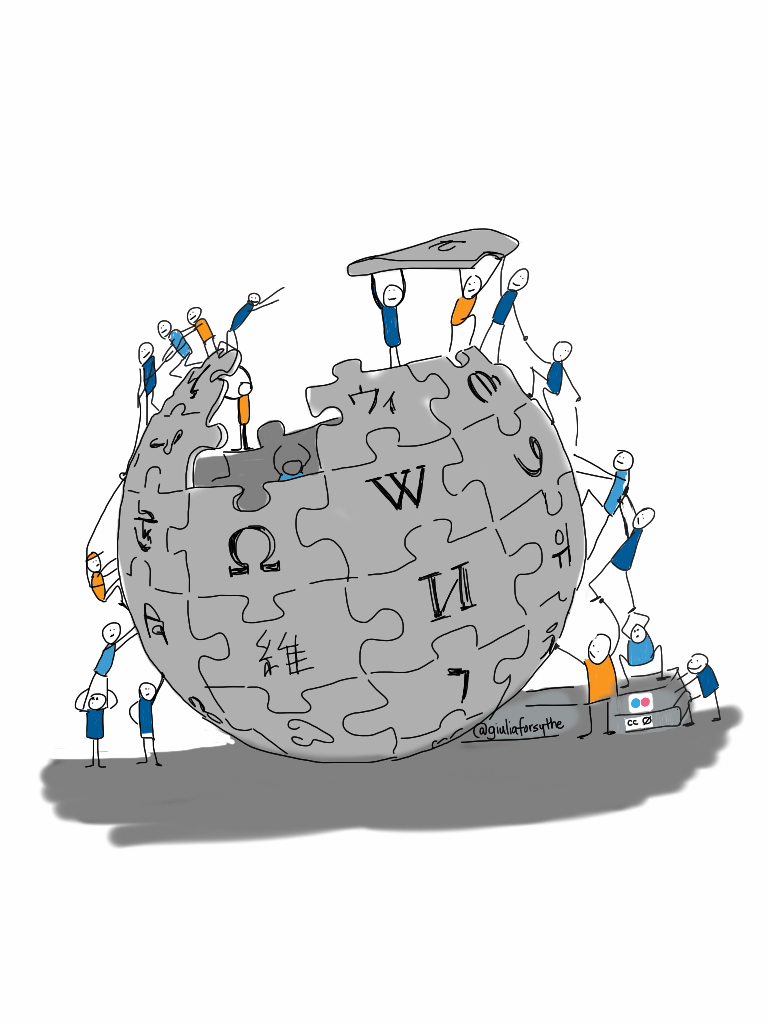
"Wikipedia" by giulia.forsythe is marked with CC0 1.0

Will you join in the effort to enhance a Wikipedia article about Metaliteracy?

(“Wikipedia” by giulia.forsytheCC0 1.0)

Wikipedia is used by so many people to learn about topics they are interested in. But if they want to learn more about Metaliteracy, they won’t have much luck. A search on the word “metaliteracy” in Wikipedia yields two results, very brief mentions in the Information Literacy and Transliteracy articles. There have been efforts in the past to get an article included specifically on Metaliteracy. Now, once more, the draft Metaliteracy article that began with these earlier efforts has been restored for editing. This latest draft needs additional content before being considered for permanent status. It would be tremendous if the effort this time were successful.

Are you available to work on a new draft of a Wikipedia article about metaliteracy? An educator in Canada is analyzing how the article might be shaped to address the reasons earlier efforts were unsuccessful. Her analysis can be seen on the Talk page for the draft. She is continuing to work on the page, but is new to metaliteracy and would love to have assistance. Tom, Trudi, and Kelsey are unable to work on it, as per Wikipedia’s policies. While we post all of our open content via Metaliteracy.org, including a concise definition at our About page, our latest Publications, and Metaliteracy in Practice, it would be great to reach an even wider audience through Wikipedia. Types of additions that are particularly needed are information about metaliteracy applications by others, and connections between metaliteracy and other pedagogical frameworks.

If you have already edited Wikipedia, feel free to jump right in and join the conversation on the Talk page. If you’ve never edited Wikipedia, learning to do so is not hard, and it is actually quite fun and satisfying! There are numerous resources available to help you learn how to edit. Here are just a few of them:

The Wikipedia Adventure: Learn to edit Wikipedia in under an hour! Accomplish 7 missions and you are good to go! Unfortunately, the adventure doesn’t work on tablets and other mobile devices.

Student training modules: Trudi’s students learn quite quickly how to edit Wikipedia by working through some of these concise yet extraordinarily helpful modules. Ignore the mention of the student dashboard, and jump right in. If you’ve completed The Wikipedia Adventure and want a refresher on some topics, this would be a great way to access that information.

Contributing to Wikipedia: A one-page guide to get you started.

If you need help once you start editing, the best place to ask questions is the welcoming Teahouse.

We hope you can help us make the Metaliteracy Wikipedia article a reality!

Trudi, Tom, and Kelsey

Metaliteracy in Wikipedia

An article for metaliteracy that has been started on Wikipedia is currently available only in draft form. Additional content, including information about its use and the range of practitioners and researchers who have incorporated metaliteracy in their work, would be very helpful in getting this new article approved. Based on the rules of editing in Wikipedia, neither Trudi nor Tom or others who are highly involved with researching metaliteracy are able to contribute to this article. If you are a Wikipedia editor or are interested In learning to edit on Wikipedia, this might be a great article to start.You will find the draft article here.

There are some excellent resources for learning to edit in Wikipedia. Even if you don’t have a chance to edit the metaliteracy draft article, you may be interested in editing an existing article or starting a new one. Here is a list of available tutorials and guides:

Help: Getting Started Page

The Wikipedia Adventure is fun!

Open Pedagogy and Metaliteracy Topic of ICIL Keynote

bC19g0oxRyOYV6LZ+rTnmw

Trudi Jacobson keynoting at ICIL in South Africa

Trudi Jacobson gave the last international keynote address at the International Conference on Information Literacy (ICIL) at North-West University (NWU) in Vanderbijlpark, South Africa on September 26. Her topic was Creating Shareable Knowledge: Exploring the Synergy between Metaliteracy and Open Pedagogy. She spoke about the components of open educational practices, including open educational resources, open pedagogies, open learning, open sharing of teaching ideas, and open technologies. She then asked participants to put themselves in the role of a student and to consider what might be different about their learning experience if open played a role. (Their responses are here, please feel free to consider the question and add your own ideas.)

Trudi delved into how metaliteracy can both scaffold and add to student learning in open pedagogical settings, using Caroline Sinkinson’s open pedagogy model to make connections. Trudi concluded by exploring the connections in two case studies. One, which was analyzed in-depth, is an information literacy/metaliteracy course in which students contribute to Wikipedia. The second, discussed more briefly, is a political science course in which metaliteracy OER play a large role and encourage elements of open pedagogy. If interested in this latter course, look for an article next year in the International Journal of Open Educational Resources that explores this professor/librarian collaboration in more depth.