Digital Story: Embracing Metaliteracy in the Digital Age

We welcome this guest blog post from Riaz Laghari. He is an English language teacher, researcher, and writer from Pakistan. His work focuses on digital literacy, education, language, and critical thinking. As a passionate lifelong learner, he is dedicated to exploring how pedagogy and technology intersect to promote responsible digital citizenship.

I completed the Coursera MOOC Metaliteracy: Empowering Yourself in a Connected World offered by Empire State University. It was an incredibly enriching experience that broadened my understanding of how learners engage with information in today’s digital environment.

This story published in Medium entitled Embracing Metaliteracy in the Digital Age reflects my personal journey and learning process. It emphasizes the importance of being a responsible digital citizen in today’s interconnected world. Through the narrative, I explore how embracing metaliteracy has helped me understand the significance of critical thinking. It also highlights the importance of ethical information sharing. Collaboration in digital spaces is another key aspect I have come to appreciate. As I state in the article:

Metaliteracy has transformed my approach to digital engagement, equipping me with the tools to navigate the online world responsibly, ethically, and collaboratively.

In today’s fast-paced digital world, being an informed and ethical participant in online spaces is more important than ever. In this piece, I reflect on my personal journey as a digital citizen. I also consider my professional journey. My experiences are guided by the principles of metaliteracy. This article highlights how this model has influenced my way of learning. It details how I teach and share information. It shows how I evaluate online sources and engage responsibly in digital communities.

As I state in the article:

In my experience, embracing metaliteracy has meant developing a heightened awareness of my role in the digital ecosystem. It’s about recognizing that the content I create and share impacts others, and therefore, I must engage with this content thoughtfully and critically. This responsibility extends to both professional and personal digital spaces.

Besides my own journey, I also apply metaliteracy concepts in my teaching. I encouraged my students to reflect critically on the sources they use. I urged them to recognize their role as both consumers and producers of information. I also motivated them to collaborate more mindfully in digital spaces. For instance, I integrated reflective blog writing into the curriculum. I also added peer feedback activities. These methods helped promote metacognitive awareness. They fostered a more participatory learning environment. It was particularly effective in helping students become more responsible and confident digital citizens.

As I conclude in my Medium article:

As we continue to interact with the ever-expanding digital landscape, it is crucial for all of us to embrace metaliteracy. By doing so, we can foster a more informed, ethical, and connected world, where information flows freely and responsibly.

Riaz is an English teacher, and writes about language and political discourse in Pakistan. You can find his work on Medium and via his personal blog. If you would like to share your personal or professional experience with metaliteracy, feel free to reach out.
Metaliteracy’s Place in the Development of an Artist

Trudi Jacobson

Color and texture. They beguile me. Lure me. Tease me. Color and texture can enhance or detract. I weave. Weaving can be all about color and texture in the emerging cloth. Done well, it sizzles and shimmers. Otherwise, you might have a veritable reproduction of mud.

Art embraces color and texture. I collected art-themed postage stamps when I was young, arranged them by artist, and did research into each artist. I still have that collection. I visited museums with my mother when young, then on my own, with friends or my husband. I was entranced by much of what I saw. I took a college art history course in London, visiting the National Gallery to see the works we studied in person. I wanted to know why there seemed to be so few women artists. In my quest, I received a study grant to travel to England to learn more about Lady Elizabeth Butler.

But art was for others to produce, me to admire. I couldn’t even draw a realistic stick figure. I never considered aspiring to try to create art myself. Until I did.

I started with a popular book Learn to Paint in Acrylics with 50 Small Paintings by Mark Daniel Nelson and some 6” x 6” canvases. I began reproducing images from the book. Some were better, some worse. Each one of them, even if mediocre, excited me. Maybe, just maybe, I could do this. Of course, it would take time and practice. Did I have the courage to go forward, though? One can’t claim beginner status forever–eventually one has to take responsibility for one’s progress, or lack of progress.

Where does metaliteracy fit into all of this? Its impact was subtle but substantive. I only started to think about this when Tom suggested I consider writing a blog post on this topic. When I was taking my first tentative forays in painting, I was heavily involved with shaping and sharing metaliteracy. Tom and I recognized and developed the metaliterate learner roles. At the time, Dr. Sally Friedman, a professor of political science and friend, was very interested in engaging her students with metaliteracy concepts. She asked them to consider their strengths and goals in connection with the metaliterate learner roles. Which role would they each like to become more comfortable with by the end of the course? We developed similar learning activities for our first global Coursera MOOC Metaliteracy: Empowering Yourself in a Connected World.

I realized I should be asking myself the same question. I’d always produced content, but mostly as an author dealing with the written word. But could I be brave and follow the path of a producer of art? Would the affective components of learning something so new and discomforting to me steer me away from this pursuit? Might I engage the metacognitive component to sort myself out?

It seemed I could. I sought online and in-person learning opportunities to help with my steep learning curve. I had to consider the metaliterate learner characteristics that would help me on my journey. The participatory characteristic is vital, closely aligned with being adaptable, reflective, collaborative, and civic-minded. These attributes were all critical when I was invited to join a group of women who met weekly to practice art and support one another’s efforts. At first, I felt like a fraud, masquerading as an artist but really just an artist wannabe. But I continued to participate. I brought my medium of choice at the time, watercolor. But when a group member suggested I try pastels and lent me the materials, I had to grapple with a medium that threw me back to being a beginner all over again. I focused on adaptability, reflecting that this established artist had her reasons for encouraging me to take this step in my learning process. As it turned out, she steered my artistic efforts in a crucial way. I love the immediacy and vibrant color of pastels.

As for the collaborative characteristic, group members work together to mount exhibits several times a year at local public libraries. Showing one’s work can be a bit scary, but the support of the group members makes it much easier. And civic-minded? I developed and maintain a website for the group as another means of sharing our work with a wide community. 

In the interest of length, I’ve just skimmed the surface of metaliteracy’s impact on me as a learner creating art. But perhaps it might prompt reflection on your part as you consider metaliteracy’s role in something new you are learning. 

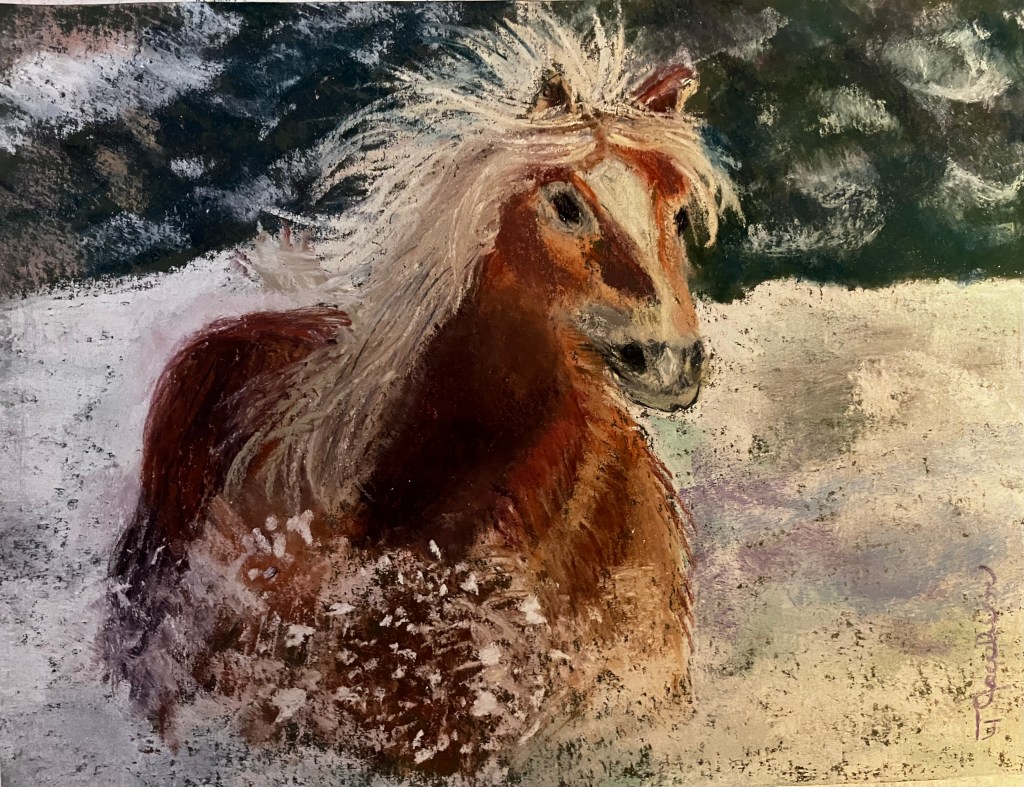
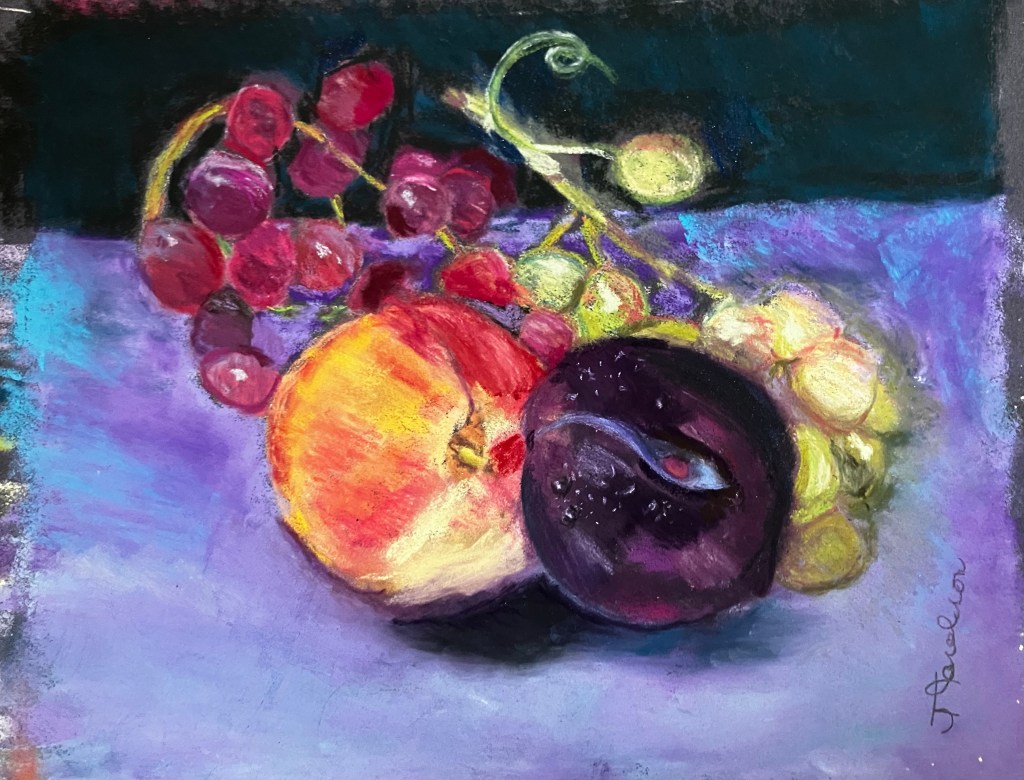
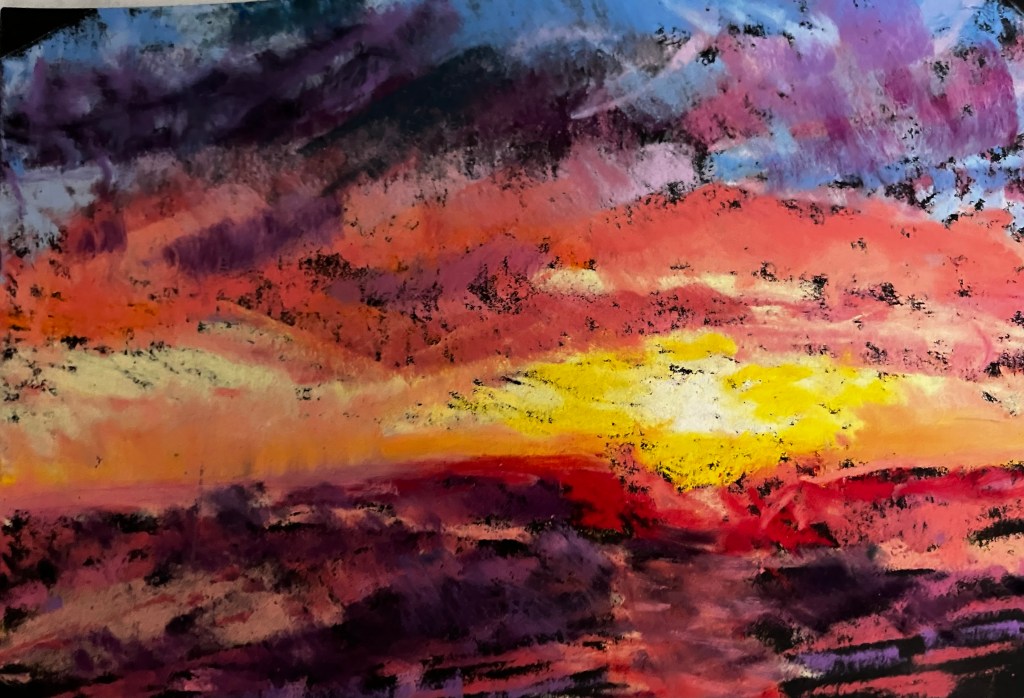
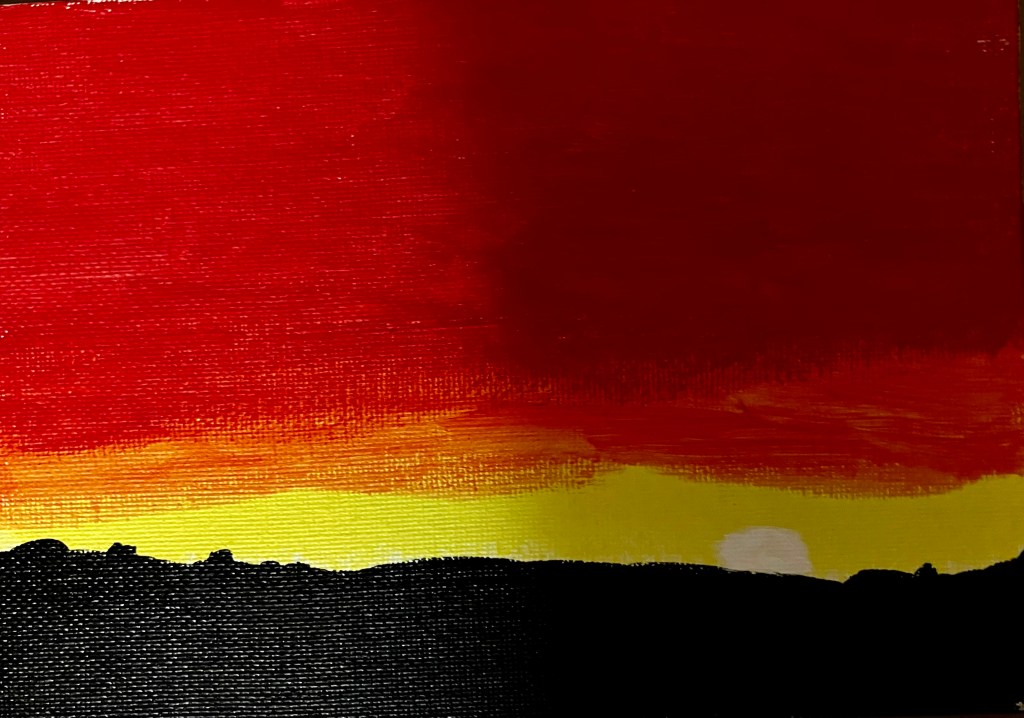
Let me share some works that document my continuing evolution as a painter. Other than the first two which are very early works, I am particularly happy with these paintings that just a few years ago I would never, ever have thought I could produce! And if you are engaged on your own development as an artist of any type, I highly recommend Art & Fear: Observations on the Perils (and Rewards) of Artmaking by David Bayles and Ted Orland.

Metaliteracy Featured in ALA Neal-Schuman Interview

A new metaliteracy interview with Tom Mackey and Trudi Jacobson is featured in the ALAstore blog to coincide with the publication of their book Metaliteracy in a Connected World: Developing Learners as Producers. Rob Christopher, Marketing Coordinator at ALA Editions | ALA Neal-Schuman conducted the interview and asked questions related to the origins of the metaliteracy framework, the timeliness of metaliteracy, the “learner as producer” dimension of the model, and the relationship of a “growth mindset” to lifelong learning. Here’s one excerpt from the interview that addresses the importance of a “growth mindset” and the development of a metaliteracy mindset:

If you have a fixed mindset, you are much less likely to delve into new areas that require time and energy to succeed. Your lifelong learning would not be able to develop in creative and inventive ways. But with a growth mindset, the world’s your oyster! You just need to make a commitment and follow through on it when you are serious about learning or accomplishing something new. And you have to realize that there will be stumbles along the way–it is inevitable. Making mistakes is such an important part of the learning process, and the value of these experiences can be drawn out through the metacognitive dimension of metaliteracy.

(https://www.alastore.ala.org/MJconnectinterview)
Metaliteracy in a Connected World: Developing Learners as Producers (2022)

Metaliteracy Keynote at Virtual Teaching with Technology Showcase on April 24

The Annual Teaching with Technology Showcase: Excellence in Action, an entirely online event, will feature an invited keynote by Trudi Jacobson and Tom Mackey about metaliteracy on Friday, April 24. The keynote entitled Teaching Metaliteracy as a Vital Literacy for Today’s Digital World will explore metaliteracy and its relevance to educators and students, especially during this time of the COVID-19 crisis, when the ability to produce and share truthful and trusted information is essential. The keynote will examine metacognitive reflection and self-regulation as part of the scaffolding that metaliteracy provides for successful student participation in open pedagogical settings. Several open digital learning projects produced by the Metaliteracy Learning Collaborative will be introduced as part of this interactive presentation.

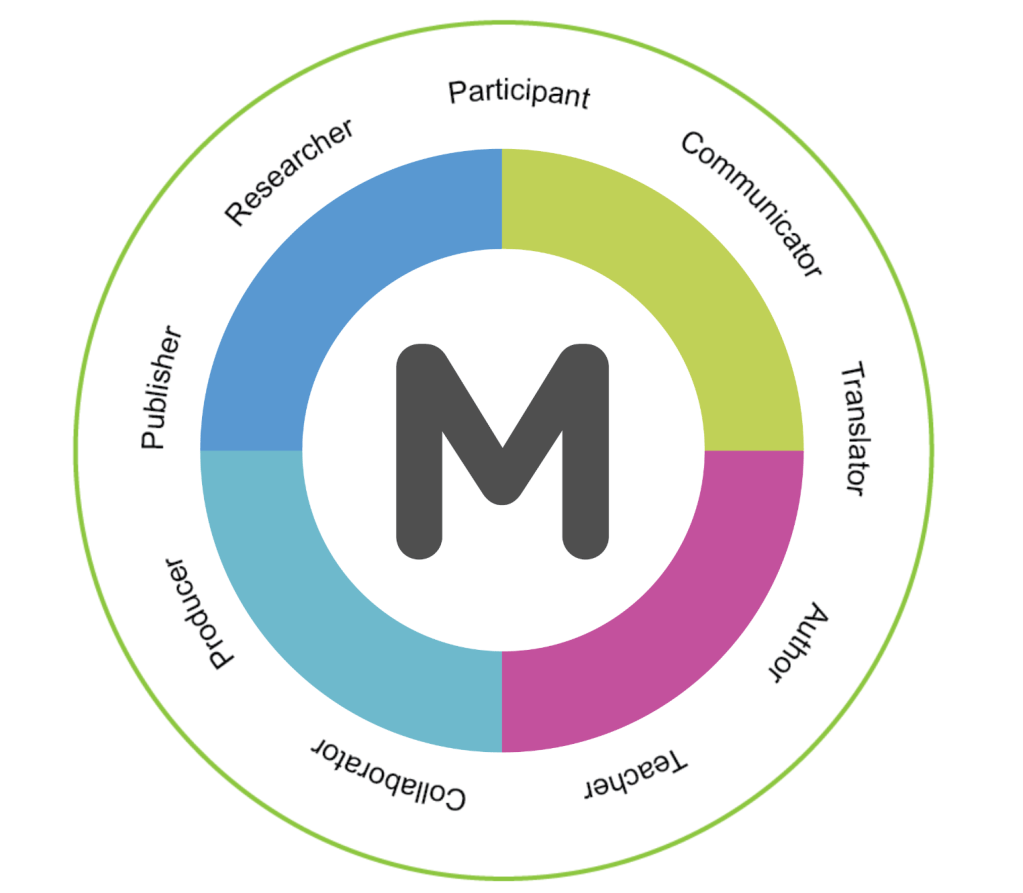
Roles of the Metaliterate Learner Figure (Mackey & Jacobson, 2014)

Registration is open for this virtual conference that is sponsored by Edge, the regional technology partner for colleges and universities in New Jersey. Edge responded quickly to the COVID-19 crisis and moved this conference to an entirely online format and will pilot the Run the World platform as part of this transition.

The conference starts at 9:30am with opening remarks by Nancy Zimmerman, Executive Director for EdgeEvents and Print Communications. Trudi and Tom’s keynote address is at 11:45 am. Throughout the day, presenters will address such relevant topics as: promoting the adoption of technology by faculty, video games for learning, technology preferences of Generation Z college students, virtual experiences in art and science, creating OER initiatives, interactive polling, using makerspaces in college, applying augmented reality and gamification to deepen learning, and much more!

We look forward to seeing you at the virtual conference and will share our slides after our keynote!

-Tom & Trudi

On-Demand Version of Coursera Metaliteracy MOOC Launches in December 2016!

We are set to launch an on-demand version of our Cousera Metaliteracy MOOC entitled Metaliteracy: Empowering Yourself in a Connected World in December 2016! If you missed this MOOC the first time around or would like to discover this course for your own learning or as a resource for instruction, register now for this on-demand version taught by  Tom Mackey, Trudi Jacobson, Kelsey O’Brien, Michele Forte, and Allyson Kaczmarek.  This course will provide a dynamic exploration of metaliteracy through videos, animations, interviews, readings, and digital images, all developed by members of the metaliteracy learning collaborative from two schools within the State University of New York (SUNY), The University at Albany and Empire State College. Learners will participate in peer assessments and contribute to online discussions related to such topics as the metaliteracy model, creating and sharing information, understanding intellectual property and the ethical use of information, understanding how information is packaged and shared, participating as a global contributor, creating and curating information, and developing metacognitive reflection.  While this course is focused primarily on metaliteracy, learners and teachers should also explore this MOOC as a way to support information literacy and related literacies such as digital literacy and media literacy.  Register now for our December launch. Special thanks to Kelsey O’Brien for working closely with Coursera and our UAlbany/ESC team to transition the first version of this course into the on-demand format!


Video Recording of 2014 IL Summit Keynote

Thanks to Troy Swanson Department Chair and Teaching & Learning Librarian at Moraine Valley Community College for posting the video of our keynote Changing Models, Changing Emphases: The Evolution of Information Literacy at the 2014 IL Summit.  We enjoyed our time at the summit and appreciate this opportunity to share the video.

Metaliteracy MOOC Talk Plenary

We launched Metaliteracy MOOC on September 4 at the University at Albany with colleagues from SUNY Empire State College and the University Libraries. Our opening plenary was facilitated through Blackboard Collaborate and included Tom Mackey, Trudi Jacobson, Tor Loney, Jenna Hecker, Nicola Marae Allain, and our colleagues from the Metaliteracy Learning Collaborative Michele Forte, Kathleen Stone, Mike Daly, and Mark McBride. We were joined in person by three UAlbany students and online by one of our graduate students from Empire State College. The first MOOC Talk was developed in Prezi and provided an overview of key metaliteracy terms, updates on recent metaliteracy activity, and two figures from the Metaliteracy manuscript recently completed by Tom Mackey and Trudi Jacobson for ALA Books. A recording of our first interactive session via Blackboard Collaborate is available at our Topic 1 page at Metaliteracy MOOC. In the spirit of Open SUNY we coordinated shared press releases that have been published at the Empire State College web site and the UAlbany Web site. The live MOOC Talk session was fascinating for us as we facilitated the talk with several presenters, allowing us to look at metaliteracy from multiple perspectives. We were also inspired by the post-MOOC Talk (that we did not record) because it allowed us to talk through the MOOC format itself and it felt very much like a spontaneous seminar about MOOCs. We have also seen an asynchronous conversation unfold via Twitter at #metaliteracy in response to the talk. We look forward to our upcoming MOOC Talks. On September 18 Char Booth will examine “The Metacognitive Dimension of Metaliteracy,” a key aspect of the metaliteracy model.