by Damiano Orrù
Through my BiblioSkill blog, I explore issues related to artificial intelligence, libraries, and information literacy. I see metaliteracy as a dynamic framework that combines critical thinking, digital literacy, and metacognition. This approach is increasingly important in an information environment shaped by artificial intelligence, where librarians, educators, and researchers must help users evaluate, interpret, and responsibly create information. Librarians can organize discussions about AI’s social consequences, including job displacement, algorithmic bias, privacy, and copyright. They can also guide users in selecting responsible AI tools and promote institutional policies for ethical and transparent AI use.
The Metaliteracy Goals and Learning Objectives support the metaliteracy framework and are adaptable to many different educational settings. I recently edited the Italian translation of the updated 2025 Metaliteracy Goals and Learning Objectives. This translation broadens access to the framework, supporting inclusive, multilingual information literacy across the diverse communities connected through our blogs.
For me, an important aspect of metaliteracy is developing metacognitive awareness: learners should reflect on how they acquire knowledge and critically question AI-generated content. Librarians can support this process by helping users compare AI outputs with reliable traditional sources, identify hallucinations and outdated information, and understand the limitations of automated systems.
Metaliteracy also strengthens critical evaluation skills and encourages learners to consider how information is produced and shared. AI-generated misinformation, deepfakes, synthetic media, biased algorithms, and unethical prompt practices require users to assess both the reliability of information and the processes through which it is produced. Teaching with metaliteracy should also address AI’s growing role in academic publishing, including AI-assisted peer review and the risks of predatory or deceptive practices.
Overall, integrating metaliteracy with AI literacy can support more critical, reflective, and responsible engagement with information. By combining reflection, evaluation, collaboration, and ethical awareness, librarians and users can engage with AI as informed and responsible participants.
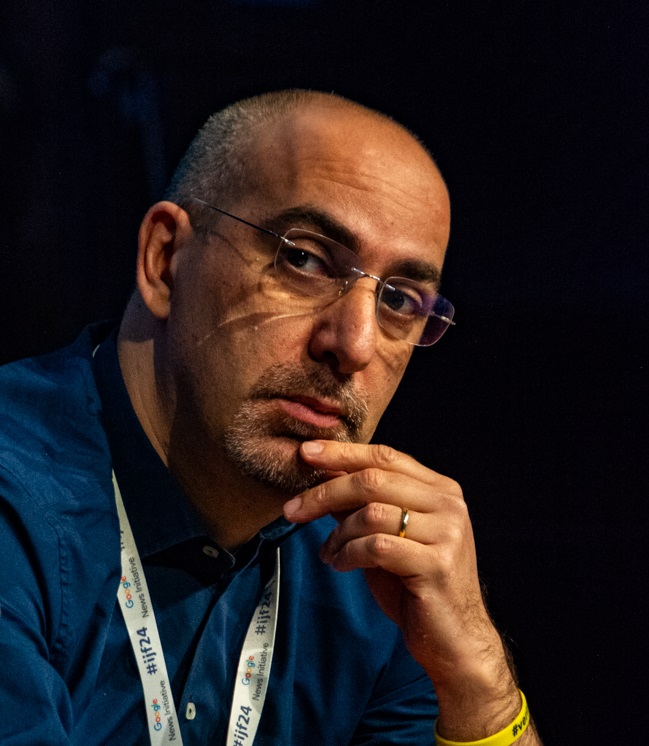
Damiano Orrù is a librarian and the Head of the Vilfredo Pareto Library, Faculty of Economics, University of Rome Tor Vergata, Italy. He is a member of the AIB’s (Italian Library Association) Information Literacy Observatory and teaches in professional and postgraduate programmes on generative AI, customer experience, machine learning, sustainability, and research data management. He is also the creator and blogger behind BiblioSkill, a professional platform dedicated to exploring the impact of artificial intelligence on libraries, education, and information services. Through BiblioSkill, he publishes articles, reflections, and practical resources on generative AI, metaliteracy, information evaluation, ethical technology use, digital transformation, and the development of responsible AI literacy among librarians, educators, researchers, and library users.
His work aims to promote critical thinking, professional development, and informed discussion about the opportunities, risks, and ethical challenges of AI in contemporary information environments. His professional interests include AI literacy, critical thinking, fact-checking, FAIR research data management, sustainability reporting, and the indexing of print, multimedia, and digital resources.


Molto bravo! Thank you for sharing this with us; I’ll be watching with interest as I too am using metaliteracy to create an ethical framework for AI use, and I have several librarians that I work with. I can’t wait to share BiblioSkill with them!
Excellent insights! Metaliteracy is indeed an ideal tool for navigating the AI era, shifting the focus from mere technology adoption to critical and reflective engagement. Congratulations on editing the Italian translation of the 2025 Metaliteracy Goals and Learning Objectives, it is super important to spread this powerful framework through BiblioSkill!