by Changhong Wu
As generative AI reshapes the information landscape, the line between authentic and fabricated content grows harder to see. Deepfakes, synthetic text, and AI “hallucinations” now circulate alongside genuine sources, and the familiar cues of credibility — fluency, formatting, the look of authority — are exactly what these systems reproduce so well. In this environment, the retrieval-and-evaluation model of information literacy remains necessary but is no longer sufficient.
At the IFLA WLIC 2026 Information Literacy Section Satellite Meeting in Busan, Republic of Korea, we will share a project that responds to this challenge through the lens of metaliteracy. Our presentation, “Building Digital Resilience through Metaliteracy: A Meme-Based Pedagogy to Counter AI-Driven Disinformation,” builds on Mackey and Jacobson’s framework, treating digital resilience as a capability fostered through metaliteracy when learners face AI-driven disinformation — integrating the behavioural, cognitive, affective, and metacognitive domains of learning rather than teaching isolated skills.
Our approach turns abstract metaliterate objectives into something students can see, make, and remember: internet memes. Through a meme-based pedagogy developed at the library of Northeast Normal University, a Chinese “Double First-Class” institution, students decode, create, and reflect on memes as tools for recognising and resisting disinformation. Drawing on a survey of 183 undergraduates, we found balanced competence across all four metaliteracy domains and, encouragingly, a clear tendency to verify rather than to trust at a glance when confronted with the very artefacts generative AI now makes so easy to produce.
The full satellite meeting programme is available online. The presentation will be delivered in person in Busan by Changhong Wu, with Tom Mackey joining remotely to discuss the metaliteracy model.

We look forward to sharing our full findings in Busan—and to continuing the conversation here on Metaliteracy.org.

Changhong Wu is an Information Literacy Librarian at Northeast Normal University (NENU), China, where her teaching and research focus on information literacy, metaliteracy, and AI literacy. She serves as a Standing Committee Member of the IFLA Information Literacy Section and as a Board Member of the Chinese American Librarians Association (CALA), and has been a Visiting Scholar at George Washington University.
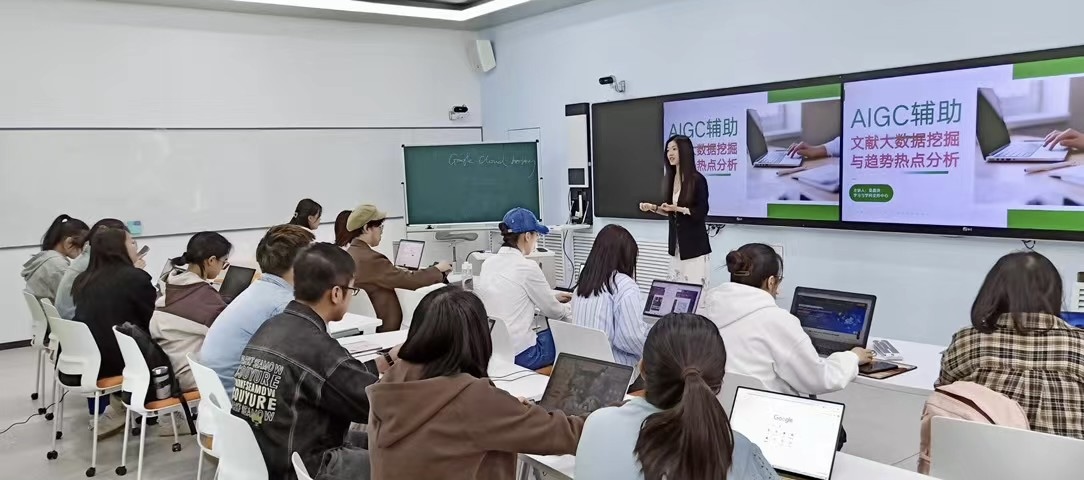
She teaches a range of credit-bearing courses at NENU— including Historical Data and AI Agent Applications, Data Processing and AI Agent Applications, Digital Curation and Display of Cultural Heritage, and Historical Sources and Information Literacy. Her work on AI literacy and metaliteracy has appeared in leading journals, and she has given keynote and invited talks at venues including IFLA, iSchools, and ALA. She also shares AI-literacy ideas with a public audience of more than 90,000 followers online.